












Enantioselective synthesis of sulfoxide using an SBA-15 supported vanadia catalyst: a computational elucidation using a QM/MM approach
Literature Information
Publication Date
2017-08-29
DOI
10.1039/C7CP05153K
Impact Factor
3.676
Authors
Navjot Kaur, Shuchi Gupta, Neetu Goel
View Original
Abstract
Metal catalyzed asymmetric oxidation of prochiral sulfides is one of the prevailing strategies to produce enantiopure sulfoxides. Keeping in view the reported reactivity of peroxo vanadium complexes towards asymmetric oxidation reactions, this study explores the reactivity of vanadia represented as a VO4 cluster with CH3-S-Ph through DFT computations. The mechanism of the oxidation of sulfides to sulfoxides with unsupported VO4 is thoroughly investigated. The chiral centre in the VO4 cluster is introduced by grafting it on an SBA-15 support and two conformers of the supported cluster are thus obtained. The study was extended to locate transition states for the reaction of each conformer with CH3-S-Ph. The large enantiomeric excess obtained from the energy difference of the transition states confirms the formation of enantiopure sulfoxide. Analysis of the computational results provides a rational explanation for the observed enantioselectivity, which is remarkable. The optical stability as well as asymmetry of chiral sulfoxides obtained by the current approach has been further confirmed by locating the planar transition state, through which conversion from one enantiomer to another takes place. The calculations suggest that transition between the two enantiomers of sulfoxide is hampered by sufficiently high inversion barriers.
Related Literature
Synthesis of glycopolymers and their multivalent recognitions with lectins
S. R. Simon Ting, Gaojian Chen, Martina H. Stenzel
2010-06-30
Review Article
DOI: 10.1039/C0PY00141D
Synthesis of P(EGDMA-co-MAA)/P(EGDMA-co-VPy)/titania/polymer tetra-layer microspheres
Longyu Li, Guangyu Liu, Dianbin Qin, Xinlin Yang
2010-02-18
Paper
DOI: 10.1039/B9PY00302A
Characterization of network structure in radiation-cured resins of polyfunctional acrylic ester and N-vinylpyrrolidone by MALDI-MS combined with supercritical methanolysis
Hideki Matsubara, Hiroyasu Kataoka, Hajime Ohtani
2010-05-19
Paper
DOI: 10.1039/C0PY00026D
Miktoarm core-crosslinked star copolymers with biologically active moieties on peripheries
Irakli Javakhishvili, Søren Hvilsted
2010-09-20
Paper
DOI: 10.1039/C0PY00226G
New low-bandgap polymetallaynes of platinum functionalized with a triphenylamine-benzothiadiazole donor–acceptor unit for solar cell applications‡
Qiwei Wang, Wai-Yeung Wong
2010-12-01
Paper
DOI: 10.1039/C0PY00273A
Self-healing and self-mendable polymers
Jay A. Syrett, C. Remzi Becer, David M. Haddleton
2010-05-13
Review Article
DOI: 10.1039/C0PY00104J
Novel polymer coupling chemistry based upon latent cysteine-like residues and thiazolidine chemistry
Joseph S. Carlson, Megan R. Hill, Taiga Young, Philip J. Costanzo
2010-08-24
Communication
DOI: 10.1039/C0PY00191K
Hydrophilization of poly(ether ether ketone) films by surface-initiated atom transfer radical polymerization
Charlotte Juel Fristrup, Katja Jankova, Søren Hvilsted
2010-09-13
Paper
DOI: 10.1039/C0PY00142B
Synergistic temperature and pH effects on glass (Tg) and stimuli-responsive (TSR) transitions in poly(N-acryloyl-N′-propylpiperazine-co-2-ethoxyethyl methacrylate) copolymers
Fang Liu, William L. Jarrett, Marek W. Urban
2011-02-01
Paper
DOI: 10.1039/C0PY00366B
You might also like
Compound Q&A
Is 6-(3-Fluorophenyl)picolinic acid (CAS: 887982-40-3) safe?
6-(3-Fluorophenyl)picolinic acid is generally considered safe for laboratory use...
887982-40-36-(3-Fluorophenyl)pi...
Compound Q&A
What industries use (3R)-3-Pyrrolidinol (CAS: 2799-21-5)?
(3R)-3-Pyrrolidinol is used in the pharmaceutical industry as a precursor for dr...
2799-21-5(3R)-3-Pyrrolidinol
Compound Q&A
What precautions should be taken when handling (4R,5R)-4,5-Diethoxycarbonyl-2,2-dimethyldioxolane (CAS: 59779-75-8)?
When handling (4R,5R)-4,5-Diethoxycarbonyl-2,2-dimethyldioxolane (CAS: 59779-75-...
59779-75-8(4R,5R)-4,5-Diethoxy...
Compound Q&A
How is 1-(6-Chloroimidazo[1,2-b]pyridazin-3-yl)ethanone (CAS: 90734-71-7) typically synthesized?
1-(6-Chloroimidazo[1,2-b]pyridazin-3-yl)ethanone is often synthesized via a mult...
90734-71-71-(6-Chloroimidazo[1...
Compound Q&A
What is the market or research trend for N-Ethyl-3,4-dimethylbenzylamine (CAS: 39180-83-1)?
The market for N-Ethyl-3,4-dimethylbenzylamine (CAS: 39180-83-1) remains steady,...
39180-83-1N-Ethyl-3,4-dimethyl...
Compound Q&A
What is Tert-butyl 3-(pyrrolidin-1-yl)azetidine-1-carboxylate (CAS: 1019008-21-9)?
Tert-butyl 3-(pyrrolidin-1-yl)azetidine-1-carboxylate is a chemical compound wit...
1019008-21-9Tert-butyl 3-(pyrrol...
Compound Q&A
What regulatory guidelines apply to 1-Bromo-3-chloro-2,4-dimethoxybenzene (CAS: 1228956-93-1)?
1-Bromo-3-chloro-2,4-dimethoxybenzene (CAS: 1228956-93-1) falls under the classi...
1228956-93-11-Bromo-3-chloro-2,4...
Compound Q&A
Is 8-Bromo-2-methyl-3,4-dihydroisoquinolin-1(2H)-one (CAS: 1368622-07-4) safe?
The safety of 8-Bromo-2-methyl-3,4-dihydroisoquinolin-1(2H)-one (CAS: 1368622-07...
1368622-07-48-Bromo-2-methyl-3,4...
Compound Q&A
Is Benzyl [(3S)-2,6-dioxo-3-piperidinyl]carbamate (CAS: 22785-43-9) safe?
Benzyl [(3S)-2,6-dioxo-3-piperidinyl]carbamate is generally safe when handled wi...
22785-43-9Benzyl [(3S)-2,6-dio...
Compound Q&A
How should 1-{[4-(4,4,5,5-Tetramethyl-1,3,2-dioxaborolan-2-yl)phenyl]sulfonyl}pyrrolidine (CAS: 928657-21-0) be stored?
1-{[4-(4,4,5,5-Tetramethyl-1,3,2-dioxaborolan-2-yl)phenyl]sulfonyl}pyrrolidine s...
928657-21-01-{[4-(4,4,5,5-Tetra...
Source Journal
Physical Chemistry Chemical Physics

CiteScore:
5.5
Self-citation Rate:
10.3%
Articles per Year:
3036
Physical Chemistry Chemical Physics (PCCP) is an international journal co-owned by 19 physical chemistry and physics societies from around the world. This journal publishes original, cutting-edge research in physical chemistry, chemical physics and biophysical chemistry. To be suitable for publication in PCCP, articles must include significant innovation and/or insight into physical chemistry; this is the most important criterion that reviewers and Editors will judge against when evaluating submissions. The journal has a broad scope and welcomes contributions spanning experiment, theory, computation and data science. Topical coverage includes spectroscopy, dynamics, kinetics, statistical mechanics, thermodynamics, electrochemistry, catalysis, surface science, quantum mechanics, quantum computing and machine learning. Interdisciplinary research areas such as polymers and soft matter, materials, nanoscience, energy, surfaces/interfaces, and biophysical chemistry are welcomed if they demonstrate significant innovation and/or insight into physical chemistry. Joined experimental/theoretical studies are particularly appreciated when complementary and based on up-to-date approaches.
Recommended Compounds
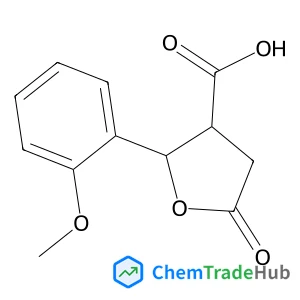
trans-2-(2-Methoxyphenyl)-5-oxotetrahydrofuran-3-carboxylic acid
CAS Number:
99226-02-5
Molecular Formula:
C12H12O5
![4-[(2,4-Dihydroxyphenyl)diazenyl]-5-hydroxy-2,7-naphthalenedisulfonic acid structure](https://static.chemtradehub.com/structs/362/3627-01-8-79ac.webp "4-[(2,4-Dihydroxyphenyl)diazenyl]-5-hydroxy-2,7-naphthalenedisulfonic acid structure")
4-[(2,4-Dihydroxyphenyl)diazenyl]-5-hydroxy-2,7-naphthalenedisulfonic acid
CAS Number:
3627-01-8
Molecular Formula:
C16H12N2O9S2
Recommended Suppliers






Disclaimer
This page provides academic journal information for reference and research purposes only. We are not affiliated with any journal publishers and do not handle publication submissions. For publication-related inquiries, please contact the respective journal publishers directly.
If you notice any inaccuracies in the information displayed, please contact us at support@chemtradehub.com. We will promptly review and address your concerns.