












![Imidazo[1,2-c]pyrimidine structure](https://static.chemtradehub.com/structs/274/274-78-2-8b4c.webp "Imidazo[1,2-c]pyrimidine structure")
Computational insights into CdSe quantum dots' interactions with acetate ligands
Literature Information
Publication Date
2016-07-04
DOI
10.1039/C6CP01665K
Impact Factor
3.676
Authors
Patrick K. Tamukong, Wadumesthrige D. N. Peiris, Svetlana Kilina
View Original
Abstract
Using density functional theory (DFT) and time-dependent DFT (TDDFT), we investigate the effects of carboxylate groups on the electronic and optical properties of CdSe quantum dots (QDs). We specifically focus on the mechanisms of the binding of the acetate anion to the QD surface with and without excess of Cd2+ cations. Our calculations show that the most stable ligated conformations are those where an acetate is attached to extra Cd2+ ion forming a [Cd2+(CH3COO−)] at the QD's surface, while also accompanied by an acetate attached nearby at the surface balancing the overall neutral charge of the system. In contrast, formation of a neutral metal–acetate complex [Cd2+(CH3COO−)2] at the QD surface is found to be the least energetically preferable. A strength of the QD–ligand interaction depends on the solvent, the facet of the QD to which the ligands are attached, and the binding mode – with the bridging mode found to be the most stable conformation for both acetate and cadmium acetate ligands. The cadmium acetate ligands introduce electron trap states at the edge of the conduction band – unoccupied orbitals predominately localized on Cd2+ ion – that are extremely sensitive to the ligand position and the solvent polarity. Polar solvents like acetonitrile delocalize the electronic density over the entire system and, thus, eliminate trap states. As a result, mixed passivation of the CdSe QDs by pairs of cadmium acetate and acetate ligands provides optimal optical properties with minimal contributions of the ligand-related trap states and optically bright lowest energy transitions.
Related Literature
Cr-MIL-101 encapsulated Keggin phosphotungstic acid as active nanomaterial for catalysing the alcoholysis of styrene oxide
Lik H. Wee, Francesca Bonino, Carlo Lamberti, Silvia Bordiga, Johan A. Martens
2013-11-22
Paper
DOI: 10.1039/C3GC41988F
A sustainable biotechnological process for the efficient synthesis of kojibiose
Marina Díez-Municio, Antonia Montilla, F. Javier Moreno, Miguel Herrero
2014-01-07
Paper
DOI: 10.1039/C3GC42246A
Organocatalysis in biorefining for biomass conversion and upgrading
Eugene Y.-X. Chen
2013-11-12
Critical Review
DOI: 10.1039/C3GC41934G
Carbonylation in microflow: close encounters of CO and reactive species
Takahide Fukuyama, Takenori Totoki, Ilhyong Ryu
2013-12-13
Critical Review
DOI: 10.1039/C3GC41789A
Non-toxic catalysts for ring-opening polymerizations of biodegradable polymers at room temperature for biohybrid materials
2013-12-05
Paper
DOI: 10.1039/C3GC42044B
Journey on greener pathways: from the use of alternate energy inputs and benign reaction media to sustainable applications of nano-catalysts in synthesis and environmental remediation
2014-01-17
Perspective
DOI: 10.1039/C3GC42640H
A carbon-based photocatalyst efficiently converts CO2 to CH4 and C2H2 under visible light
Tongshun Wu, Luyi Zou, Dongxue Han, Fenghua Li, Qixian Zhang, Li Niu
2014-01-08
Communication
DOI: 10.1039/C3GC42454E
Catalyst-free chemo-/regio-/stereo-selective amination of alk-3-ynones. Synthesis of 1,5-benzodiazepines and 3-amino-2-alkenones
Agnes Solan, Bilal Nişanci, Miranda Belcher, Jonathon Young, Christian Schäfer, Kraig A. Wheeler, Béla Török, Roman Dembinski
2013-12-19
Communication
DOI: 10.1039/C3GC41898G
You might also like
Compound Q&A
What precautions should be taken when handling 4-Methyl-6-(trifluoromethyl)quinoline (CAS: 40716-16-3)?
When handling 4-Methyl-6-(trifluoromethyl)quinoline (CAS: 40716-16-3), safety go...
40716-16-34-Methyl-6-(trifluor...
Compound Q&A
What is 4-(3,5-Difluorophenyl)aniline (CAS: 405058-00-6)?
4-(3,5-Difluorophenyl)aniline is an aromatic organic compound with the CAS numbe...
405058-00-64-(3,5-Difluoropheny...
Compound Q&A
How is 5-{[4-(Trifluoromethyl)phenyl]sulfanyl}-1,2,3-thiadiazole-4-carboxylic acid (CAS: 338982-07-3) typically synthesized?
5-{[4-(Trifluoromethyl)phenyl]sulfanyl}-1,2,3-thiadiazole-4-carboxylic acid can ...
338982-07-35-{[4-(Trifluorometh...
Compound Q&A
What is the market or research trend for 4-Benzylaniline hydrochloride (CAS: 6317-57-3)?
The market for 4-Benzylaniline hydrochloride (CAS: 6317-57-3) is steadily growin...
6317-57-34-Benzylaniline hydr...
Compound Q&A
Is [3-(Diethylsulfamoyl)phenyl]boronic acid (CAS: 871329-58-7) safe?
[3-(Diethylsulfamoyl)phenyl]boronic acid is generally considered safe when handl...
871329-58-7[3-(Diethylsulfamoyl...
Compound Q&A
What are the main uses of 3-Bromo-2,5-dimethoxyaniline (CAS: 115929-62-9)?
3-Bromo-2,5-dimethoxyaniline is mainly used in the pharmaceutical and chemical i...
115929-62-93-Bromo-2,5-dimethox...
Compound Q&A
What regulatory guidelines apply to N-Methyl-1-(5-methyl-1H-indol-3-yl)methanamine (CAS: 915922-67-7)?
N-Methyl-1-(5-methyl-1H-indol-3-yl)methanamine (CAS: 915922-67-7) is subject to ...
915922-67-7N-Methyl-1-(5-methyl...
Compound Q&A
What industries use Carbamic acid, N-[(5S)-5,6-diamino-6-oxohexyl]-, 1,1-dimethylethyl ester (CAS: 24828-96-4)?
This compound is primarily used in the pharmaceutical industry for the synthesis...
24828-96-4Carbamic acid, N-[(5...
Compound Q&A
How should 2-Methyl-2-propanyl [(1S,3R)-3-aminocyclohexyl]carbamate (CAS: 1298101-47-9) be stored?
2-Methyl-2-propanyl [(1S,3R)-3-aminocyclohexyl]carbamate (CAS: 1298101-47-9) sho...
1298101-47-92-Methyl-2-propanyl ...
Compound Q&A
What industries use Ethyl 2-bromo-4,4,4-trifluorobutanoate (CAS: 367-33-9)?
Ethyl 2-bromo-4,4,4-trifluorobutanoate (CAS: 367-33-9) is utilized in the pharma...
367-33-9Ethyl 2-bromo-4,4,4-...
Source Journal
Physical Chemistry Chemical Physics

CiteScore:
5.5
Self-citation Rate:
10.3%
Articles per Year:
3036
Physical Chemistry Chemical Physics (PCCP) is an international journal co-owned by 19 physical chemistry and physics societies from around the world. This journal publishes original, cutting-edge research in physical chemistry, chemical physics and biophysical chemistry. To be suitable for publication in PCCP, articles must include significant innovation and/or insight into physical chemistry; this is the most important criterion that reviewers and Editors will judge against when evaluating submissions. The journal has a broad scope and welcomes contributions spanning experiment, theory, computation and data science. Topical coverage includes spectroscopy, dynamics, kinetics, statistical mechanics, thermodynamics, electrochemistry, catalysis, surface science, quantum mechanics, quantum computing and machine learning. Interdisciplinary research areas such as polymers and soft matter, materials, nanoscience, energy, surfaces/interfaces, and biophysical chemistry are welcomed if they demonstrate significant innovation and/or insight into physical chemistry. Joined experimental/theoretical studies are particularly appreciated when complementary and based on up-to-date approaches.
Recommended Compounds
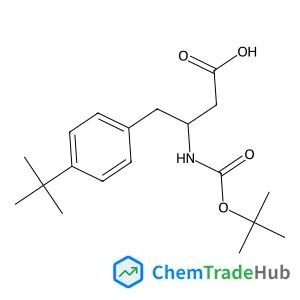
(S)-3-((tert-Butoxycarbonyl)amino)-4-(4-(tert-butyl)phenyl)butanoic acid
CAS Number:
403661-85-8
Molecular Formula:
C19H29NO4
Recommended Suppliers





Disclaimer
This page provides academic journal information for reference and research purposes only. We are not affiliated with any journal publishers and do not handle publication submissions. For publication-related inquiries, please contact the respective journal publishers directly.
If you notice any inaccuracies in the information displayed, please contact us at support@chemtradehub.com. We will promptly review and address your concerns.