













Carbon and proton Overhauser DNP from MD simulations and ab initio calculations: TEMPOL in acetone
Literature Information
Publication Date
2015-08-25
DOI
10.1039/C5CP04405G
Impact Factor
3.676
Authors
Sami Emre Küçük, Timur Biktagirov, Deniz Sezer
View Original
Abstract
A computational analysis of the Overhauser effect is reported for the proton, methyl carbon, and carbonyl carbon nuclei of liquid acetone doped with the nitroxide radical TEMPOL. A practical methodology for calculating the dynamic nuclear polarization (DNP) coupling factors by accounting for both dipole–dipole and Fermi-contact interactions is presented. The contribution to the dipolar spectral density function of nuclear spins that are not too far from TEMPOL is computed through classical molecular dynamics (MD) simulations, whereas the contribution of distant spins is included analytically. Fermi contacts are obtained by subjecting a few molecules from every MD snapshot to ab initio quantum mechanical calculations. Scalar interaction is found to be an essential part of the 13C Overhauser DNP. While mostly detrimental to the carbonyl carbon of acetone it is predicted to result in large enhancements of the methyl carbon signal at magnetic fields of 9 T and beyond. In contrast, scalar coupling is shown to be negligible for the protons of acetone. The additional influence of proton polarization on the carbon DNP (three-spin effect) is also analyzed computationally. Its effect, however, is concluded to be practically insignificant for liquid acetone.
Recommended Journals
Related Literature
Towards resource efficient chemistry: tandem reactions with renewables
Arno Behr, Andreas J. Vorholt, Karoline A. Ostrowski, Thomas Seidensticker
2013-11-29
Critical Review
DOI: 10.1039/C3GC41960F
Lignin fate and characterization during ionic liquid biomass pretreatment for renewable chemicals and fuels production
Noppadon Sathitsuksanoh, Kevin M. Holtman, Daniel J. Yelle, Trevor Morgan, Vitalie Stavila, Jeffrey Pelton
2013-11-18
Paper
DOI: 10.1039/C3GC42295J
Organocatalysis in biorefining for biomass conversion and upgrading
Eugene Y.-X. Chen
2013-11-12
Critical Review
DOI: 10.1039/C3GC41934G
Highly efficient SO2 capture by phenyl-containing azole-based ionic liquids through multiple-site interactions
Wenjun Lin, Fang Ding, Xiaoyan Luo, Xi He, Congmin Wang
2013-10-16
Paper
DOI: 10.1039/C3GC41458B
A molybdenum based metallomicellar catalyst for controlled and selective sulfoxidation reactions in aqueous medium
Rajan Deepan Chakravarthy, Venkatachalam Ramkumar, Dillip Kumar Chand
2014-01-07
Paper
DOI: 10.1039/C3GC42245C
Ruthenium on chitosan: a recyclable heterogeneous catalyst for aqueous hydration of nitriles to amides
R. B. Nasir Baig, Mallikarjuna N. Nadagouda, Rajender S. Varma
2013-12-19
Communication
DOI: 10.1039/C3GC42004C
Efficient biocatalytic processes for highly valuable terminally phosphorylated C5 to C9 d-ketoses
P. Clapés, A. Szekrenyi
2013-11-26
Communication
DOI: 10.1039/C3GC42140F
Green and sustainable manufacture of chemicals from biomass: state of the art
Roger A. Sheldon
2013-11-27
Critical Review
DOI: 10.1039/C3GC41935E
A continuous process for glyoxal valorisation using tailored Lewis-acid zeolite catalysts
Pierre Y. Dapsens, Cecilia Mondelli, Bright T. Kusema, René Verel, Javier Pérez-Ramírez
2013-12-13
Paper
DOI: 10.1039/C3GC42353K
Studies on staged precipitation of cellulose from an ionic liquid by compressed carbon dioxide
Xiaofu Sun, Yanling Chi, Tiancheng Mu
2014-02-24
Paper
DOI: 10.1039/C4GC00085D
You might also like
Compound Q&A
What precautions should be taken when handling 4-Methyl-6-(trifluoromethyl)quinoline (CAS: 40716-16-3)?
When handling 4-Methyl-6-(trifluoromethyl)quinoline (CAS: 40716-16-3), safety go...
40716-16-34-Methyl-6-(trifluor...
Compound Q&A
What is 4-(3,5-Difluorophenyl)aniline (CAS: 405058-00-6)?
4-(3,5-Difluorophenyl)aniline is an aromatic organic compound with the CAS numbe...
405058-00-64-(3,5-Difluoropheny...
Compound Q&A
How is 5-{[4-(Trifluoromethyl)phenyl]sulfanyl}-1,2,3-thiadiazole-4-carboxylic acid (CAS: 338982-07-3) typically synthesized?
5-{[4-(Trifluoromethyl)phenyl]sulfanyl}-1,2,3-thiadiazole-4-carboxylic acid can ...
338982-07-35-{[4-(Trifluorometh...
Compound Q&A
What is the market or research trend for 4-Benzylaniline hydrochloride (CAS: 6317-57-3)?
The market for 4-Benzylaniline hydrochloride (CAS: 6317-57-3) is steadily growin...
6317-57-34-Benzylaniline hydr...
Compound Q&A
Is [3-(Diethylsulfamoyl)phenyl]boronic acid (CAS: 871329-58-7) safe?
[3-(Diethylsulfamoyl)phenyl]boronic acid is generally considered safe when handl...
871329-58-7[3-(Diethylsulfamoyl...
Compound Q&A
What are the main uses of 3-Bromo-2,5-dimethoxyaniline (CAS: 115929-62-9)?
3-Bromo-2,5-dimethoxyaniline is mainly used in the pharmaceutical and chemical i...
115929-62-93-Bromo-2,5-dimethox...
Compound Q&A
What regulatory guidelines apply to N-Methyl-1-(5-methyl-1H-indol-3-yl)methanamine (CAS: 915922-67-7)?
N-Methyl-1-(5-methyl-1H-indol-3-yl)methanamine (CAS: 915922-67-7) is subject to ...
915922-67-7N-Methyl-1-(5-methyl...
Compound Q&A
What industries use Carbamic acid, N-[(5S)-5,6-diamino-6-oxohexyl]-, 1,1-dimethylethyl ester (CAS: 24828-96-4)?
This compound is primarily used in the pharmaceutical industry for the synthesis...
24828-96-4Carbamic acid, N-[(5...
Compound Q&A
How should 2-Methyl-2-propanyl [(1S,3R)-3-aminocyclohexyl]carbamate (CAS: 1298101-47-9) be stored?
2-Methyl-2-propanyl [(1S,3R)-3-aminocyclohexyl]carbamate (CAS: 1298101-47-9) sho...
1298101-47-92-Methyl-2-propanyl ...
Compound Q&A
What industries use Ethyl 2-bromo-4,4,4-trifluorobutanoate (CAS: 367-33-9)?
Ethyl 2-bromo-4,4,4-trifluorobutanoate (CAS: 367-33-9) is utilized in the pharma...
367-33-9Ethyl 2-bromo-4,4,4-...
Source Journal
Physical Chemistry Chemical Physics

CiteScore:
5.5
Self-citation Rate:
10.3%
Articles per Year:
3036
Physical Chemistry Chemical Physics (PCCP) is an international journal co-owned by 19 physical chemistry and physics societies from around the world. This journal publishes original, cutting-edge research in physical chemistry, chemical physics and biophysical chemistry. To be suitable for publication in PCCP, articles must include significant innovation and/or insight into physical chemistry; this is the most important criterion that reviewers and Editors will judge against when evaluating submissions. The journal has a broad scope and welcomes contributions spanning experiment, theory, computation and data science. Topical coverage includes spectroscopy, dynamics, kinetics, statistical mechanics, thermodynamics, electrochemistry, catalysis, surface science, quantum mechanics, quantum computing and machine learning. Interdisciplinary research areas such as polymers and soft matter, materials, nanoscience, energy, surfaces/interfaces, and biophysical chemistry are welcomed if they demonstrate significant innovation and/or insight into physical chemistry. Joined experimental/theoretical studies are particularly appreciated when complementary and based on up-to-date approaches.
Recommended Compounds
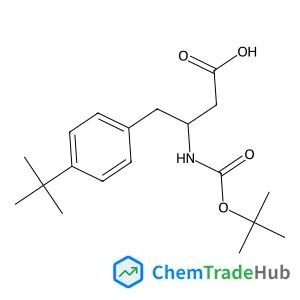
(S)-3-((tert-Butoxycarbonyl)amino)-4-(4-(tert-butyl)phenyl)butanoic acid
CAS Number:
403661-85-8
Molecular Formula:
C19H29NO4
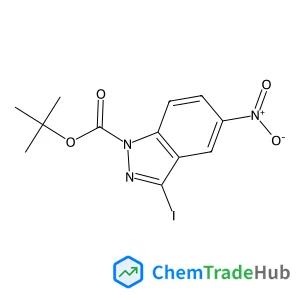
Tert-butyl 3-iodo-5-nitro-1H-indazole-1-carboxylate
CAS Number:
459133-69-8
Molecular Formula:
C12H12IN3O4
Recommended Suppliers





Disclaimer
This page provides academic journal information for reference and research purposes only. We are not affiliated with any journal publishers and do not handle publication submissions. For publication-related inquiries, please contact the respective journal publishers directly.
If you notice any inaccuracies in the information displayed, please contact us at support@chemtradehub.com. We will promptly review and address your concerns.