












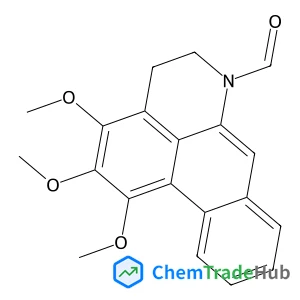
Modular multi-enzyme cascade process using highly stabilized enzyme microbeads
Literature Information
Publication Date
2014-01-09
DOI
10.1039/C3GC41737A
Impact Factor
10.182
Authors
Ee Taek Hwang, Ji Hoon Kim, Byoung Chan Kim, Man Bock Gu
View Original
Abstract
A highly stable, homogeneous and magnetically separable enzyme microbead (EMB) comprised of branched-polymer/silica-shell hybrid microbeads is demonstrated. In addition, an EMB-based modular in vitro cascade reaction system is successfully implemented to the multi-enzymatic reactions with reusability and tractability.
Related Literature
Photoionization access to cyclodextrin-encapsulated resveratrol phenoxy radicals and their repair by ascorbate across the phase boundary
Christoph Kerzig, Martin Goez
2016-06-24
Paper
DOI: 10.1039/C6CP03742A
Why is the electroanalytical performance of carbon paste electrodes involving an ionic liquid binder higher than paraffinic binders? A simulation investigation
M. H. Ghatee, S. Namvar, A. R. Zolghadr, F. Moosavi
2015-07-15
Paper
DOI: 10.1039/C5CP02683K
Theoretical study of the reactions of Criegee intermediates with ozone, alkylhydroperoxides, and carbon monoxide
L. Vereecken, W. J. Bloss
2015-08-20
Paper
DOI: 10.1039/C5CP03862F
Electrical impedance spectroscopy of a PET chip sandwiched between two disk electrodes: understanding the contribution of the polymer/electrode interface
L. Chaal, V. Vivier, B. Tribollet, J. Gamby
2016-06-29
Paper
DOI: 10.1039/C6CP03042D
The evolution of the surface of the mineral schreibersite in prebiotic chemistry
Nikita L. La Cruz, Danna Qasim, Heather Abbott-Lyon, Claire Pirim, Aaron D. McKee, Thomas Orlando, Maheen Gull, Danny Lindsay, Matthew A. Pasek
2016-05-04
Paper
DOI: 10.1039/C6CP00836D
Water adsorption in SAPO-34: elucidating the role of local heterogeneities and defects using dispersion-corrected DFT calculations
2015-08-28
Paper
DOI: 10.1039/C5CP04189A
Nonadiabatic dynamics of floppy hydrogen bonded complexes: the case of the ionized ammonia dimer
Jan Chalabala, Petr Slavíček
2016-06-29
Paper
DOI: 10.1039/C6CP02714H
Non-covalent interaction of benzene with methanol and diethyl ether solid surfaces
Demian Marchione, Martin R. S. McCoustra
2016-07-07
Paper
DOI: 10.1039/C6CP01787H
Concave or convex π-dimers: the role of the pancake bond in substituted phenalenyl radical dimers
Zhong-hua Cui, Abhinav Gupta, Miklos Kertesz
2015-08-11
Paper
DOI: 10.1039/C5CP03759J
Role of donor–acceptor macrocycles in sequence specific peptide recognition and their optoelectronic properties: a detailed computational insight
Arkamita Bandyopadhyay
2016-07-06
Paper
DOI: 10.1039/C6CP03181A
You might also like
Compound Q&A
What precautions should be taken when handling 4-Methyl-6-(trifluoromethyl)quinoline (CAS: 40716-16-3)?
When handling 4-Methyl-6-(trifluoromethyl)quinoline (CAS: 40716-16-3), safety go...
40716-16-34-Methyl-6-(trifluor...
Compound Q&A
What is 4-(3,5-Difluorophenyl)aniline (CAS: 405058-00-6)?
4-(3,5-Difluorophenyl)aniline is an aromatic organic compound with the CAS numbe...
405058-00-64-(3,5-Difluoropheny...
Compound Q&A
How is 5-{[4-(Trifluoromethyl)phenyl]sulfanyl}-1,2,3-thiadiazole-4-carboxylic acid (CAS: 338982-07-3) typically synthesized?
5-{[4-(Trifluoromethyl)phenyl]sulfanyl}-1,2,3-thiadiazole-4-carboxylic acid can ...
338982-07-35-{[4-(Trifluorometh...
Compound Q&A
What is the market or research trend for 4-Benzylaniline hydrochloride (CAS: 6317-57-3)?
The market for 4-Benzylaniline hydrochloride (CAS: 6317-57-3) is steadily growin...
6317-57-34-Benzylaniline hydr...
Compound Q&A
Is [3-(Diethylsulfamoyl)phenyl]boronic acid (CAS: 871329-58-7) safe?
[3-(Diethylsulfamoyl)phenyl]boronic acid is generally considered safe when handl...
871329-58-7[3-(Diethylsulfamoyl...
Compound Q&A
What are the main uses of 3-Bromo-2,5-dimethoxyaniline (CAS: 115929-62-9)?
3-Bromo-2,5-dimethoxyaniline is mainly used in the pharmaceutical and chemical i...
115929-62-93-Bromo-2,5-dimethox...
Compound Q&A
What regulatory guidelines apply to N-Methyl-1-(5-methyl-1H-indol-3-yl)methanamine (CAS: 915922-67-7)?
N-Methyl-1-(5-methyl-1H-indol-3-yl)methanamine (CAS: 915922-67-7) is subject to ...
915922-67-7N-Methyl-1-(5-methyl...
Compound Q&A
What industries use Carbamic acid, N-[(5S)-5,6-diamino-6-oxohexyl]-, 1,1-dimethylethyl ester (CAS: 24828-96-4)?
This compound is primarily used in the pharmaceutical industry for the synthesis...
24828-96-4Carbamic acid, N-[(5...
Compound Q&A
How should 2-Methyl-2-propanyl [(1S,3R)-3-aminocyclohexyl]carbamate (CAS: 1298101-47-9) be stored?
2-Methyl-2-propanyl [(1S,3R)-3-aminocyclohexyl]carbamate (CAS: 1298101-47-9) sho...
1298101-47-92-Methyl-2-propanyl ...
Compound Q&A
What industries use Ethyl 2-bromo-4,4,4-trifluorobutanoate (CAS: 367-33-9)?
Ethyl 2-bromo-4,4,4-trifluorobutanoate (CAS: 367-33-9) is utilized in the pharma...
367-33-9Ethyl 2-bromo-4,4,4-...
Source Journal
Green Chemistry

CiteScore:
16.1
Self-citation Rate:
7.5%
Articles per Year:
944
Green Chemistry provides a unique forum for the publication of innovative research on the development of alternative green and sustainable technologies. The scope of Green Chemistry is based on, but not limited to, the definition proposed by Anastas and Warner (Green Chemistry: Theory and Practice, P T Anastas and J C Warner, Oxford University Press, Oxford, 1998). Green chemistry is the utilisation of a set of principles that reduces or eliminates the use or generation of hazardous substances in the design, manufacture and application of chemical products. Green Chemistry is at the frontiers of this continuously-evolving interdisciplinary science and publishes research that attempts to reduce the environmental impact of the chemical enterprise by developing a technology base that is inherently non-toxic to living things and the environment. Submissions on all aspects of research relating to the endeavour are welcome. The journal publishes original and significant cutting-edge research that is likely to be of wide general appeal. To be published, work must present a significant advance in green chemistry. Papers must contain a comparison with existing methods and demonstrate advantages over those methods before publication can be considered. For more information please see this Editorial. Coverage includes the following, but is not limited to: Design (e.g. biomimicry, design for degradation/recycling/reduced toxicity…) Reagents & Feedstocks (e.g. renewables, CO2, solvents, auxiliary agents, waste utilization…) Synthesis (e.g. organic, inorganic, synthetic biology…) Catalysis (e.g. homogeneous, heterogeneous, enzyme, whole cell…) Process (e.g. process design, intensification, separations, recycling, efficiency…) Energy (e.g. renewable energy, fuels, photovoltaics, fuel cells, energy storage, energy carriers…) Applications (e.g. electronics, dyes, consumer products, coatings, pharmaceuticals, preservatives, building materials, chemicals for industry/agriculture/mining…) Impact (e.g. safety, metrics, LCA, sustainability, (eco)toxicology…) Green chemistry is, by definition, a continuously-evolving frontier. Therefore, the inclusion of a particular material or technology does not, of itself, guarantee that a paper is suitable for the journal. To be suitable, the novel advance should have the potential for reduced environmental impact relative to the state of the art. Green Chemistry does not normally deal with research associated with 'end-of-pipe' or remediation issues.
Recommended Compounds
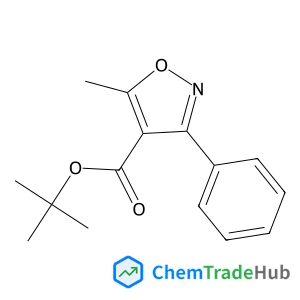
2-Methyl-2-propanyl 5-methyl-3-phenyl-1,2-oxazole-4-carboxylate
CAS Number:
211429-79-7
Molecular Formula:
C15H17NO3
Recommended Suppliers




Disclaimer
This page provides academic journal information for reference and research purposes only. We are not affiliated with any journal publishers and do not handle publication submissions. For publication-related inquiries, please contact the respective journal publishers directly.
If you notice any inaccuracies in the information displayed, please contact us at support@chemtradehub.com. We will promptly review and address your concerns.