












Photoionization access to cyclodextrin-encapsulated resveratrol phenoxy radicals and their repair by ascorbate across the phase boundary
Literature Information
Publication Date
2016-06-24
DOI
10.1039/C6CP03742A
Impact Factor
3.676
Authors
Christoph Kerzig, Martin Goez
View Original
Abstract
Repair reactions of phenoxy radicals by co-antioxidants are key parts of radical scavenging cascades in nature. Yet, kinetic and mechanistic studies of such repairs are scarce, particularly at biologically relevant interfaces. For the popular red-wine polyphenol resveratrol, we present the first example of repairing a cyclodextrin-complexed phenoxy radical by a water soluble co-antioxidant (ascorbate), a reaction of practical importance given the fact that both antioxidants and cyclodextrins are large-scale food additives. To prepare the phenoxy radical from its parent compound inside the cavities of native or hydroxypropyl-substituted α- and β-cyclodextrins, we employed laser photoionization with UV-A (355 nm), which does not rely on additional reagents, and therefore leaves the repair completely undisturbed. A global fit of the intensity dependence pinpoints the cyclodextrin influences on the biphotonic resveratrol ionization as a shift of the ground-state absorption spectrum and a longer life of the first excited state due to the suppression of the geometrical isomerization by the rigid containers, whereas the actual electron ejection from an upper excited state is almost medium-independent. The exchange of the phenoxy radical between the cyclodextrin interior and the aqueous bulk is immeasurably slow on the timescale of its repair by the ascorbate monoanion. Kinetic H/D isotope effects and activation entropies identify the repair at the cyclodextrin–water interface as a concerted proton–electron transfer with no mechanistic difference to homogeneous aqueous solution. The activation enthalpies reveal a steric repulsion between ascorbate and cyclodextrin that indicates a deeper embedding of the less hydrophilic phenoxy radical in the macrocycle compared to the parent compound, with the observed structure–rate relationships explainable on the basis of the cavity diameter and depth.
Related Literature
The efficiency of driving chemical reactions by a physical non-equilibrium is kinetically controlled
Tobias Göppel, Vladimir V. Palyulin, Ulrich Gerland
2016-04-28
Paper
DOI: 10.1039/C6CP01034B
TEMPO-mediated oxidized winter melon-based carbonaceous aerogel as an ultralight 3D support for enhanced photodegradation of organic pollutants
Miao Miao, Gangling Wang, Shaomei Cao, Xin Feng, Jianhui Fang, Liyi Shi
2015-08-27
Paper
DOI: 10.1039/C5CP04679C
The quest for rationalizing the magnetism in purely organic semiquinone-bridged bisdithiazolyl molecular magnets
Mercè Deumal
2016-06-23
Paper
DOI: 10.1039/C6CP02699K
The thermoelectrochemistry of lithium–glyme solvate ionic liquids: towards waste heat harvesting
Jeffrey J. Black, Thomas Murphy, Rob Atkin, Andrew Dolan, Leigh Aldous
2016-07-01
Paper
DOI: 10.1039/C6CP02255C
Nonadiabatic dynamics of floppy hydrogen bonded complexes: the case of the ionized ammonia dimer
Jan Chalabala, Petr Slavíček
2016-06-29
Paper
DOI: 10.1039/C6CP02714H
Anomalous effective polarity of an air/liquid-mixture interface: a heterodyne-detected electronic and vibrational sum frequency generation study
Sudip Kumar Mondal, Ken-ichi Inoue, Shoichi Yamaguchi
2015-09-01
Communication
DOI: 10.1039/C5CP04264J
Vertical heterostructures of MoS2 and graphene nanoribbons grown by two-step chemical vapor deposition for high-gain photodetectors
Rozan Mohamad Yunus, Hiroko Endo
2015-09-01
Paper
DOI: 10.1039/C5CP03958D
The oxidation of copper catalysts during ethylene epoxidation
M. T. Greiner, T. E. Jones, B. E. Johnson, T. C. R. Rocha, Z. J. Wang, M. Armbrüster, M. Willinger, A. Knop-Gericke, R. Schlögl
2015-08-28
Paper
DOI: 10.1039/C5CP03722K
100 fs photo-isomerization with vibrational coherences but low quantum yield in Anabaena Sensory Rhodopsin
Alexandre Cheminal, Jérémie Léonard, So-Young Kim, Kwang-Hwan Jung, Hideki Kandori, Stefan Haacke
2015-09-03
Paper
DOI: 10.1039/C5CP04353K
Photodissociation of aniline N–H bonds in clusters of different nature
Viktoriya Poterya, Dana Nachtigallová, Jozef Lengyel, Michal Fárník
2015-09-01
Paper
DOI: 10.1039/C5CP04485E
You might also like
Compound Q&A
What precautions should be taken when handling 4-Methyl-6-(trifluoromethyl)quinoline (CAS: 40716-16-3)?
When handling 4-Methyl-6-(trifluoromethyl)quinoline (CAS: 40716-16-3), safety go...
40716-16-34-Methyl-6-(trifluor...
Compound Q&A
What is 4-(3,5-Difluorophenyl)aniline (CAS: 405058-00-6)?
4-(3,5-Difluorophenyl)aniline is an aromatic organic compound with the CAS numbe...
405058-00-64-(3,5-Difluoropheny...
Compound Q&A
How is 5-{[4-(Trifluoromethyl)phenyl]sulfanyl}-1,2,3-thiadiazole-4-carboxylic acid (CAS: 338982-07-3) typically synthesized?
5-{[4-(Trifluoromethyl)phenyl]sulfanyl}-1,2,3-thiadiazole-4-carboxylic acid can ...
338982-07-35-{[4-(Trifluorometh...
Compound Q&A
What is the market or research trend for 4-Benzylaniline hydrochloride (CAS: 6317-57-3)?
The market for 4-Benzylaniline hydrochloride (CAS: 6317-57-3) is steadily growin...
6317-57-34-Benzylaniline hydr...
Compound Q&A
Is [3-(Diethylsulfamoyl)phenyl]boronic acid (CAS: 871329-58-7) safe?
[3-(Diethylsulfamoyl)phenyl]boronic acid is generally considered safe when handl...
871329-58-7[3-(Diethylsulfamoyl...
Compound Q&A
What are the main uses of 3-Bromo-2,5-dimethoxyaniline (CAS: 115929-62-9)?
3-Bromo-2,5-dimethoxyaniline is mainly used in the pharmaceutical and chemical i...
115929-62-93-Bromo-2,5-dimethox...
Compound Q&A
What regulatory guidelines apply to N-Methyl-1-(5-methyl-1H-indol-3-yl)methanamine (CAS: 915922-67-7)?
N-Methyl-1-(5-methyl-1H-indol-3-yl)methanamine (CAS: 915922-67-7) is subject to ...
915922-67-7N-Methyl-1-(5-methyl...
Compound Q&A
What industries use Carbamic acid, N-[(5S)-5,6-diamino-6-oxohexyl]-, 1,1-dimethylethyl ester (CAS: 24828-96-4)?
This compound is primarily used in the pharmaceutical industry for the synthesis...
24828-96-4Carbamic acid, N-[(5...
Compound Q&A
How should 2-Methyl-2-propanyl [(1S,3R)-3-aminocyclohexyl]carbamate (CAS: 1298101-47-9) be stored?
2-Methyl-2-propanyl [(1S,3R)-3-aminocyclohexyl]carbamate (CAS: 1298101-47-9) sho...
1298101-47-92-Methyl-2-propanyl ...
Compound Q&A
What industries use Ethyl 2-bromo-4,4,4-trifluorobutanoate (CAS: 367-33-9)?
Ethyl 2-bromo-4,4,4-trifluorobutanoate (CAS: 367-33-9) is utilized in the pharma...
367-33-9Ethyl 2-bromo-4,4,4-...
Source Journal
Physical Chemistry Chemical Physics

CiteScore:
5.5
Self-citation Rate:
10.3%
Articles per Year:
3036
Physical Chemistry Chemical Physics (PCCP) is an international journal co-owned by 19 physical chemistry and physics societies from around the world. This journal publishes original, cutting-edge research in physical chemistry, chemical physics and biophysical chemistry. To be suitable for publication in PCCP, articles must include significant innovation and/or insight into physical chemistry; this is the most important criterion that reviewers and Editors will judge against when evaluating submissions. The journal has a broad scope and welcomes contributions spanning experiment, theory, computation and data science. Topical coverage includes spectroscopy, dynamics, kinetics, statistical mechanics, thermodynamics, electrochemistry, catalysis, surface science, quantum mechanics, quantum computing and machine learning. Interdisciplinary research areas such as polymers and soft matter, materials, nanoscience, energy, surfaces/interfaces, and biophysical chemistry are welcomed if they demonstrate significant innovation and/or insight into physical chemistry. Joined experimental/theoretical studies are particularly appreciated when complementary and based on up-to-date approaches.
Recommended Compounds
![2,4-Dichloro-6-isopropyl-5H-pyrrolo[3,4-d]pyrimidin-7(6H)-one structure](https://static.chemtradehub.com/structs/107/1079649-94-7-ad4a.webp "2,4-Dichloro-6-isopropyl-5H-pyrrolo[3,4-d]pyrimidin-7(6H)-one structure")
2,4-Dichloro-6-isopropyl-5H-pyrrolo[3,4-d]pyrimidin-7(6H)-one
CAS Number:
1079649-94-7
Molecular Formula:
C9H9Cl2N3O

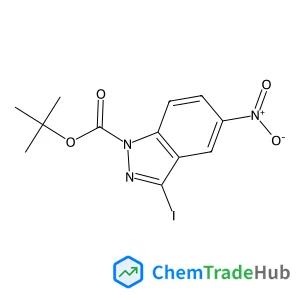
Tert-butyl 3-iodo-5-nitro-1H-indazole-1-carboxylate
CAS Number:
459133-69-8
Molecular Formula:
C12H12IN3O4
Recommended Suppliers






Disclaimer
This page provides academic journal information for reference and research purposes only. We are not affiliated with any journal publishers and do not handle publication submissions. For publication-related inquiries, please contact the respective journal publishers directly.
If you notice any inaccuracies in the information displayed, please contact us at support@chemtradehub.com. We will promptly review and address your concerns.