












Theoretical study of the reactions of Criegee intermediates with ozone, alkylhydroperoxides, and carbon monoxide
Literature Information
Publication Date
2015-08-20
DOI
10.1039/C5CP03862F
Impact Factor
3.676
Authors
L. Vereecken, W. J. Bloss
View Original
Abstract
The reaction of Criegee intermediates (CI) with ozone, O3, has been re-examined with higher levels of theory, following earlier reports that O3 could be a relevant sink of CI. The updated rate coefficients indicate that the reaction is somewhat slower than originally anticipated, and is not expected to play a role in the troposphere. In experimental (laboratory) conditions, the CI + O3 reaction can be important. The reaction of CI with ROOH intermediates is found to proceed through a pre-reactive complex, and the insertion process allows for the formation of oligomers in agreement with recent experimental observations. The CI + ROOH reaction also allows for the formation of ether oxides, which don't react with H2O but can oxidize SO2. Under tropospheric conditions, the ether oxides are expected to re-dissociate to the CI + ROOH complex, and ultimately follow the insertion reaction forming a longer-chain hydroperoxide. The CI + ROOH reaction is not expected to play a significant role in the atmosphere. The reaction of CI with CO molecules was studied at very high levels of theory, but no energetically viable route was found, leading to very low rate coefficients. These results are compared against an extensive literature overview of experimental data.
Recommended Journals
Related Literature
Probing of molecular replication and accumulation in shallow heat gradients through numerical simulations
Lorenz Keil, Michael Hartmann, Simon Lanzmich, Dieter Braun
2016-05-06
Paper
DOI: 10.1039/C6CP00577B
The thermoelectrochemistry of lithium–glyme solvate ionic liquids: towards waste heat harvesting
Jeffrey J. Black, Thomas Murphy, Rob Atkin, Andrew Dolan, Leigh Aldous
2016-07-01
Paper
DOI: 10.1039/C6CP02255C
Double deuterated acetylacetone in neon matrices: infrared spectroscopy, photoreactivity and the tunneling process
Michèle Chevalier, Claudine Crépin
2016-06-27
Paper
DOI: 10.1039/C6CP02796B
Formation of a thermally stable bilayer of coadsorbed intact and deprotonated thymine exploiting the surface corrugation of rutile TiO2(110)
J. H. K. Pfisterer, P. S. Deimel, R. G. Acres, M. Fritton, P. Feulner, J. V. Barth, F. Allegretti
2016-07-05
Paper
DOI: 10.1039/C6CP02541B
Modulation of the aggregation properties of sodium deoxycholate in presence of hydrophilic imidazolium based ionic liquid: water dynamics study to probe the structural alteration of the aggregates
Niloy Kundu, Debasis Banik, Arpita Roy, Jagannath Kuchlyan, Nilmoni Sarkar
2015-09-01
Paper
DOI: 10.1039/C5CP03906A
Replica exchange reactive molecular dynamics simulations of initial reactions in zeolite synthesis
Zhifeng Jing
2015-08-25
Paper
DOI: 10.1039/C5CP03063C
Nonadiabatic dynamics of floppy hydrogen bonded complexes: the case of the ionized ammonia dimer
Jan Chalabala, Petr Slavíček
2016-06-29
Paper
DOI: 10.1039/C6CP02714H
100 fs photo-isomerization with vibrational coherences but low quantum yield in Anabaena Sensory Rhodopsin
Alexandre Cheminal, Jérémie Léonard, So-Young Kim, Kwang-Hwan Jung, Hideki Kandori, Stefan Haacke
2015-09-03
Paper
DOI: 10.1039/C5CP04353K
Flexible band gap tuning of hexagonal boron nitride sheets interconnected by acetylenic bonds
Hongyu Zhang, Youhua Luo, Xiaojuan Feng, Lixia Zhao, Meng Zhang
2015-07-07
Paper
DOI: 10.1039/C5CP02346G
A novel crystalline SiCO compound
Miriam Marqués, Angel Morales-García, José Manuel Menéndez, Valentín G. Baonza, José Manuel Recio
2015-08-20
Paper
DOI: 10.1039/C5CP03673A
You might also like
Compound Q&A
What precautions should be taken when handling 4-Methyl-6-(trifluoromethyl)quinoline (CAS: 40716-16-3)?
When handling 4-Methyl-6-(trifluoromethyl)quinoline (CAS: 40716-16-3), safety go...
40716-16-34-Methyl-6-(trifluor...
Compound Q&A
What is 4-(3,5-Difluorophenyl)aniline (CAS: 405058-00-6)?
4-(3,5-Difluorophenyl)aniline is an aromatic organic compound with the CAS numbe...
405058-00-64-(3,5-Difluoropheny...
Compound Q&A
How is 5-{[4-(Trifluoromethyl)phenyl]sulfanyl}-1,2,3-thiadiazole-4-carboxylic acid (CAS: 338982-07-3) typically synthesized?
5-{[4-(Trifluoromethyl)phenyl]sulfanyl}-1,2,3-thiadiazole-4-carboxylic acid can ...
338982-07-35-{[4-(Trifluorometh...
Compound Q&A
What is the market or research trend for 4-Benzylaniline hydrochloride (CAS: 6317-57-3)?
The market for 4-Benzylaniline hydrochloride (CAS: 6317-57-3) is steadily growin...
6317-57-34-Benzylaniline hydr...
Compound Q&A
Is [3-(Diethylsulfamoyl)phenyl]boronic acid (CAS: 871329-58-7) safe?
[3-(Diethylsulfamoyl)phenyl]boronic acid is generally considered safe when handl...
871329-58-7[3-(Diethylsulfamoyl...
Compound Q&A
What are the main uses of 3-Bromo-2,5-dimethoxyaniline (CAS: 115929-62-9)?
3-Bromo-2,5-dimethoxyaniline is mainly used in the pharmaceutical and chemical i...
115929-62-93-Bromo-2,5-dimethox...
Compound Q&A
What regulatory guidelines apply to N-Methyl-1-(5-methyl-1H-indol-3-yl)methanamine (CAS: 915922-67-7)?
N-Methyl-1-(5-methyl-1H-indol-3-yl)methanamine (CAS: 915922-67-7) is subject to ...
915922-67-7N-Methyl-1-(5-methyl...
Compound Q&A
What industries use Carbamic acid, N-[(5S)-5,6-diamino-6-oxohexyl]-, 1,1-dimethylethyl ester (CAS: 24828-96-4)?
This compound is primarily used in the pharmaceutical industry for the synthesis...
24828-96-4Carbamic acid, N-[(5...
Compound Q&A
How should 2-Methyl-2-propanyl [(1S,3R)-3-aminocyclohexyl]carbamate (CAS: 1298101-47-9) be stored?
2-Methyl-2-propanyl [(1S,3R)-3-aminocyclohexyl]carbamate (CAS: 1298101-47-9) sho...
1298101-47-92-Methyl-2-propanyl ...
Compound Q&A
What industries use Ethyl 2-bromo-4,4,4-trifluorobutanoate (CAS: 367-33-9)?
Ethyl 2-bromo-4,4,4-trifluorobutanoate (CAS: 367-33-9) is utilized in the pharma...
367-33-9Ethyl 2-bromo-4,4,4-...
Source Journal
Physical Chemistry Chemical Physics

CiteScore:
5.5
Self-citation Rate:
10.3%
Articles per Year:
3036
Physical Chemistry Chemical Physics (PCCP) is an international journal co-owned by 19 physical chemistry and physics societies from around the world. This journal publishes original, cutting-edge research in physical chemistry, chemical physics and biophysical chemistry. To be suitable for publication in PCCP, articles must include significant innovation and/or insight into physical chemistry; this is the most important criterion that reviewers and Editors will judge against when evaluating submissions. The journal has a broad scope and welcomes contributions spanning experiment, theory, computation and data science. Topical coverage includes spectroscopy, dynamics, kinetics, statistical mechanics, thermodynamics, electrochemistry, catalysis, surface science, quantum mechanics, quantum computing and machine learning. Interdisciplinary research areas such as polymers and soft matter, materials, nanoscience, energy, surfaces/interfaces, and biophysical chemistry are welcomed if they demonstrate significant innovation and/or insight into physical chemistry. Joined experimental/theoretical studies are particularly appreciated when complementary and based on up-to-date approaches.
Recommended Compounds
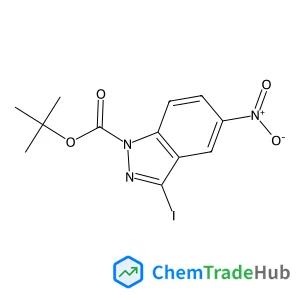
Tert-butyl 3-iodo-5-nitro-1H-indazole-1-carboxylate
CAS Number:
459133-69-8
Molecular Formula:
C12H12IN3O4
![Methyl 3-({2'-[(E)-(hydroxyhydrazono)methyl]-4-biphenylyl}methyl)-2-oxo-2,3-dihydro-1H-benzimidazole-4-carboxylate structure](https://static.chemtradehub.com/structs/149/1499167-72-4-034a.webp "Methyl 3-({2'-[(E)-(hydroxyhydrazono)methyl]-4-biphenylyl}methyl)-2-oxo-2,3-dihydro-1H-benzimidazole-4-carboxylate structure")
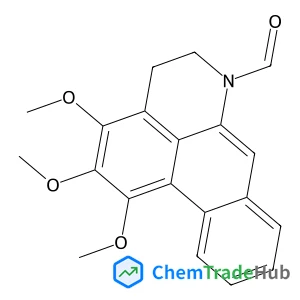
Methyl 3-({2'-[(E)-(hydroxyhydrazono)methyl]-4-biphenylyl}methyl)-2-oxo-2,3-dihydro-1H-benzimidazole-4-carboxylate
CAS Number:
1499167-72-4
Molecular Formula:
C23H20N4O4
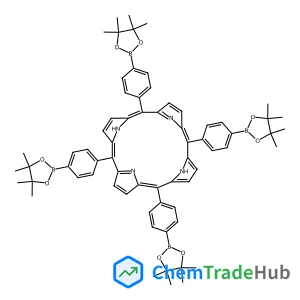
5,10,15,20-tetrakis(4-boronic acid pinacol ester phenyl) porphyrin
CAS Number:
1332748-00-1
Molecular Formula:
C68H74B4N4O8
Recommended Suppliers







Disclaimer
This page provides academic journal information for reference and research purposes only. We are not affiliated with any journal publishers and do not handle publication submissions. For publication-related inquiries, please contact the respective journal publishers directly.
If you notice any inaccuracies in the information displayed, please contact us at support@chemtradehub.com. We will promptly review and address your concerns.