












![(R)-N-[(S)-1-[2-(Diphenylphosphino)phenyl]ethyl]-2-methylpropane-2-sulfinamide structure](https://static.chemtradehub.com/structs/159/1595319-98-4-33e7.webp "(R)-N-[(S)-1-[2-(Diphenylphosphino)phenyl]ethyl]-2-methylpropane-2-sulfinamide structure")
(R)-N-[(S)-1-[2-(Diphenylphosphino)phenyl]ethyl]-2-methylpropane-2-sulfinamide
CAS Number:
1595319-98-4
Molecular Formula:
C24H28NOPS
Zuowei Chen, Liquan Wang, Jiaping Lin, Lei Du
Arylethynyl reactive groups have been widely used in high-temperature polymers, and therefore, understanding their curing mechanism is of great importance for academic research and engineering applications. However, no consensus has been achieved on the actual curing mechanism of arylethynyl-containing resins so far. Herein, we present a density functional theory study on the thermal curing mechanism of arylethynyl-containing resins using phenylacetylene and diphenylacetylene as model compounds. It was discovered that the rate-determining step is the dimerization of arylacetylenes into diradical intermediates. The possibilities of the Straus-type intermediates and concerted Diels–Alder cycloaddition between two arylacetylenes can be ruled out. Cyclobutadiene and cyclic allene are the critical intermediates generated by the intramolecular coupling of diradicals. The formation of polyene is preferred by monoradical initiation rather than diradical growth. The overall reaction pathways can well account for the formation of naphthalenic dimers, benzenic trimers, and polyenic chains. The computational results of reactivity for the dimerization of arylacetylenes were finally compared with the existing experimental findings, and an agreement is shown.
Samir Diab, Mateen Raiyat, Dimitrios I. Gerogiorgis
DOI: 10.1039/D1RE00184A
Vivek Kumar, Ravinder Kumar Wanchoo, Amrit Pal Toor
DOI: 10.1039/D1RE00149C
Milan Kundra, Yutong Zhu, Xuan Nguyen, Darren Fraser, Christian H. Hornung, John Tsanaktsidis
DOI: 10.1039/D1RE00456E
Abolfazl Heydari, Mahdieh Darroudi
DOI: 10.1039/D1RE00089F
Roel J. T. Kleijwegt, Vera C. Henricks, Wyatt Winkenwerder, Wim Baan, John van der Schaaf
DOI: 10.1039/D1RE00191D
Guowei Weng, Kun Ouyang, Xuanhe Lin, Jian Xue, Haihui Wang
DOI: 10.1039/D1RE00207D
Chaitra S. Shenoy, Tuhin S. Khan, Kirti Verma, Mesfin Tsige, M. Ali Haider, Shelaka Gupta
DOI: 10.1039/D1RE00252J
Nicole C. Neyt, Darren L. Riley
DOI: 10.1039/D1RE00004G
When handling lithium chloride hydrate (1:1:1) (CAS: 16712-20-2), it is importan...
4-(4H-1,2,4-Triazol-4-yl)piperidine is generally considered safe for use in phar...
Waste containing 1,3-Thiazole-2-carboxamide (CAS: 16733-85-0) should be collecte...
5-(Difluoromethyl)-2-fluorobenzonitrile (CAS: 934175-58-3) is subject to regulat...
Methyl 3-acetamido-2-thiophenecarboxylate can be synthesized by the reaction of ...
4-Isoquinolinecarbonitrile is a chemical compound with the CAS number 34846-65-6...
Store Methyl 1H-1,2,3-triazole-4-carboxylate (CAS: 877309-59-6) in a cool, dry p...
6-Bromo[1,3]thiazolo[5,4-b]pyridin-2-amine (CAS: 1160791-13-8) is subject to the...
(2S,3S)-2-Ammonio-3-(3,4-dihydroxyphenyl)-3-hydroxypropanoate (CAS: 23651-95-8) ...
7-Bromo-3-methyl-3,4-dihydroquinazolin-4-one is a solid with a crystalline form....

Physical Chemistry Chemical Physics (PCCP) is an international journal co-owned by 19 physical chemistry and physics societies from around the world. This journal publishes original, cutting-edge research in physical chemistry, chemical physics and biophysical chemistry. To be suitable for publication in PCCP, articles must include significant innovation and/or insight into physical chemistry; this is the most important criterion that reviewers and Editors will judge against when evaluating submissions. The journal has a broad scope and welcomes contributions spanning experiment, theory, computation and data science. Topical coverage includes spectroscopy, dynamics, kinetics, statistical mechanics, thermodynamics, electrochemistry, catalysis, surface science, quantum mechanics, quantum computing and machine learning. Interdisciplinary research areas such as polymers and soft matter, materials, nanoscience, energy, surfaces/interfaces, and biophysical chemistry are welcomed if they demonstrate significant innovation and/or insight into physical chemistry. Joined experimental/theoretical studies are particularly appreciated when complementary and based on up-to-date approaches.
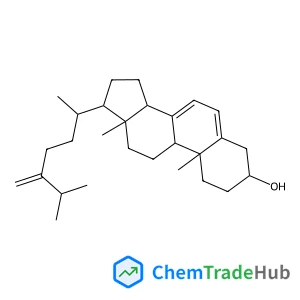
![N-[2-(2-Pyridinyl)ethyl]-1-propanamine structure](https://static.chemtradehub.com/structs/554/55496-57-6-22b4.webp "N-[2-(2-Pyridinyl)ethyl]-1-propanamine structure")
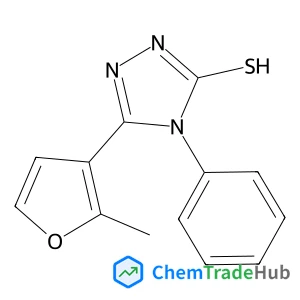
![5,10-Dihydroindeno[2,1-a]indene structure](https://static.chemtradehub.com/structs/654/6543-29-9-71ca.webp "5,10-Dihydroindeno[2,1-a]indene structure")



