












Vibronic structures and dynamics of the predissociating dimethyl sulfide and its isotopomers (CH3SCH3, CD3SCD3, CH3SCD3) at the conical intersection
Literature Information
Publication Date
2014-02-19
DOI
10.1039/C3CP55220A
Impact Factor
3.676
Authors
Jun-Ho Yoon, Kyung Chul Woo, Sang Kyu Kim
View Original
Abstract
Conical intersection seam comprised of crossing surfaces of two lowest excited states of dimethyl sulfide (DMS) has been directly accessed by the one-photon excitation from the ground equilibrium state. Since the S–C bond rupture takes place promptly, the molecular structure on the excited state effectively belongs to CS symmetry. Namely, excited states of 11B1 and 11A2 in C2V become 11A′′ and 21A′′ states in CS, respectively, and the optical transition from the ground equilibrium state to the dissociating molecule at the conical intersection seam is symmetry-allowed to facilitate the nonadiabatic transition on the 21A′′ state, leading eventually to the CH3S + CH3 products. The dynamic study of DMS, in this sense, gives the great opportunity to unravel the vibronic structure of the conical intersection seam by the conventional one-photon excitation method. In this work, utilizing the photofragment excitation (PHOFEX) spectroscopic method, the vibronic structures of DMS and its isotope analogs (CD3SCD3, CH3SCD3) at the conical intersection seam have been revealed, providing accurate lifetimes and detailed dynamics associated with individual vibronic transitions. The lifetime of the excited DMS is estimated to be ∼100 fs, indicating that the dissociation is complete within one single oscillation in the conical intersection region. It is also found that the symmetric CSC stretching mode is strongly coupled to the reaction coordinate, as manifested by our experimental finding that the fragmentation yield of the S–CD3 bond is enhanced compared to that of the S–CH3 bond in the CH3SCD3 dissociation reaction only when the CSC symmetric stretching vibrational mode is excited at the conical intersection region. This work demonstrates that the better understanding of the excited state could make the bond-selective chemistry into reality.
Related Literature
An oscillating C22− unit inside a copper rectangle
Hong-Zhe Sun, David Balcells, Feliu Maseras, Odile Eisenstein
2003-04-28
Communication
DOI: 10.1039/B301842C
Construction of functional porphyrin polystyrene nano-architectures by ATRP
Femke de Loos, Irene C. Reynhout, Jeroen J. L. M. Cornelissen, Alan E. Rowan, Roeland J. M. Nolte
2004-12-01
Communication
DOI: 10.1039/B412067A
A novel method for hydrogen production from liquid ethanol/water at room temperature
Yasushi Sekine, Kohei Urasaki, Shinjiro Asai, Masahiko Matsukata, Eiichi Kikuchi, Shigeru Kado
2004-11-19
Communication
DOI: 10.1039/B412552E
Solid state structures of pentacoordinated λ3-iodanes with a trigonal bipyramidal geometry: synthesis of diphenyl- and alkynyl(phenyl)-λ3-iodane complexes with 1,10-phenanthroline
Masahito Ochiai, Takashi Suefuji, Kazunori Miyamoto, Motoo Shiro
2003-05-16
Communication
DOI: 10.1039/B302579A
Phenolhydroxylation using Ti- and Sn-containing silicalites
Raweewan Klaewkla, Santi Kulprathipanja, Pramoch Rangsunvigit, Thirasak Rirksomboon, Laszlo Nemeth
2003-05-20
Communication
DOI: 10.1039/B303455K
A crystalline organic substrate absorbs methane under STP conditions
Jerry L. Atwood, Leonard J. Barbour, Praveen K. Thallapally, Trevor B. Wirsig
2004-11-30
Communication
DOI: 10.1039/B416752J
Extra amino group-containing gramicidin S analogs possessing outer membrane-permeabilizing activity
Masao Kawai, Ryoji Tanaka, Hatsuo Yamamura, Keiko Yasuda, Shizuto Narita, Hiroshi Umemoto, Setsuko Ando, Takashi Katsu
2003-04-29
Communication
DOI: 10.1039/B302351F
An optically-active subphthalocyanine dimer
Takamitsu Fukuda, Marilyn M. Olmstead, William S. Durfee, Nagao Kobayashi
2003-04-23
Communication
DOI: 10.1039/B301563G
Hydrotelluration of aminoalkynes
Gilson Zeni, Olga Soares do Rego Barros, Angélica Venturini Moro, Antonio Luiz Braga, Clovis Peppe
2003-04-28
Communication
DOI: 10.1039/B301857A
You might also like
Compound Q&A
What are the main uses of (3.beta.)-3-Hydroxy-N,N-dimethyl-chol-5-en-24-amide (CAS: 79066-03-8)?
(3.beta.)-3-Hydroxy-N,N-dimethyl-chol-5-en-24-amide (CAS: 79066-03-8) is primari...
79066-03-8(3.beta.)-3-Hydroxy-...
Compound Q&A
What regulatory guidelines apply to 5-(aminomethyl)-2-methoxyphenol (CAS: 89702-89-6)?
5-(Aminomethyl)-2-methoxyphenol (CAS: 89702-89-6) is classified under GHS as a s...
89702-89-65-(aminomethyl)-2-me...
Compound Q&A
What is Thieno[2,3-c]pyridin-7(6H)-one (CAS: 28981-13-7)?
Thieno[2,3-c]pyridin-7(6H)-one (CAS: 28981-13-7) is a heterocyclic organic compo...
28981-13-7Thieno[2,3-c]pyridin...
Compound Q&A
Is 1-[(6-Methoxy-3-pyridinyl)methyl]-4-piperidinamine dihydrochloride (CAS: 1185311-28-7) safe?
1-[(6-Methoxy-3-pyridinyl)methyl]-4-piperidinamine dihydrochloride is generally ...
1185311-28-71-[(6-Methoxy-3-pyri...
Compound Q&A
What regulatory guidelines apply to [(2E)-3-Phenyl-2-propen-1-yl]phosphonic acid (CAS: 146404-58-2)?
[(2E)-3-Phenyl-2-propen-1-yl]phosphonic acid (CAS: 146404-58-2) is regulated und...
146404-58-2[(2E)-3-Phenyl-2-pro...
Compound Q&A
What regulatory guidelines apply to 6-Bromo-7-methoxyquinoline (CAS: 1620515-86-7)?
6-Bromo-7-methoxyquinoline (CAS: 1620515-86-7) falls under the scope of the Glob...
1620515-86-76-Bromo-7-methoxyqui...
Compound Q&A
What industries use (2R)-1-(1-Benzofuran-2-yl)-N-propyl-2-pentanamine (CAS: 260550-89-8)?
This compound is primarily used in the pharmaceutical industry for the developme...
260550-89-8(2R)-1-(1-Benzofuran...
Compound Q&A
What are the main uses of 1-Ethyl-7-[2-methyl-6-(4H-1,2,4-triazol-3-yl)-3-pyridinyl]-3,5-dihydropyrazino[2,3-b]pyrazin-2(1H)-one (CAS: 1228013-15-7)?
1-Ethyl-7-[2-methyl-6-(4H-1,2,4-triazol-3-yl)-3-pyridinyl]-3,5-dihydropyrazino[2...
1228013-15-71-Ethyl-7-[2-methyl-...
Compound Q&A
Are there alternatives to {5-(Acryloylamino)-2-[(dimethylamino)methyl]phenyl}boronic acid (CAS: 1217500-78-1) in synthesis?
Alternative reagents such as 2-[(dimethylamino)methyl]phenylboronic acid or rela...
1217500-78-1{5-(Acryloylamino)-2...
Compound Q&A
What is 3-(Piperidin-4-yloxy)pyridine (CAS: 310881-48-2)?
3-(Piperidin-4-yloxy)pyridine (CAS: 310881-48-2) is an organic compound with the...
310881-48-23-(Piperidin-4-yloxy...
Source Journal
Physical Chemistry Chemical Physics

CiteScore:
5.5
Self-citation Rate:
10.3%
Articles per Year:
3036
Physical Chemistry Chemical Physics (PCCP) is an international journal co-owned by 19 physical chemistry and physics societies from around the world. This journal publishes original, cutting-edge research in physical chemistry, chemical physics and biophysical chemistry. To be suitable for publication in PCCP, articles must include significant innovation and/or insight into physical chemistry; this is the most important criterion that reviewers and Editors will judge against when evaluating submissions. The journal has a broad scope and welcomes contributions spanning experiment, theory, computation and data science. Topical coverage includes spectroscopy, dynamics, kinetics, statistical mechanics, thermodynamics, electrochemistry, catalysis, surface science, quantum mechanics, quantum computing and machine learning. Interdisciplinary research areas such as polymers and soft matter, materials, nanoscience, energy, surfaces/interfaces, and biophysical chemistry are welcomed if they demonstrate significant innovation and/or insight into physical chemistry. Joined experimental/theoretical studies are particularly appreciated when complementary and based on up-to-date approaches.
Recommended Compounds
![N-[(6-Bromo-3-pyridinyl)methyl]ethanamine structure](https://static.chemtradehub.com/structs/120/120740-05-8-ca55.webp "N-[(6-Bromo-3-pyridinyl)methyl]ethanamine structure")
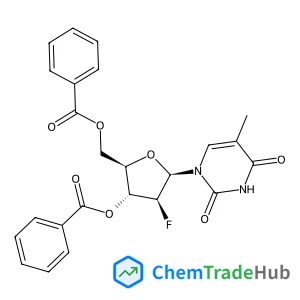
1-(3',5'-Di-O-benzoyl-2'-deoxy-2'-fluoro-b-D-arabinofuranosyl)thymine
CAS Number:
97614-47-6
Molecular Formula:
C24H21FN2O7
Recommended Suppliers




Disclaimer
This page provides academic journal information for reference and research purposes only. We are not affiliated with any journal publishers and do not handle publication submissions. For publication-related inquiries, please contact the respective journal publishers directly.
If you notice any inaccuracies in the information displayed, please contact us at support@chemtradehub.com. We will promptly review and address your concerns.