












Identification of an emitting molecular species by time-resolved fluorescence applied to the excited state dynamics of pigment yellow 101
Literature Information
Publication Date
2014-03-26
DOI
10.1039/C3CP54546F
Impact Factor
3.676
Authors
Seung Noh Lee, Jaeheung Park, Manho Lim, Taiha Joo
View Original
Abstract
Time-resolved fluorescence (TRF) with a resolution higher than the periods of vibrations may provide the vibrational spectrum of an emitting species by directly recording the vibrational wave packet motions in time. We applied high-resolution TRF to investigate the excited-state dynamics of pigment yellow 101 (P.Y.101). The TRF spectra of P.Y.101 in dichloromethane showed that upon photoexcitation of the enol isomer, dynamics occur in the S1 state to form a product in two time constants at 30 and 140 fs. TRF signals were modulated due to the vibrational wave packet motions in the excited states, which provided the vibrational spectra of the emitting species. Depending on the emission wavelength, two different vibrational spectra were evident. With the help of theoretical calculations, the two spectra were assigned to the enol and keto isomers of P.Y.101 in the S1 state, leading to the conclusion that P.Y.101 undergoes ultrafast excited-state intramolecular proton transfer (ESIPT) with a quantum yield close to 1. Visible-pump infrared-probe transient absorption spectra were recorded to corroborate this conclusion.
Recommended Journals
Related Literature
Construction of superhydrophobic surfaces by fibrous aggregation of perfluoroalkyl chain-containing organogelators
Motoshi Yamanaka, Kazuki Sada, Mikiji Miyata, Kenji Hanabusa, Kazunori Nakano
2006-04-24
Communication
DOI: 10.1039/B601485B
Facile and reproducible syntheses of bis(dialkylselenophosphenyl)-selenides and -diselenides: X-ray structures of (iPr2PSe)2Se, (iPr2PSe)2Se2 and (Ph2PSe)2Se
Chinh Q. Nguyen, Adekunle Adeogun, Mohammad Afzaal, Mohammad A. Malik, Paul O'Brien
2006-04-21
Communication
DOI: 10.1039/B603197H
An azido–metal–isonicotinate complex showing long-range ordered ferromagnetic interaction: synthesis, structure and magnetic properties
Yong-Fei Zeng, Fu-Chen Liu, Jiong-Peng Zhao, Shuang Cai, Xian-He Bu, Joan Ribas
2006-04-24
Communication
DOI: 10.1039/B601311B
Samarium diiodide-induced intramolecular pinacol coupling of dinitrones: synthesis of cyclic cis-vicinal diamines
Jean-Philippe Ebran, Rita G. Hazell, Troels Skrydstrup
2005-09-30
Communication
DOI: 10.1039/B511491H
Effect of tetrabutylphosphonium cation on the physico-chemical properties of amino-acid ionic liquids
Junko Kagimoto, Kenta Fukumoto, Hiroyuki Ohno
2006-04-25
Communication
DOI: 10.1039/B600771F
Simple transformation of crystalline chiral natural anions to liquid medium and their use to induce chirality
Luís C. Branco, Pedro M. P. Gois, Nuno M. T. Lourenço, Vanya B. Kurteva, Carlos A. M. Afonso
2006-05-10
Communication
DOI: 10.1039/B600816J
Supramolecular cruciforms
Warren W. Gerhardt, Anthony J. Zucchero, James N. Wilson, Clinton R. South, Uwe H. F. Bunz, Marcus Weck
2006-03-21
Communication
DOI: 10.1039/B602087A
Direction of unusual mixed-ligand metal–organic frameworks: a new type of 3-D polythreading involving 1-D and 2-D structural motifs and a 2-fold interpenetrating porous network
Miao Du, Xiu-Juan Jiang, Xiao-Jun Zhao
2005-10-07
Communication
DOI: 10.1039/B509875K
Three-dimensional motion and transformation of a photoelectrochemical actuator
Kazutake Takada, Taichi Miyazaki, Nobutaka Tanaka, Tetsu Tatsuma
2006-04-11
Communication
DOI: 10.1039/B600442C
You might also like
Compound Q&A
What are the main uses of 1H-Indazole-6-carbonitrile (CAS: 141290-59-7)?
1H-Indazole-6-carbonitrile finds applications in pharmaceuticals, where it serve...
141290-59-71H-Indazole-6-carbon...
Compound Q&A
How should waste containing Dioctyl (2E)-2-butenedioate (CAS: 2997-85-5) be handled?
Waste containing Dioctyl (2E)-2-butenedioate (CAS: 2997-85-5) should be collecte...
2997-85-5Dioctyl (2E)-2-buten...
Compound Q&A
What industries use Sodium [(1,2-benzoxazol-3-ylmethyl)sulfonyl]azanide (CAS: 68291-98-5)?
Sodium [(1,2-benzoxazol-3-ylmethyl)sulfonyl]azanide is primarily used in pharmac...
68291-98-5Sodium [(1,2-benzoxa...
Compound Q&A
Are there alternatives to Dimethyl 4-(4,4,5,5-tetramethyl-1,3,2-dioxaborolan-2-yl)-2,6-pyridinedicarboxylate (CAS: 741709-66-0) in synthesis?
Dimethyl 4-(4,4,5,5-tetramethyl-1,3,2-dioxaborolan-2-yl)-2,6-pyridinedicarboxyla...
741709-66-0Dimethyl 4-(4,4,5,5-...
Compound Q&A
How should waste containing 2-Fluoro-6-hydrazinopyridine (CAS: 80714-39-2) be handled?
Waste containing 2-Fluoro-6-hydrazinopyridine (CAS: 80714-39-2) should be manage...
80714-39-22-Fluoro-6-hydrazino...
Compound Q&A
What is 6-Formyl-2-pyridinecarboxylic acid (CAS: 499214-11-8)?
6-Formyl-2-pyridinecarboxylic acid is an organic compound with the molecular for...
499214-11-86-Formyl-2-pyridinec...
Compound Q&A
What is the market or research trend for 3-(3,4-dimethoxyphenyl)-2,5-dimethyl-N-(2-morpholin-4-ylethyl)pyrazolo[1,5-a]pyrimidin-7-amine (CAS: 900874-91-1)?
Research trends for this compound indicate a focus on its potential applications...
900874-91-13-(3,4-dimethoxyphen...
Compound Q&A
How is 9H-Tribenzo[b,d,f]azepine (CAS: 29875-73-8) typically synthesized?
9H-Tribenzo[b,d,f]azepine is typically synthesized via a multi-step process invo...
29875-73-89H-Tribenzo[b,d,f]az...
Compound Q&A
How is 1-Cyclopropyl-7-ethoxy-6-fluoro-8-methoxy-4-oxo-1,4-dihydro-3-quinolinecarboxylic acid (CAS: 1797982-51-4) typically synthesized?
1-Cyclopropyl-7-ethoxy-6-fluoro-8-methoxy-4-oxo-1,4-dihydro-3-quinolinecarboxyli...
1797982-51-41-Cyclopropyl-7-etho...
Compound Q&A
How should waste containing Methyl 3-oxo-1,2,3,4-tetrahydro-6-quinoxalinecarboxylate (CAS: 671820-52-3) be handled?
Waste containing Methyl 3-oxo-1,2,3,4-tetrahydro-6-quinoxalinecarboxylate (CAS: ...
671820-52-3Methyl 3-oxo-1,2,3,4...
Source Journal
Physical Chemistry Chemical Physics

CiteScore:
5.5
Self-citation Rate:
10.3%
Articles per Year:
3036
Physical Chemistry Chemical Physics (PCCP) is an international journal co-owned by 19 physical chemistry and physics societies from around the world. This journal publishes original, cutting-edge research in physical chemistry, chemical physics and biophysical chemistry. To be suitable for publication in PCCP, articles must include significant innovation and/or insight into physical chemistry; this is the most important criterion that reviewers and Editors will judge against when evaluating submissions. The journal has a broad scope and welcomes contributions spanning experiment, theory, computation and data science. Topical coverage includes spectroscopy, dynamics, kinetics, statistical mechanics, thermodynamics, electrochemistry, catalysis, surface science, quantum mechanics, quantum computing and machine learning. Interdisciplinary research areas such as polymers and soft matter, materials, nanoscience, energy, surfaces/interfaces, and biophysical chemistry are welcomed if they demonstrate significant innovation and/or insight into physical chemistry. Joined experimental/theoretical studies are particularly appreciated when complementary and based on up-to-date approaches.
Recommended Compounds
![N-[(9H-Fluoren-9-ylmethoxy)carbonyl]serine structure](https://static.chemtradehub.com/structs/737/73724-45-5-b0dc.webp "N-[(9H-Fluoren-9-ylmethoxy)carbonyl]serine structure")

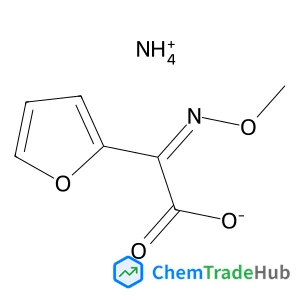
Ammonium (Z)-2-(furan-2-yl)-2-(methoxyimino)acetate
CAS Number:
97148-39-5
Molecular Formula:
C7H10N2O4
Recommended Suppliers







Disclaimer
This page provides academic journal information for reference and research purposes only. We are not affiliated with any journal publishers and do not handle publication submissions. For publication-related inquiries, please contact the respective journal publishers directly.
If you notice any inaccuracies in the information displayed, please contact us at support@chemtradehub.com. We will promptly review and address your concerns.