












Chemical vs. electrochemical extraction of lithium from the Li-excess Li1.10Mn1.90O4 spinel followed by NMR and DRX techniques
Literature Information
Publication Date
2014-01-13
DOI
10.1039/C3CP54386B
Impact Factor
3.676
Authors
S. Martinez, I. Sobrados, D. Tonti, J. M. Amarilla, J. Sanz
View Original
Abstract
Lithium extraction from the Li-excess Li1.10Mn1.90O4 spinel has been performed by chemical and electrochemical methods in aqueous and in organic media, respectively. De-lithiated samples have been investigated by XRD, SEM, TG, 7Li and 1H MAS-NMR techniques. The comparative study has allowed demonstrating that the intermediate de-intercalated samples prepared during the chemical extraction by acid titration are similar to those prepared by the electrochemical way in a non-aqueous electrolyte. LiMn2O4 based spinel with a tailored de-lithiation degree can be prepared as a single phase by controlling the pH used in chemical extraction. 7Li MAS-NMR spectroscopy has been used to follow the influence of the manganese oxidation state on tetra and octahedral Li-signals detected in Li-extracted samples. The oxidation of Mn(III) ions goes parallel to the partial dissolution of the spinel, following Hunter's mechanism. Based on this mechanism, a generalized chemical reaction has been proposed to explain the formation of intermediate Li+ de-intercalated samples during acid treatment in aqueous media. By the 1H MAS NMR study, no evidence of Li–H topotactic exchange in the bulk of the acid treated material was found.
Recommended Journals
Related Literature
Photo-responsive gel droplet as a nano- or pico-litre container comprising a supramolecular hydrogel
Shinji Matsumoto, Satoshi Yamaguchi, Atsuhiko Wada, Toshihiro Matsui, Masato Ikeda
2008-02-25
Communication
DOI: 10.1039/B719004B
Lewis acid-catalyzed hydrogenation: B(C6F5)3-mediated reduction of imines and nitriles with H2‡
Preston A. Chase, Titel Jurca, Douglas W. Stephan
2008-03-06
Communication
DOI: 10.1039/B718598G
Sulfate ion encapsulation in caged supramolecular structures assembled by second-sphere coordination
Jianjun Liang, Jin Yang, Chuandong Jia, Hongrui Zhang, Ning Tang, Christoph Janiak
2008-02-11
Communication
DOI: 10.1039/B719019K
A DNAzyme cascade for the amplified detection of Pb2+ ions or l-histidine
Johann Elbaz, Bella Shlyahovsky, Itamar Willner
2008-01-31
Communication
DOI: 10.1039/B716774A
Construction of aryl-substituted triquinanes through the interrupted Nazarov reaction
Curtis J. Rieder, Ryan J. Fradette, F. G. West
2008-02-25
Communication
DOI: 10.1039/B800800K
A highly efficient and selective turn-on fluorescent sensor for Cu2+ ion based on calix[4]arene bearing four iminoquinoline subunits on the upper rim
Chuan-Feng Chen, Zhi-Tang Huang
2008-02-14
Communication
DOI: 10.1039/B800258D
Inhibition and dispersion of proteobacterial biofilms
Justin J. Richards, Robert W. Huigens III, T. Eric Ballard, Anne Basso, John Cavanagh, Christian Melander
2008-02-08
Communication
DOI: 10.1039/B719802G
You might also like
Compound Q&A
What is the market or research trend for N-(4-Methoxybenzyl)-2-pyridinamine (CAS: 52818-63-0)?
N-(4-Methoxybenzyl)-2-pyridinamine (CAS: 52818-63-0) is increasingly being used ...
52818-63-0N-(4-Methoxybenzyl)-...
Compound Q&A
What precautions should be taken when handling Ethyl 4-(2-chlorophenyl)-1,3-thiazole-2-carboxylate (CAS: 1050507-06-6)?
When handling Ethyl 4-(2-chlorophenyl)-1,3-thiazole-2-carboxylate, appropriate p...
1050507-06-6Ethyl 4-(2-chlorophe...
Compound Q&A
What regulatory guidelines apply to diethyldiselane (CAS: 628-39-7)?
Diethyldiselane (CAS: 628-39-7) is classified under the Globally Harmonized Syst...
628-39-7Diethyldiselane
Compound Q&A
What is the market or research trend for oxocopper (CAS: 12053-18-8)?
The market for oxocopper (CAS: 12053-18-8) is primarily driven by its use in cat...
12053-18-8oxocopper; oxo-(oxoc...
Compound Q&A
What is the market or research trend for 5-{[(2-Methyl-2-propanyl)oxy]carbonyl}-5-azaspiro[2.4]heptane-7-carboxylic acid?
The market for 5-{[(2-Methyl-2-propanyl)oxy]carbonyl}-5-azaspiro[2.4]heptane-7-c...
1268519-54-55-{[(2-Methyl-2-prop...
Compound Q&A
What is 2-(1-Pyrrolidinyl)-4-pyridinamine (CAS: 35981-63-6)?
2-(1-Pyrrolidinyl)-4-pyridinamine is a chemical compound with the CAS number 359...
35981-63-62-(1-Pyrrolidinyl)-4...
Compound Q&A
What are the physical and chemical properties of 2-(3-Pyridinyl)-1-azabicyclo[2.2.2]octane (CAS: 91556-75-1)?
2-(3-Pyridinyl)-1-azabicyclo[2.2.2]octane (CAS: 91556-75-1) is a crystalline sol...
91556-75-12-(3-Pyridinyl)-1-az...
Compound Q&A
How is (S)-Alpha-allyl-proline hydrochloride (CAS: 129704-91-2) typically synthesized?
(S)-Alpha-allyl-proline hydrochloride is usually synthesized via a Wittig reacti...
129704-91-2(S)-Alpha-allyl-prol...
Compound Q&A
What is 3-Methyl-1,2-oxazole-5-carboxylic acid (CAS: 4857-42-5)?
3-Methyl-1,2-oxazole-5-carboxylic acid (CAS: 4857-42-5) is an organic compound w...
4857-42-53-Methyl-1,2-oxazole...
Compound Q&A
How is Lys-SMCC-DM1 (CAS: 1281816-04-3) typically synthesized?
Lys-SMCC-DM1 is synthesized via a multi-step process involving the coupling of S...
1281816-04-3Lys-SMCC-DM1
Source Journal
Physical Chemistry Chemical Physics

CiteScore:
5.5
Self-citation Rate:
10.3%
Articles per Year:
3036
Physical Chemistry Chemical Physics (PCCP) is an international journal co-owned by 19 physical chemistry and physics societies from around the world. This journal publishes original, cutting-edge research in physical chemistry, chemical physics and biophysical chemistry. To be suitable for publication in PCCP, articles must include significant innovation and/or insight into physical chemistry; this is the most important criterion that reviewers and Editors will judge against when evaluating submissions. The journal has a broad scope and welcomes contributions spanning experiment, theory, computation and data science. Topical coverage includes spectroscopy, dynamics, kinetics, statistical mechanics, thermodynamics, electrochemistry, catalysis, surface science, quantum mechanics, quantum computing and machine learning. Interdisciplinary research areas such as polymers and soft matter, materials, nanoscience, energy, surfaces/interfaces, and biophysical chemistry are welcomed if they demonstrate significant innovation and/or insight into physical chemistry. Joined experimental/theoretical studies are particularly appreciated when complementary and based on up-to-date approaches.
Recommended Compounds
![5'-Fluoro-[2,3'-biindolinylidene]-2',3-dione structure](https://static.chemtradehub.com/structs/251/251903-00-1-9cb1.webp "5'-Fluoro-[2,3'-biindolinylidene]-2',3-dione structure")
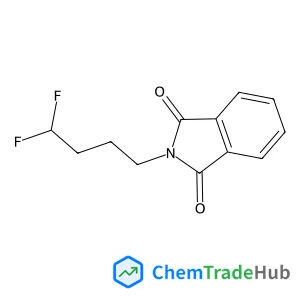
2-(4,4-Difluorobutyl)-1H-isoindole-1,3(2H)-dione
CAS Number:
1265341-14-7
Molecular Formula:
C12H11F2NO2
Recommended Suppliers




Disclaimer
This page provides academic journal information for reference and research purposes only. We are not affiliated with any journal publishers and do not handle publication submissions. For publication-related inquiries, please contact the respective journal publishers directly.
If you notice any inaccuracies in the information displayed, please contact us at support@chemtradehub.com. We will promptly review and address your concerns.