












Charge transport properties of spin crossover systems
Literature Information
Publication Date
2013-10-25
DOI
10.1039/C3CP54028F
Impact Factor
3.676
Authors
View Original
Abstract
The study of spin crossover compounds by means of theoretical or experimental approaches has provided interesting results in recent decades. The main feature of such compounds is the change in the spin state induced by many different external stimuli, i.e. temperature, light, pressure, solvent coordination and the electric field. Spin crossover systems are potentially more useful than other magnetic molecules because their switching behaviour can occur closer to room temperature, and they are thus candidates for use in spintronic devices. Here, I review the state of the art in quantum chemical approaches to the study of such systems and discuss experiments that have focused on transport properties in single-molecule, nano-objects or thin-film spin crossover systems.
Related Literature
Edge reconstruction in armchair phosphorene nanoribbons revealed by discontinuous Galerkin density functional theory
Wei Hu, Chao Yang
2015-02-11
Paper
DOI: 10.1039/C5CP00333D
Ultrafast charge carrier relaxation and charge transfer processes in CdS/CdTe thin films
Ruvini Dharmadasa, I. M. Dharmadasa, Thad Druffel
2015-05-27
Paper
DOI: 10.1039/C5CP01652E
Graphane versus graphene: a computational investigation of the interaction of nucleobases, aminoacids, heterocycles, small molecules (CO2, H2O, NH3, CH4, H2), metal ions and onium ions
Deivasigamani Umadevi, G. Narahari Sastry
2015-09-22
Paper
DOI: 10.1039/C5CP05094D
Resistive switching memory devices based on electrical conductance tuning in poly(4-vinyl phenol)–oxadiazole composites
Yanmei Sun, Fengjuan Miao, Rui Li, Dianzhong Wen
2015-10-08
Paper
DOI: 10.1039/C5CP05481H
Can HNNH, FNNH, or HNCHOH bridge the σ-hole and the lone pair at P in binary complexes with H2XP, for X = F, Cl, NC, OH, CN, CCH, CH3, and H?
Janet E. Del Bene, Ibon Alkorta, José Elguero
2015-10-21
Paper
DOI: 10.1039/C5CP05832E
Enhancement of spin polarization induced by Coulomb on-site repulsion between localized pz electrons in graphene embedded with line defects
Zhigang Wang, Rui-Qin Zhang, Zejun Ding, Michel A. Van Hove
2015-10-28
Paper
DOI: 10.1039/C5CP03764F
Multi-center covalency: revisiting the nature of anion–π interactions
Cina Foroutan-Nejad, Zahra Badri
2015-10-26
Paper
DOI: 10.1039/C5CP05777A
Fe3O4 and Au nanoparticles dispersed on the graphene support as a highly active catalyst toward the reduction of 4-nitrophenol
Yan Wang, Hai Li, Jijun Zhang, Xinyu Yan, Zexiang Chen
2015-11-16
Paper
DOI: 10.1039/C5CP05336F
Radiation-induced transformations of matrix-isolated formic acid: evidence for the HCOOH → HOCO + H channel
Sergey V. Ryazantsev, Vladimir I. Feldman
2015-10-23
Paper
DOI: 10.1039/C5CP05446J
You might also like
Compound Q&A
How should waste containing 6-Chloro-5-(2'-hydroxy-3'-methoxy-4-biphenylyl)-3-(3-methoxyphenyl)-1H-pyrrolo[3,2-d]pyrimidine-2,4(3H,5H)-dione (CAS: 1346607-05-3) be handled?
Waste containing 6-Chloro-5-(2'-hydroxy-3'-methoxy-4-biphenylyl)-3-(3-methoxyphe...
1346607-05-36-Chloro-5-(2'-hydro...
Compound Q&A
What are the main uses of (3alpha,5alpha)-3-Hydroxypregnane-11,20-dione (CAS: 23930-19-0)?
(3alpha,5alpha)-3-Hydroxypregnane-11,20-dione is primarily used in the pharmaceu...
23930-19-0(3alpha,5alpha)-3-Hy...
Compound Q&A
What is the market or research trend for 4-Amino-6-chloro-2-pyridinecarboxylic acid (CAS: 546141-56-4)?
The market for 4-Amino-6-chloro-2-pyridinecarboxylic acid (CAS: 546141-56-4) is ...
546141-56-44-Amino-6-chloro-2-p...
Compound Q&A
Are there alternatives to (2-Benzoylethyl)trimethylammonium chloride (CAS: 24472-88-6) in synthesis?
Alternatives to (2-Benzoylethyl)trimethylammonium chloride (CAS: 24472-88-6) in ...
24472-88-6(2-Benzoylethyl)trim...
Compound Q&A
Is N-[4-Nitro-3-(trifluoromethyl)phenyl]acetamide (CAS: 393-12-4) safe?
N-[4-Nitro-3-(trifluoromethyl)phenyl]acetamide (CAS: 393-12-4) is generally safe...
393-12-4N-[4-Nitro-3-(triflu...
Compound Q&A
Are there alternatives to [(4R,5R,6S)-5-hydroxy-10-imino-3,7-dioxa-1,9-diazatricyclo[6.4.0.02,6]dodeca-8,11-dien-4-yl]methyl dihydrogen phosphate (CAS: 39679-56-6) in synthesis?
Alternative reagents such as other phosphates or similar functional groups can b...
39679-56-6[(4R,5R,6S)-5-hydrox...
Compound Q&A
Are there alternatives to N,N'-Bis(3-aminopropyl)-1,3-propanediamine (CAS: 4605-14-5) in synthesis?
There are alternatives to N,N'-Bis(3-aminopropyl)-1,3-propanediamine (CAS: 4605-...
4605-14-5N,N'-Bis(3-aminoprop...
Compound Q&A
What precautions should be taken when handling Aluminium trihexadecanoate (CAS: 555-35-1)?
When handling Aluminium trihexadecanoate, it is important to use appropriate per...
555-35-1Aluminium trihexadec...
Compound Q&A
What is (1,1-Dioxido-3-oxo-1,2-benzothiazol-2(3H)-yl)acetic acid (CAS: 52188-11-1)?
(1,1-Dioxido-3-oxo-1,2-benzothiazol-2(3H)-yl)acetic acid is a chemical compound ...
52188-11-1(1,1-Dioxido-3-oxo-1...
Compound Q&A
Are there alternatives to 5,5-dimethyloxolan-2-one (CAS: 3123-97-5) in synthesis?
Several alternatives to 5,5-dimethyloxolan-2-one (CAS: 3123-97-5) can be used in...
3123-97-55,5-dimethyloxolan-2...
Source Journal
Physical Chemistry Chemical Physics

CiteScore:
5.5
Self-citation Rate:
10.3%
Articles per Year:
3036
Physical Chemistry Chemical Physics (PCCP) is an international journal co-owned by 19 physical chemistry and physics societies from around the world. This journal publishes original, cutting-edge research in physical chemistry, chemical physics and biophysical chemistry. To be suitable for publication in PCCP, articles must include significant innovation and/or insight into physical chemistry; this is the most important criterion that reviewers and Editors will judge against when evaluating submissions. The journal has a broad scope and welcomes contributions spanning experiment, theory, computation and data science. Topical coverage includes spectroscopy, dynamics, kinetics, statistical mechanics, thermodynamics, electrochemistry, catalysis, surface science, quantum mechanics, quantum computing and machine learning. Interdisciplinary research areas such as polymers and soft matter, materials, nanoscience, energy, surfaces/interfaces, and biophysical chemistry are welcomed if they demonstrate significant innovation and/or insight into physical chemistry. Joined experimental/theoretical studies are particularly appreciated when complementary and based on up-to-date approaches.
Recommended Compounds
-1,2-cyclohexanediamine structure](https://static.chemtradehub.com/structs/928/928769-12-4-a4f0.webp "N,N'-Bis[3-(2-methoxyphenyl)-2-hydroxybenzyl](1R,2R)-1,2-cyclohexanediamine structure")
N,N'-Bis[3-(2-methoxyphenyl)-2-hydroxybenzyl](1R,2R)-1,2-cyclohexanediamine
CAS Number:
928769-12-4
Molecular Formula:
C34H38N2O4


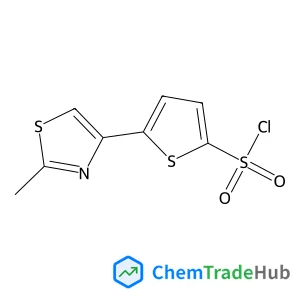
5-(2-Methyl-1,3-thiazol-4-yl)-2-thiophenesulfonyl chloride
CAS Number:
215434-25-6
Molecular Formula:
C8H6ClNO2S3
Recommended Suppliers






Disclaimer
This page provides academic journal information for reference and research purposes only. We are not affiliated with any journal publishers and do not handle publication submissions. For publication-related inquiries, please contact the respective journal publishers directly.
If you notice any inaccuracies in the information displayed, please contact us at support@chemtradehub.com. We will promptly review and address your concerns.