












Edge reconstruction in armchair phosphorene nanoribbons revealed by discontinuous Galerkin density functional theory
Literature Information
Publication Date
2015-02-11
DOI
10.1039/C5CP00333D
Impact Factor
3.676
Authors
Wei Hu, Chao Yang
View Original
Abstract
With the help of our recently developed massively parallel DGDFT (Discontinuous Galerkin Density Functional Theory) methodology, we perform large-scale Kohn–Sham density functional theory calculations on phosphorene nanoribbons with armchair edges (ACPNRs) containing a few thousands to ten thousand atoms. The use of DGDFT allows us to systematically achieve a conventional plane wave basis set type of accuracy, but with a much smaller number (about 15) of adaptive local basis (ALB) functions per atom for this system. The relatively small number of degrees of freedom required to represent the Kohn–Sham Hamiltonian, together with the use of the pole expansion the selected inversion (PEXSI) technique that circumvents the need to diagonalize the Hamiltonian, results in a highly efficient and scalable computational scheme for analyzing the electronic structures of ACPNRs as well as their dynamics. The total wall clock time for calculating the electronic structures of large-scale ACPNRs containing 1080–10 800 atoms is only 10–25 s per self-consistent field (SCF) iteration, with accuracy fully comparable to that obtained from conventional planewave DFT calculations. For the ACPNR system, we observe that the DGDFT methodology can scale to 5000–50 000 processors. We use DGDFT based ab initio molecular dynamics (AIMD) calculations to study the thermodynamic stability of ACPNRs. Our calculations reveal that a 2 × 1 edge reconstruction appears in ACPNRs at room temperature.
Related Literature
Integration of plasma and electrocatalysis to synthesize cyclohexanone oxime under ambient conditions using air as a nitrogen source
Xingxing Tan, Xiaodong Ma, Jiaqi Feng
2023-10-30
Edge Article
DOI: 10.1039/D3SC02871B
Suppressing catalyst poisoning in the carbodiimide-fueled reaction cycle
Xiaoyao Chen, Héctor Soria-Carrera, Oleksii Zozulia, Job Boekhoven
2023-10-17
Edge Article
DOI: 10.1039/D3SC04281B
Rare earth oxide based electrocatalysts: synthesis, properties and applications
Yong Jiang, Zhong Liang, Qian Zhang, Yaping Du
2023-12-18
Review Article
DOI: 10.1039/D3CS00708A
Correction: Virus-mimicking nanosystems: from design to biomedical applications
Hao-Yang Liu, Xiao Li, Zhi-Gang Wang
2023-12-20
Correction
DOI: 10.1039/D3CS90101G
Bidirectional manipulation of iodine redox kinetics in aqueous Fe–I2 electrochemistry
Hong Zhang, Lin Fu, Wenli Zhang, Yupeng Yuan
2023-10-20
Edge Article
DOI: 10.1039/D3SC04853E
Nuclear localization signal-tagged systems: relevant nuclear import principles in the context of current therapeutic design
Ritabrita Goswami, Aarohi Gupta, Olga Bednova, Gaël Coulombe, Dipika Patel, Vincent M. Rotello
2023-11-30
Review Article
DOI: 10.1039/D1CS00269D
Nucleic acid degradation as barrier to gene delivery: a guide to understand and overcome nuclease activity
2023-12-11
Review Article
DOI: 10.1039/D3CS00194F
You might also like
Compound Q&A
How should waste containing 6-Chloro-5-(2'-hydroxy-3'-methoxy-4-biphenylyl)-3-(3-methoxyphenyl)-1H-pyrrolo[3,2-d]pyrimidine-2,4(3H,5H)-dione (CAS: 1346607-05-3) be handled?
Waste containing 6-Chloro-5-(2'-hydroxy-3'-methoxy-4-biphenylyl)-3-(3-methoxyphe...
1346607-05-36-Chloro-5-(2'-hydro...
Compound Q&A
What are the main uses of (3alpha,5alpha)-3-Hydroxypregnane-11,20-dione (CAS: 23930-19-0)?
(3alpha,5alpha)-3-Hydroxypregnane-11,20-dione is primarily used in the pharmaceu...
23930-19-0(3alpha,5alpha)-3-Hy...
Compound Q&A
What is the market or research trend for 4-Amino-6-chloro-2-pyridinecarboxylic acid (CAS: 546141-56-4)?
The market for 4-Amino-6-chloro-2-pyridinecarboxylic acid (CAS: 546141-56-4) is ...
546141-56-44-Amino-6-chloro-2-p...
Compound Q&A
Are there alternatives to (2-Benzoylethyl)trimethylammonium chloride (CAS: 24472-88-6) in synthesis?
Alternatives to (2-Benzoylethyl)trimethylammonium chloride (CAS: 24472-88-6) in ...
24472-88-6(2-Benzoylethyl)trim...
Compound Q&A
Is N-[4-Nitro-3-(trifluoromethyl)phenyl]acetamide (CAS: 393-12-4) safe?
N-[4-Nitro-3-(trifluoromethyl)phenyl]acetamide (CAS: 393-12-4) is generally safe...
393-12-4N-[4-Nitro-3-(triflu...
Compound Q&A
Are there alternatives to [(4R,5R,6S)-5-hydroxy-10-imino-3,7-dioxa-1,9-diazatricyclo[6.4.0.02,6]dodeca-8,11-dien-4-yl]methyl dihydrogen phosphate (CAS: 39679-56-6) in synthesis?
Alternative reagents such as other phosphates or similar functional groups can b...
39679-56-6[(4R,5R,6S)-5-hydrox...
Compound Q&A
Are there alternatives to N,N'-Bis(3-aminopropyl)-1,3-propanediamine (CAS: 4605-14-5) in synthesis?
There are alternatives to N,N'-Bis(3-aminopropyl)-1,3-propanediamine (CAS: 4605-...
4605-14-5N,N'-Bis(3-aminoprop...
Compound Q&A
What precautions should be taken when handling Aluminium trihexadecanoate (CAS: 555-35-1)?
When handling Aluminium trihexadecanoate, it is important to use appropriate per...
555-35-1Aluminium trihexadec...
Compound Q&A
What is (1,1-Dioxido-3-oxo-1,2-benzothiazol-2(3H)-yl)acetic acid (CAS: 52188-11-1)?
(1,1-Dioxido-3-oxo-1,2-benzothiazol-2(3H)-yl)acetic acid is a chemical compound ...
52188-11-1(1,1-Dioxido-3-oxo-1...
Compound Q&A
Are there alternatives to 5,5-dimethyloxolan-2-one (CAS: 3123-97-5) in synthesis?
Several alternatives to 5,5-dimethyloxolan-2-one (CAS: 3123-97-5) can be used in...
3123-97-55,5-dimethyloxolan-2...
Source Journal
Physical Chemistry Chemical Physics

CiteScore:
5.5
Self-citation Rate:
10.3%
Articles per Year:
3036
Physical Chemistry Chemical Physics (PCCP) is an international journal co-owned by 19 physical chemistry and physics societies from around the world. This journal publishes original, cutting-edge research in physical chemistry, chemical physics and biophysical chemistry. To be suitable for publication in PCCP, articles must include significant innovation and/or insight into physical chemistry; this is the most important criterion that reviewers and Editors will judge against when evaluating submissions. The journal has a broad scope and welcomes contributions spanning experiment, theory, computation and data science. Topical coverage includes spectroscopy, dynamics, kinetics, statistical mechanics, thermodynamics, electrochemistry, catalysis, surface science, quantum mechanics, quantum computing and machine learning. Interdisciplinary research areas such as polymers and soft matter, materials, nanoscience, energy, surfaces/interfaces, and biophysical chemistry are welcomed if they demonstrate significant innovation and/or insight into physical chemistry. Joined experimental/theoretical studies are particularly appreciated when complementary and based on up-to-date approaches.
Recommended Compounds
![(3-{[4-(Aminomethyl)-6-(trifluoromethyl)-2-pyridinyl]oxy}phenyl)[(3R,4R)-3-fluoro-4-hydroxy-1-pyrrolidinyl]methanone structure](https://static.chemtradehub.com/structs/200/2007885-39-2-affc.webp "(3-{[4-(Aminomethyl)-6-(trifluoromethyl)-2-pyridinyl]oxy}phenyl)[(3R,4R)-3-fluoro-4-hydroxy-1-pyrrolidinyl]methanone structure")
(3-{[4-(Aminomethyl)-6-(trifluoromethyl)-2-pyridinyl]oxy}phenyl)[(3R,4R)-3-fluoro-4-hydroxy-1-pyrrolidinyl]methanone
CAS Number:
2007885-39-2
Molecular Formula:
C18H17F4N3O3
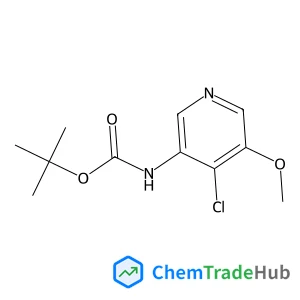
tert-Butyl 4-chloro-5-methoxypyridin-3-ylcarbamate
CAS Number:
1045858-17-0
Molecular Formula:
C11H15ClN2O3

Recommended Suppliers





Disclaimer
This page provides academic journal information for reference and research purposes only. We are not affiliated with any journal publishers and do not handle publication submissions. For publication-related inquiries, please contact the respective journal publishers directly.
If you notice any inaccuracies in the information displayed, please contact us at support@chemtradehub.com. We will promptly review and address your concerns.