












Eutectic melting in metal borohydrides
Literature Information
Publication Date
2013-10-14
DOI
10.1039/C3CP53920B
Impact Factor
3.676
Authors
Mark Paskevicius, Drew A. Sheppard, Torben R. Jensen, Craig E. Buckley
View Original
Abstract
A series of monometallic borohydrides and borohydride eutectic mixtures have been investigated during thermal ramping by mass spectroscopy, differential scanning calorimetry, and photography. Mixtures of LiBH4–NaBH4, LiBH4–KBH4, LiBH4–Mg(BH4)2, LiBH4–Ca(BH4)2, LiBH4–Mn(BH4)2, NaBH4–KBH4, and LiBH4–NaBH4–KBH4 all displayed melting behaviour below that of the monometallic phases (up to 167 °C lower). Generally, each system behaves differently with respect to their physical behaviour upon melting. The molten phases can exhibit colour changes, bubbling and in some cases frothing, or even liquid–solid phase transitions during hydrogen release. Remarkably, the eutectic melt can also allow for hydrogen release at temperatures lower than that of the individual components. Some systems display decomposition of the borohydride in the solid-state before melting and certain hydrogen release events have also been linked to the adverse reaction of samples with impurities, usually within the starting reagents, and these may also be coupled with bubbling or frothing of the ionic melt.
Related Literature
Semi-conjugated acceptor-based polyimides as electrets for nonvolatile transistor memory devices
Lei Dong, Yu-Cheng Chiu, Chu-Chen Chueh, An-Dih Yu, Wen-Chang Chen
2014-08-12
Paper
DOI: 10.1039/C4PY00988F
A fluorescent supramolecular polymer with aggregation induced emission (AIE) properties formed by crown ether-based host–guest interactions
Dong Chen, Jiayi Zhan, Mingming Zhang, Jing Zhang, Jiaju Tao, Danting Tang, Ailin Shen, Huayu Qiu, Shouchun Yin
2014-09-25
Communication
DOI: 10.1039/C4PY01206B
Post-polymerisation modification of bio-derived unsaturated polyester resins via Michael additions of 1,3-dicarbonyls
T. J. Farmer, J. H. Clark, D. J. Macquarrie, J. K. Ogunjobi, R. L. Castle
2016-01-22
Paper
DOI: 10.1039/C5PY01729G
Synthesis and properties of CO2-switchable Dex-g-PAHMA copolymers
Hongliang Kang, Ruigang Liu, Zhuang Li, Xiaozhong Qu
2014-09-02
Paper
DOI: 10.1039/C4PY00987H
Dynamic uptake and release from poly(methacryloyl hydrazide) microgel particles through reversible hydrazide-aldehyde chemistry
Nicholas Ballard, Stefan A. F. Bon
2014-08-28
Paper
DOI: 10.1039/C4PY00726C
A fluorescent hyperbranched supramolecular polymer based on triple hydrogen bonding interactions
Xin Fu, Qiwei Zhang, Gang Wu, Wei Zhou, Qiao-Chun Wang, Da-Hui Qu
2014-08-14
Communication
DOI: 10.1039/C4PY00894D
Synthesis and migration insertion polymerization (MIP) of CpFe(CO)2(CH2)6PPh2 (FpC6P) for PFpC6P: macromolecule stability, degradability and redox activity
Kai Cao, Brahamjot Nayyar, Xiaohui Tian, Xiaosong Wang
2014-08-07
Paper
DOI: 10.1039/C4PY00862F
Exploiting nucleobase-containing materials – from monomers to complex morphologies using RAFT dispersion polymerization
Yan Kang, Anaïs Pitto-Barry, Helen Willcock, Wen-Dong Quan, Nigel Kirby, Ana M. Sanchez, Rachel K. O'Reilly
2014-09-11
Paper
DOI: 10.1039/C4PY01074D
Dendrimer-like conjugated microporous polymers
Ting Wang, Wei Huang, Jia-Xing Jiang, Zhengkun Du, Fa-Kuen Shieh, Renqiang Yang
2016-01-04
Paper
DOI: 10.1039/C5PY01767J
In situ and readily prepared metal catalysts and initiators for living cationic polymerization of isobutyl vinyl ether: dual-purpose salphen as a ligand framework for ZrCl4 and an initiating proton source
Sensho Kigoshi, Arihiro Kanazawa, Shokyoku Kanaoka, Sadahito Aoshima
2014-09-02
Communication
DOI: 10.1039/C4PY01012D
You might also like
Compound Q&A
How should waste containing (6-Bromo-2-naphthyl)oxy](dimethyl)(2-methyl-2-propanyl)silane be handled?
Waste containing (6-Bromo-2-naphthyl)oxy](dimethyl)(2-methyl-2-propanyl)silane (...
100751-65-3[(6-Bromo-2-naphthyl...
Compound Q&A
How is 7-Fluoro-4-isoquinolinecarboxylic acid (CAS: 1841081-40-0) typically synthesized?
7-Fluoro-4-isoquinolinecarboxylic acid can be synthesized via a multi-step proce...
1841081-40-07-Fluoro-4-isoquinol...
Compound Q&A
What are the physical and chemical properties of 2,3,5,6-Tetrabromothieno[3,2-b]thiophene (CAS: 124638-53-5)?
2,3,5,6-Tetrabromothieno[3,2-b]thiophene is a crystalline compound with a high m...
124638-53-52,3,5,6-Tetrabromoth...
Compound Q&A
Is 1-[4-(Benzylamino)-7,8-dihydro-5H-pyrano[4,3-d]pyrimidin-2-yl]-2-methyl-1H-indole-4-carboxamide (CAS: 1542705-92-9) safe?
1-[4-(Benzylamino)-7,8-dihydro-5H-pyrano[4,3-d]pyrimidin-2-yl]-2-methyl-1H-indol...
1542705-92-91-[4-(Benzylamino)-7...
Compound Q&A
What is the market or research trend for imidazo[5,1-d]-1,2,3,5-tetrazine-8-carboxylic acid, 3,4-dihydro-3-methyl-4-oxo- (CAS: 113942-30-6)?
The market for imidazo[5,1-d]-1,2,3,5-tetrazine-8-carboxylic acid, 3,4-dihydro-3...
113942-30-6Imidazo[5,1-d]-1,2,3...
Compound Q&A
What is 3-(Triisopropylsilyl)propiolaldehyde (CAS: 163271-80-5)?
3-(Triisopropylsilyl)propiolaldehyde is a synthetic organic compound with the CA...
163271-80-53-(Triisopropylsilyl...
Compound Q&A
What regulatory guidelines apply to 6-Nitro-2H-1,4-benzoxazin-3(4H)-one (CAS: 81721-87-1)?
6-Nitro-2H-1,4-benzoxazin-3(4H)-one (CAS: 81721-87-1) is subject to various regu...
81721-87-16-Nitro-2H-1,4-benzo...
Compound Q&A
How should waste containing (3-Fluorophenyl)(4-{[(2-methyl-2-propanyl)oxy]carbonyl}-1-piperazinyl)acetic acid (CAS: 885272-91-3) be handled?
Waste containing (3-Fluorophenyl)(4-{[(2-methyl-2-propanyl)oxy]carbonyl}-1-piper...
885272-91-3(3-Fluorophenyl)(4-{...
Compound Q&A
What are the physical and chemical properties of N,N'-4,4'-Biphenyldiyldiisonicotinamide (CAS: 55119-40-9)?
N,N'-4,4'-Biphenyldiyldiisonicotinamide is a white crystalline solid with a mole...
55119-40-9N,N'-4,4'-Biphenyldi...
Compound Q&A
What industries use 6-Bromo-8-fluoro-2-quinazolinol (CAS: 1036756-15-6)?
6-Bromo-8-fluoro-2-quinazolinol is primarily used in the pharmaceutical industry...
1036756-15-66-Bromo-8-fluoro-2-q...
Source Journal
Physical Chemistry Chemical Physics

CiteScore:
5.5
Self-citation Rate:
10.3%
Articles per Year:
3036
Physical Chemistry Chemical Physics (PCCP) is an international journal co-owned by 19 physical chemistry and physics societies from around the world. This journal publishes original, cutting-edge research in physical chemistry, chemical physics and biophysical chemistry. To be suitable for publication in PCCP, articles must include significant innovation and/or insight into physical chemistry; this is the most important criterion that reviewers and Editors will judge against when evaluating submissions. The journal has a broad scope and welcomes contributions spanning experiment, theory, computation and data science. Topical coverage includes spectroscopy, dynamics, kinetics, statistical mechanics, thermodynamics, electrochemistry, catalysis, surface science, quantum mechanics, quantum computing and machine learning. Interdisciplinary research areas such as polymers and soft matter, materials, nanoscience, energy, surfaces/interfaces, and biophysical chemistry are welcomed if they demonstrate significant innovation and/or insight into physical chemistry. Joined experimental/theoretical studies are particularly appreciated when complementary and based on up-to-date approaches.
Recommended Compounds


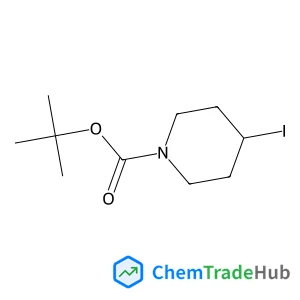
2-Methyl-2-propanyl 4-iodo-1-piperidinecarboxylate
CAS Number:
301673-14-3
Molecular Formula:
C10H18INO2
Recommended Suppliers







Disclaimer
This page provides academic journal information for reference and research purposes only. We are not affiliated with any journal publishers and do not handle publication submissions. For publication-related inquiries, please contact the respective journal publishers directly.
If you notice any inaccuracies in the information displayed, please contact us at support@chemtradehub.com. We will promptly review and address your concerns.