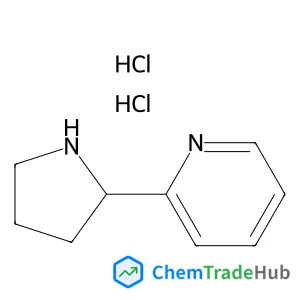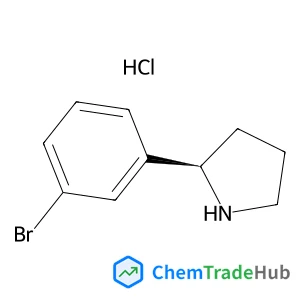
(2R)-2-(3-Bromophenyl)pyrrolidine hydrochloride (1:1)
CAS Number:
1391550-13-2
Molecular Formula:
C10H13BrClN
Marco Micciarelli, Carlo Altucci, Bartolomeo Della Ventura, Raffaele Velotta, Valer Toşa, Adán B. Gónzalez Pérez, Martin Pérez Rodríguez, Ángel R. de Lera, Attila Bende
A numerical study is reported concerning the first and second singlet excited-states of 5-benzyluracil using the multireference self-consistent field (state-averaged CASSCF) method. The vertical excitation energies of low-lying excited-states were characterized using the SA-CASSCF method, as well as using higher-level methods, such as CASPT2, MRCI and EOM-CCSD. The local minima and conical intersections found on the potential energy surfaces (PESs) were characterized in terms of molecular geometry and natural population analysis. Different relaxation pathways on the PESs are identified and discussed by comparing with the similar pathways found for the individual monomers of uracil and benzene. The molecule can be thought of as a model system for the study of crosslink reaction between DNA and proteins induced by UV light.
Mauro Coduri, Michela Brunelli, Paolo Masala
DOI: 10.1039/C3CP44300K
Uttam Anand, Saptarshi Mukherjee
DOI: 10.1039/C3CP50207D
Rajamani Krishna, Jasper M. van Baten
DOI: 10.1039/C3CP50449B
Oliver L. G. Alderman, Dinu Iuga, Andrew P. Howes, Diane Holland, Ray Dupree
DOI: 10.1039/C3CP50772F
John L. Provis, Breaunnah Bloomer, Neil J. Henson, Katharine Page
DOI: 10.1039/C3CP44342F
Andrzej Lewandowski, Pawel Jakobczyk, Maciej Galinski, Marcin Biegun
DOI: 10.1039/C3CP44612C
Joseph Mason, Christopher Batchelor-McAuley, Richard G. Compton
DOI: 10.1039/C3CP50607J
Javier Catalán
DOI: 10.1039/C3CP44627A
Jing-Hua Guo, Yoshiyuki Miyamoto
DOI: 10.1039/C3CP50492A
N-(4-Methoxybenzyl)-2-pyridinamine (CAS: 52818-63-0) is increasingly being used ...
When handling Ethyl 4-(2-chlorophenyl)-1,3-thiazole-2-carboxylate, appropriate p...
Diethyldiselane (CAS: 628-39-7) is classified under the Globally Harmonized Syst...
The market for oxocopper (CAS: 12053-18-8) is primarily driven by its use in cat...
The market for 5-{[(2-Methyl-2-propanyl)oxy]carbonyl}-5-azaspiro[2.4]heptane-7-c...
2-(1-Pyrrolidinyl)-4-pyridinamine is a chemical compound with the CAS number 359...
2-(3-Pyridinyl)-1-azabicyclo[2.2.2]octane (CAS: 91556-75-1) is a crystalline sol...
(S)-Alpha-allyl-proline hydrochloride is usually synthesized via a Wittig reacti...
3-Methyl-1,2-oxazole-5-carboxylic acid (CAS: 4857-42-5) is an organic compound w...
Lys-SMCC-DM1 is synthesized via a multi-step process involving the coupling of S...

Physical Chemistry Chemical Physics (PCCP) is an international journal co-owned by 19 physical chemistry and physics societies from around the world. This journal publishes original, cutting-edge research in physical chemistry, chemical physics and biophysical chemistry. To be suitable for publication in PCCP, articles must include significant innovation and/or insight into physical chemistry; this is the most important criterion that reviewers and Editors will judge against when evaluating submissions. The journal has a broad scope and welcomes contributions spanning experiment, theory, computation and data science. Topical coverage includes spectroscopy, dynamics, kinetics, statistical mechanics, thermodynamics, electrochemistry, catalysis, surface science, quantum mechanics, quantum computing and machine learning. Interdisciplinary research areas such as polymers and soft matter, materials, nanoscience, energy, surfaces/interfaces, and biophysical chemistry are welcomed if they demonstrate significant innovation and/or insight into physical chemistry. Joined experimental/theoretical studies are particularly appreciated when complementary and based on up-to-date approaches.