


Advanced nanoparticle generation and excitation by lasers in liquids
Literature Information
Publication Date
2012-11-08
DOI
10.1039/C2CP90132C
Impact Factor
3.676
Authors
Stephan Barcikowski, Giuseppe Compagnini
View Original
Abstract
Today, nanoparticles are widely implemented as functional elements onto surfaces, into volumes and as nano-hybrids, resulting for example in bioactive composites and biomolecule conjugates. However, only limited varieties of materials compatible for integration into advanced functional materials are available: nanoparticles synthesized using conventional gas phase processes are often agglomerated into micro powders that are hard to re-disperse into functional matrices. Chemical synthesis methods often lead to impurities of the nanoparticle colloids caused by additives and precursor reaction products. In the last decade, laser ablation and nanoparticle generation in liquids has proven to be a unique and efficient technique to generate, excite, fragment, and conjugate a large variety of nanostructures in a scalable and clean manner. This editorial briefly highlights selected recent advancements and critical aspects in the field of pulsed laser-based nanoparticle generation and manipulation, including exemplary strategies to harvest the unique properties of the laser-generated nanomaterials in the field of biomedicine and catalysis. The presented critical aspects address future assignments such as size control and scale-up.
Recommended Journals

NDT & E International

Bioorganic & Medicinal Chemistry

Cellulose

Colloid Journal

Critical Reviews in Solid State and Materials Sciences

Journal of Chemical Sciences

Bioorganic & Medicinal Chemistry Letters

Biocatalysis and Biotransformation

Acta Metallurgica Sinica-English Letters

Journal of Asian Natural Products Research
Related Literature
Substituent effects on the stabilities of polymeric and small molecule bis-terpyridine complexes
Ian M. Henderson, Ryan C. Hayward
2012-03-13
Paper
DOI: 10.1039/C2PY20042B
Poly(vinylidene fluoride)-functionalized single-walled carbon nanotubes for the preparation of composites with improved conductivity
Radovan Vukićević, Ivana Vukovic, Hristiyan Stoyanov, Andreas Korwitz, Doris Pospiech, Guggi Kofod, Katja Loos, Gerrit ten Brinke, Sabine Beuermann
2012-05-16
Paper
DOI: 10.1039/C2PY20166F
Honeycomb structured polymer films via breath figures
Maribel Hernández-Guerrero, Martina H. Stenzel
2011-11-02
Review Article
DOI: 10.1039/C1PY00219H
Metal-free click polymerization of propiolates and azides: facile synthesis of functional poly(aroxycarbonyltriazole)s
Hongkun Li, Jian Wang, Jing Zhi Sun, Rongrong Hu, Anjun Qin
2012-02-17
Paper
DOI: 10.1039/C2PY00586G
A new polyfluorene bearing pyridine moieties: a sensitive fluorescent chemosensor for metal ions and cyanide
Xiaoding Lou, Yi Zhang, Shuang Li, Daxin Ou, Zhaomin Wan, Jingui Qin, Zhen Li
2012-04-03
Paper
DOI: 10.1039/C2PY20022H
Synthesis of cyclic amphiphilic homopolymers and their potential application as polymeric micelles
Boyd A. Laurent, Scott M. Grayson
2011-10-19
Paper
DOI: 10.1039/C1PY00378J
One-step RAFT synthesis of well-defined amphiphilic star polymers and their self-assembly in aqueous solution
Christoph Herfurth, Paula Malo de Molina, Christoph Wieland, Sarah Rogers, Michael Gradzielski
2012-04-26
Paper
DOI: 10.1039/C2PY20126G
Poly(ethylene) brushes grafted to silicon substrates
Denis Damiron, Jérôme Mazzolini, Fabrice Cousin, Christophe Boisson, Franck D'Agosto, Eric Drockenmuller
2011-11-24
Paper
DOI: 10.1039/C1PY00459J
You might also like
Compound Q&A
Are there alternatives to 1-(4-Chlorophenyl)-N-hydroxymethanimine (CAS: 3848-36-0) in synthesis?
When considering alternatives to 1-(4-Chlorophenyl)-N-hydroxymethanimine (CAS: 3...
3848-36-01-(4-Chlorophenyl)-N...
Compound Q&A
How should (1R,9S,10S,12S,14E,16S,19R,20R,21S,22R)-3,9,21-Trihydroxy-5,10,12,14,16,20,22-heptamethyl-23,24-dioxatetracyclo[17.3.1.1~6,9~.0~2,7~]tetracosa-2,5,7,14-tetraen-4-one (CAS: 183202-73-5) be stored?
This compound should be stored in a cool, dry place away from direct sunlight. I...
183202-73-5(1R,9S,10S,12S,14E,1...
Compound Q&A
How is 3-(4-Bromophenyl)-5-(2-fluorophenyl)-1,2,4-oxadiazole (CAS: 419553-16-5) typically synthesized?
3-(4-Bromophenyl)-5-(2-fluorophenyl)-1,2,4-oxadiazole is synthesized through a m...
419553-16-53-(4-Bromophenyl)-5-...
Compound Q&A
How is 5-Chloro-2-(4-chlorophenyl)-4-methyl-6-[3-(1-piperidinyl)propoxy]pyrimidine (CAS: 1639220-19-1) typically synthesized?
5-Chloro-2-(4-chlorophenyl)-4-methyl-6-[3-(1-piperidinyl)propoxy]pyrimidine (CAS...
1639220-19-15-Chloro-2-(4-chloro...
Compound Q&A
What industries use 2-Chloro-4-(difluoromethoxy)pyridine (CAS: 1206978-15-5)?
2-Chloro-4-(difluoromethoxy)pyridine is used in the pharmaceutical industry for ...
1206978-15-52-Chloro-4-(difluoro...
Compound Q&A
What regulatory guidelines apply to 3-Chloro-6-methylpyridazine (CAS: 1121-79-5)?
3-Chloro-6-methylpyridazine (CAS: 1121-79-5) is classified under the Globally Ha...
1121-79-53-Chloro-6-methylpyr...
Compound Q&A
Are there alternatives to Methyl 4,5-dimethyl-2-nitrobenzoate in synthesis?
Several alternatives can be used in the synthesis of Methyl 4,5-dimethyl-2-nitro...
90922-74-0Methyl 4,5-dimethyl-...
Compound Q&A
Are there alternatives to (2E,2'E)-3,3'-(1,4-Phenylene)bisacrylaldehyde in synthesis?
Alternatives to (2E,2'E)-3,3'-(1,4-Phenylene)bisacrylaldehyde include other acry...
63405-68-5(2E,2'E)-3,3'-(1,4-P...
Compound Q&A
What is 3-Amino-5-chloropyridin-2-ol hydrochloride (CAS: 1261906-29-9)?
3-Amino-5-chloropyridin-2-ol hydrochloride is an organic compound with the CAS n...
1261906-29-93-Amino-5-chloropyri...
Compound Q&A
What precautions should be taken when handling 6,7-Difluoro-2,3-dihydro-4H-chromen-4-one (CAS: 1092349-93-3)?
When handling 6,7-Difluoro-2,3-dihydro-4H-chromen-4-one, it is essential to wear...
1092349-93-36,7-Difluoro-2,3-dih...
Source Journal
Physical Chemistry Chemical Physics

CiteScore:
5.5
Self-citation Rate:
10.3%
Articles per Year:
3036
Physical Chemistry Chemical Physics (PCCP) is an international journal co-owned by 19 physical chemistry and physics societies from around the world. This journal publishes original, cutting-edge research in physical chemistry, chemical physics and biophysical chemistry. To be suitable for publication in PCCP, articles must include significant innovation and/or insight into physical chemistry; this is the most important criterion that reviewers and Editors will judge against when evaluating submissions. The journal has a broad scope and welcomes contributions spanning experiment, theory, computation and data science. Topical coverage includes spectroscopy, dynamics, kinetics, statistical mechanics, thermodynamics, electrochemistry, catalysis, surface science, quantum mechanics, quantum computing and machine learning. Interdisciplinary research areas such as polymers and soft matter, materials, nanoscience, energy, surfaces/interfaces, and biophysical chemistry are welcomed if they demonstrate significant innovation and/or insight into physical chemistry. Joined experimental/theoretical studies are particularly appreciated when complementary and based on up-to-date approaches.
Recommended Compounds
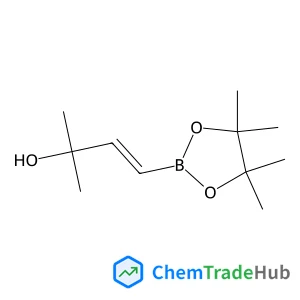
(E)-2-methyl-4-(4,4,5,5-tetramethyl-1,3,2-dioxaborolan-2-yl)but-3-en-2-ol
CAS Number:
581802-26-8
Molecular Formula:
C11H21BO3
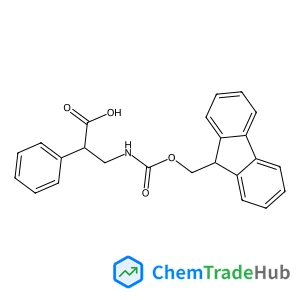
(S)-3-((((9H-Fluoren-9-yl)methoxy)carbonyl)amino)-2-phenylpropanoic acid
CAS Number:
1217663-60-9
Molecular Formula:
C24H21NO4
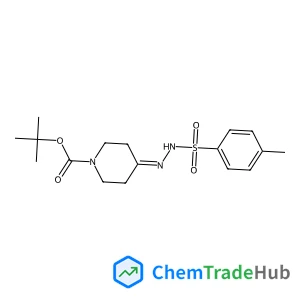
tert-Butyl 4-(2-(p-Tolylsulfonyl)hydrazono)piperidine-1-carboxylate
CAS Number:
1046478-89-0
Molecular Formula:
C17H25N3O4S
Recommended Suppliers




Disclaimer
This page provides academic journal information for reference and research purposes only. We are not affiliated with any journal publishers and do not handle publication submissions. For publication-related inquiries, please contact the respective journal publishers directly.
If you notice any inaccuracies in the information displayed, please contact us at support@chemtradehub.com. We will promptly review and address your concerns.