













Contents list
Literature Information
Publication Date
DOI
10.1039/C2CP90047E
Impact Factor
3.676
Authors
View Original
Abstract
The first page of this article is displayed as the abstract.
Related Literature
New insights into the structural evolution of TiO2–Ti3O5–Ti2O3–TiO–TixOyCz–TiC systems at the nanoscale during the reduction process
Pengliang Jin, Lifeng Zhang
2021-02-08
Paper
DOI: 10.1039/D0CP06477G
Understanding the nature of NH3-coordinated active sites and the complete reaction schemes for NH3-SCR using Cu-SAPO-34 catalysts
Guangpeng Yang, Jingyu Ran, Xuesen Du, Xiangmin Wang, Zhilin Ran, Yanrong Chen, Li Zhang, John Crittenden
2021-01-29
Paper
DOI: 10.1039/D0CP06285E
Electric field-driven conformational changes in the elastin protein
Debajyoti De, Nisha Pawar, Amar Nath Gupta
2021-01-14
Paper
DOI: 10.1039/D0CP04813E
VUV photochemistry and nuclear spin conversion of water and water–orthohydrogen complexes in parahydrogen crystals at 4 K
Brendan Moore, Termeh Bashiri, Hatsuki Otani, Pavle Djuricanin, Rasoul Malekfar, Amir Hossein Farahbod, Takamasa Momose
2021-02-02
Paper
DOI: 10.1039/D0CP04523C
A theoretical study on the role of ammonium ions in the double-layered V2O5 electrode
Zilin Qu, Bo Zhou, Bo Li, Qi Song, Yong Hua Cao, Zhenyi Jiang
2021-01-27
Paper
DOI: 10.1039/D0CP05717G
Molecular biaxiality determines the helical structure – infrared measurements of the molecular order in the nematic twist-bend phase of difluoro terphenyl dimer
Katarzyna Merkel, Barbara Loska, Chris Welch, Georg H. Mehl, Antoni Kocot
2021-02-02
Paper
DOI: 10.1039/D1CP00187F
Correction: Fast prediction of oxygen reduction reaction activity on carbon nanotubes with a localized geometric descriptor
Jeremie Zaffran, Bo Yang
2021-02-17
Correction
DOI: 10.1039/D1CP90025K
Quasi-one dimensional magnetic interactions in the three-dimensional hyper-honeycomb framework [(C2H5)3NH]2Cu2(C2O4)3
Anthony C. Jacko, Benjamin J. Powell
2021-02-16
Paper
DOI: 10.1039/D0CP05999D
Theoretical studies on the initial reaction kinetics and mechanisms of p-, m- and o-nitrotoluene
Meng Yang, Caiyue Liao, Chenglong Tang, Peng Zhang, Zuohua Huang, Jianling Li
2021-01-14
Paper
DOI: 10.1039/D0CP05935H
Microwave-assisted coherent control of ultracold polar molecules in a ladder-type configuration of rotational states
2021-01-29
Paper
DOI: 10.1039/D1CP00202C
You might also like
Compound Q&A
Is 6-(3-Fluorophenyl)picolinic acid (CAS: 887982-40-3) safe?
6-(3-Fluorophenyl)picolinic acid is generally considered safe for laboratory use...
887982-40-36-(3-Fluorophenyl)pi...
Compound Q&A
What industries use (3R)-3-Pyrrolidinol (CAS: 2799-21-5)?
(3R)-3-Pyrrolidinol is used in the pharmaceutical industry as a precursor for dr...
2799-21-5(3R)-3-Pyrrolidinol
Compound Q&A
What precautions should be taken when handling (4R,5R)-4,5-Diethoxycarbonyl-2,2-dimethyldioxolane (CAS: 59779-75-8)?
When handling (4R,5R)-4,5-Diethoxycarbonyl-2,2-dimethyldioxolane (CAS: 59779-75-...
59779-75-8(4R,5R)-4,5-Diethoxy...
Compound Q&A
How is 1-(6-Chloroimidazo[1,2-b]pyridazin-3-yl)ethanone (CAS: 90734-71-7) typically synthesized?
1-(6-Chloroimidazo[1,2-b]pyridazin-3-yl)ethanone is often synthesized via a mult...
90734-71-71-(6-Chloroimidazo[1...
Compound Q&A
What is the market or research trend for N-Ethyl-3,4-dimethylbenzylamine (CAS: 39180-83-1)?
The market for N-Ethyl-3,4-dimethylbenzylamine (CAS: 39180-83-1) remains steady,...
39180-83-1N-Ethyl-3,4-dimethyl...
Compound Q&A
What is Tert-butyl 3-(pyrrolidin-1-yl)azetidine-1-carboxylate (CAS: 1019008-21-9)?
Tert-butyl 3-(pyrrolidin-1-yl)azetidine-1-carboxylate is a chemical compound wit...
1019008-21-9Tert-butyl 3-(pyrrol...
Compound Q&A
What regulatory guidelines apply to 1-Bromo-3-chloro-2,4-dimethoxybenzene (CAS: 1228956-93-1)?
1-Bromo-3-chloro-2,4-dimethoxybenzene (CAS: 1228956-93-1) falls under the classi...
1228956-93-11-Bromo-3-chloro-2,4...
Compound Q&A
Is 8-Bromo-2-methyl-3,4-dihydroisoquinolin-1(2H)-one (CAS: 1368622-07-4) safe?
The safety of 8-Bromo-2-methyl-3,4-dihydroisoquinolin-1(2H)-one (CAS: 1368622-07...
1368622-07-48-Bromo-2-methyl-3,4...
Compound Q&A
Is Benzyl [(3S)-2,6-dioxo-3-piperidinyl]carbamate (CAS: 22785-43-9) safe?
Benzyl [(3S)-2,6-dioxo-3-piperidinyl]carbamate is generally safe when handled wi...
22785-43-9Benzyl [(3S)-2,6-dio...
Compound Q&A
How should 1-{[4-(4,4,5,5-Tetramethyl-1,3,2-dioxaborolan-2-yl)phenyl]sulfonyl}pyrrolidine (CAS: 928657-21-0) be stored?
1-{[4-(4,4,5,5-Tetramethyl-1,3,2-dioxaborolan-2-yl)phenyl]sulfonyl}pyrrolidine s...
928657-21-01-{[4-(4,4,5,5-Tetra...
Source Journal
Physical Chemistry Chemical Physics

CiteScore:
5.5
Self-citation Rate:
10.3%
Articles per Year:
3036
Physical Chemistry Chemical Physics (PCCP) is an international journal co-owned by 19 physical chemistry and physics societies from around the world. This journal publishes original, cutting-edge research in physical chemistry, chemical physics and biophysical chemistry. To be suitable for publication in PCCP, articles must include significant innovation and/or insight into physical chemistry; this is the most important criterion that reviewers and Editors will judge against when evaluating submissions. The journal has a broad scope and welcomes contributions spanning experiment, theory, computation and data science. Topical coverage includes spectroscopy, dynamics, kinetics, statistical mechanics, thermodynamics, electrochemistry, catalysis, surface science, quantum mechanics, quantum computing and machine learning. Interdisciplinary research areas such as polymers and soft matter, materials, nanoscience, energy, surfaces/interfaces, and biophysical chemistry are welcomed if they demonstrate significant innovation and/or insight into physical chemistry. Joined experimental/theoretical studies are particularly appreciated when complementary and based on up-to-date approaches.
Recommended Compounds
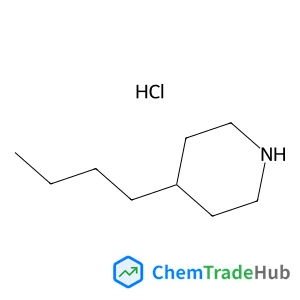
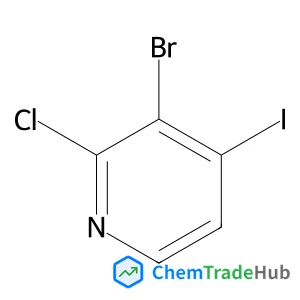


(11alpha,13E)-11-Hydroxy-9,15-dioxoprost-13-en-1-oic acid
CAS Number:
22973-19-9
Molecular Formula:
C20H32O5
Recommended Suppliers





Disclaimer
This page provides academic journal information for reference and research purposes only. We are not affiliated with any journal publishers and do not handle publication submissions. For publication-related inquiries, please contact the respective journal publishers directly.
If you notice any inaccuracies in the information displayed, please contact us at support@chemtradehub.com. We will promptly review and address your concerns.