












Reversible chemical delithiation/lithiation of LiFePO4: towards a redox flow lithium-ion battery
Literature Information
Publication Date
2012-12-13
DOI
10.1039/C2CP44466F
Impact Factor
3.676
Authors
Qizhao Huang, Hong Li, Michael Grätzel, Qing Wang
View Original
Abstract
Reversible chemical delithiation/lithiation of LiFePO4 was successfully demonstrated using ferrocene derivatives, based on which a novel energy storage system — the redox flow lithium-ion battery (RFLB), was devised by integrating the operation flexibility of a redox flow battery and high energy density of a lithium-ion battery. Distinct from the recent semi-solid lithium rechargeable flow battery, the energy storage materials of RFLB stored in separate energy tanks remain stationary upon operation, giving us a fresh perspective on building large-scale energy storage systems with higher energy density and improved safety.
Related Literature
The N-methylpyrrolidone–(C1–C10) alkan-1-ols solvent systems
Begoña García, Rafael Alcalde, Santiago Aparicio, José M. Leal
2002-02-27
Paper
DOI: 10.1039/B109709C
Density function studies of peptides Part I. Vibrational frequencies including isotopic effects and NMR chemical shifts of N-methylacetamide, a peptide model, from density function and MP2 calculations
G. Cuevas, G. Madrid, A. T. Hagler
2002-03-15
Paper
DOI: 10.1039/B110777C
Theoretical study of the relative reactivity of chloroethenes with atmospheric oxidants (OH, NO3, O(3P), Cl(2P) and Br(2P))
María T. Baumgartner, Raúl A. Taccone, Mariano A. Teruel, Silvia I. Lane
2002-02-14
Paper
DOI: 10.1039/B108856B
Investigation of collisional quenching of CCl2( 1B1 and ã 3B1) by some inorganic molecules
Yide Gao, Changjin Hu, Qin Ran, Yang Chen, Xingxiao Ma, Congxiang Chen
2002-02-26
Paper
DOI: 10.1039/B105728F
Surface freezing in liquid Ga–Bi alloys: optical second harmonic and plasma generation study
2002-01-18
Paper
DOI: 10.1039/B107478B
Conductometric and electrooptic relaxation spectrometry of lipid vesicle electroporation at high fields
T. Griese, S. Kakorin, E. Neumann
2002-02-20
Paper
DOI: 10.1039/B108193B
Analysis of the effect of changing the a0 parameter of the Becke3-LYP hybrid functional on the transition state geometries and energy barriers in a series of prototypical reactions
Jordi Poater, Miquel Solà, Miquel Duran, Juvencio Robles
2002-01-31
Paper
DOI: 10.1039/B108910M
Kinetic, infrared, and X-ray absorption studies of adsorption, desorption, and reactions of thiophene on H-ZSM5 and Co/H-ZSM5
Sara Y. Yu, Javier Garcia-Martinez, Wei Li, George D. Meitzner, Enrique Iglesia
2002-02-22
Paper
DOI: 10.1039/B108640P
Degradation of naphthalenesulfonic acids by oxidation with ozone in aqueous phase
J. Rivera-Utrilla, M. Sánchez-Polo, C. A. Zaror
2002-02-21
Paper
DOI: 10.1039/B108194B
Infrared and Raman spectra, conformational stability, vibrational assignment, ab initio calculations and r0 structural parameters for N-methylpropargyl amine
Gamil A. Guirgis, Stephen Bell, Chao Zheng, James R. Durig
2002-03-19
Paper
DOI: 10.1039/B109222G
You might also like
Compound Q&A
What regulatory guidelines apply to 6-Bromo-2-methylimidazo[1,2-a]pyrimidine (CAS: 1111638-05-1)?
6-Bromo-2-methylimidazo[1,2-a]pyrimidine (CAS: 1111638-05-1) falls under various...
1111638-05-16-Bromo-2-methylimid...
Compound Q&A
Are there alternatives to 1-Pyrrolidineethanol, β-methyl-α-phenyl-, (αS,βR) (CAS: 123620-80-4) in synthesis?
While there are no direct alternatives, similar compounds like 1-Pyrrolidineetha...
123620-80-41-Pyrrolidineethanol...
Compound Q&A
Is 4-Methyl-2,6-bis(2-methyl-2-propanyl)phenyl methylcarbamate (CAS: 1918-11-2) safe?
4-Methyl-2,6-bis(2-methyl-2-propanyl)phenyl methylcarbamate (CAS: 1918-11-2) is ...
1918-11-24-Methyl-2,6-bis(2-m...
Compound Q&A
How should 2-(3-Bromo-4-fluorophenyl)-1,3-dioxolane (CAS: 77771-04-1) be stored?
2-(3-Bromo-4-fluorophenyl)-1,3-dioxolane (CAS: 77771-04-1) should be stored in a...
77771-04-12-(3-Bromo-4-fluorop...
Compound Q&A
What are the physical and chemical properties of 4,5,6,7-Tetrahydro-1H-indazole hydrochloride (CAS: 18161-11-0)?
4,5,6,7-Tetrahydro-1H-indazole hydrochloride is a white crystalline solid with a...
18161-11-04,5,6,7-Tetrahydro-1...
Compound Q&A
What is (2R)-1-Methoxy-3-phenyl-2-propanamine (CAS: 59919-07-2)?
(2R)-1-Methoxy-3-phenyl-2-propanamine is a chiral organic compound with the CAS ...
59919-07-2(2R)-1-Methoxy-3-phe...
Compound Q&A
What industries use Ethyl 1-(1-phenylethyl)-1H-imidazole-5-carboxylate (CAS: 56649-47-9)?
Ethyl 1-(1-phenylethyl)-1H-imidazole-5-carboxylate is used in various industries...
56649-47-9Ethyl 1-(1-phenyleth...
Compound Q&A
What regulatory guidelines apply to 4-[(1E,3S)-1-(4-Hydroxyphenyl)-1,4-pentadien-3-yl]phenol (CAS: 17676-24-3)?
4-[(1E,3S)-1-(4-Hydroxyphenyl)-1,4-pentadien-3-yl]phenol (CAS: 17676-24-3) falls...
17676-24-34-[(1E,3S)-1-(4-Hydr...
Compound Q&A
What industries use (S)-3-Amino-5-phenylpentanoic acid hydrochloride (CAS: 331846-97-0)?
(S)-3-Amino-5-phenylpentanoic acid hydrochloride is primarily used in the pharma...
331846-97-0(S)-3-Amino-5-phenyl...
Compound Q&A
How is 7-methoxy-1-benzothiophene-2-carboxylic acid (CAS: 88791-07-5) typically synthesized?
7-Methoxy-1-benzothiophene-2-carboxylic acid is typically synthesized by reactin...
88791-07-57-methoxy-1-benzothi...
Source Journal
Physical Chemistry Chemical Physics

CiteScore:
5.5
Self-citation Rate:
10.3%
Articles per Year:
3036
Physical Chemistry Chemical Physics (PCCP) is an international journal co-owned by 19 physical chemistry and physics societies from around the world. This journal publishes original, cutting-edge research in physical chemistry, chemical physics and biophysical chemistry. To be suitable for publication in PCCP, articles must include significant innovation and/or insight into physical chemistry; this is the most important criterion that reviewers and Editors will judge against when evaluating submissions. The journal has a broad scope and welcomes contributions spanning experiment, theory, computation and data science. Topical coverage includes spectroscopy, dynamics, kinetics, statistical mechanics, thermodynamics, electrochemistry, catalysis, surface science, quantum mechanics, quantum computing and machine learning. Interdisciplinary research areas such as polymers and soft matter, materials, nanoscience, energy, surfaces/interfaces, and biophysical chemistry are welcomed if they demonstrate significant innovation and/or insight into physical chemistry. Joined experimental/theoretical studies are particularly appreciated when complementary and based on up-to-date approaches.
Recommended Compounds
![(3R)-4-(4-Chlorophenyl)-3-({[(2-methyl-2-propanyl)oxy]carbonyl}amino)butanoic acid structure](https://static.chemtradehub.com/structs/218/218608-96-9-f871.webp "(3R)-4-(4-Chlorophenyl)-3-({[(2-methyl-2-propanyl)oxy]carbonyl}amino)butanoic acid structure")
(3R)-4-(4-Chlorophenyl)-3-({[(2-methyl-2-propanyl)oxy]carbonyl}amino)butanoic acid
CAS Number:
218608-96-9
Molecular Formula:
C15H20ClNO4
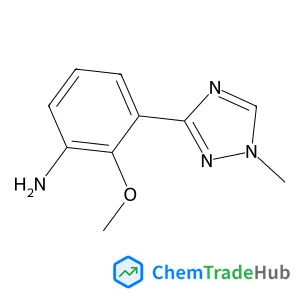
2-Methoxy-3-(1-methyl-1H-1,2,4-triazol-3-yl)aniline
CAS Number:
1609394-10-6
Molecular Formula:
C10H12N4O
Recommended Suppliers







Disclaimer
This page provides academic journal information for reference and research purposes only. We are not affiliated with any journal publishers and do not handle publication submissions. For publication-related inquiries, please contact the respective journal publishers directly.
If you notice any inaccuracies in the information displayed, please contact us at support@chemtradehub.com. We will promptly review and address your concerns.