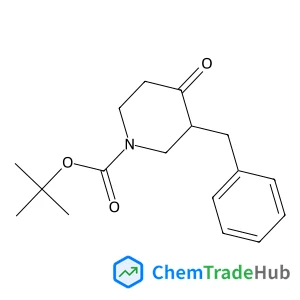
2-Methyl-2-propanyl 3-benzyl-4-oxo-1-piperidinecarboxylate
CAS Number:
193274-82-7
Molecular Formula:
C17H23NO3
J. Rivera-Utrilla, M. Sánchez-Polo, C. A. Zaror
Sulfonic aromatic compounds are widely used in the textile industry for the synthesis of azo dyes. The presence of the sulfonic group endows these compounds with high water-solubility and resistance to biological treatment. The present work analysed the efficacy of oxidation with ozone in the treatment of waters containing naphthalene-1-sulfonic acid, naphthalene-1,5-disulfonic acid and naphthalene-1,3,6-trisulfonic acid. The reactivity to ozone significantly decreased with an increase in the number of sulfonic groups in the aromatic ring, and naphthalene-1,3,6-trisulfonic acid showed the lowest reaction rate. The stoichiometry of the direct ozonization reaction was around one mole of sulfonic acid per mole of ozone in all cases. The activation energy value of the direct ozonization reaction was very similar in all studied cases (37–42 kJ mol−1). The contribution of the direct reaction to the global oxidation at pH 2 was observed to decrease with more sulfonic groups in the aromatic ring, from a contribution of 69% for naphthalene-1-sulfonic acid to around 20% for naphthalene-1,3,6-trisulfonic acid. The radical reaction rate constant was found to be of the order of 109 × M−1 s−1 in all cases, although it showed a slight reduction as the number of sulfonic groups in the aromatic ring increased. A follow-up study of the oxidation products of each sulfonic aromatic acid revealed the presence of highly oxidized organic acids and sulfate ions. A theoretical study of the electronic density at the bond critical point showed that double bonds with highest electron density in the three acids are in positions 1–2, 3–4, 5–6 and 7–8. These bonds are initially attacked by ozone via 1,3-dipolar cycloaddition.
Pavel S. Slepov, Kristina E. Nikiruy
DOI: 10.1039/D3NH00421J
Kaiyuan Tang, Zilu Liu, Zhijing Zhang, Shufan Duan, Hui Wang, Hui Yang, Dongliang Yang, Wenpei Fan
DOI: 10.1039/D3NH00388D
Chia-Hao Tsai, Shih-Hung Tung, Jhih-Min Lin
DOI: 10.1039/D3TA05836K
Yu Shu, Ting Li, Naihua Miao, Jian Gou, Xiaochun Huang, Zhou Cui, Rui Xiong, Cuilian Wen, Jian Zhou, Baisheng Sa, Zhimei Sun
DOI: 10.1039/D3NH00450C
Asmaa Khalil, Alexandre Barras, Rabah Boukherroub, David Devos, Sabine Szunerits
DOI: 10.1039/D3NH00306J
Amit Nain, Yu-Ting Tseng, Akash Gupta, Yu-Feng Lin, Sangili Arumugam, Yu-Fen Huang
DOI: 10.1039/D3NH00275F
Linmeng Wang, Zhiyuan Liu, Rushuo Li, Ping Yang, Wei Wang, Xiangdong Xue, Shihao Feng, Lingjing Yu, Ge Wang
DOI: 10.1039/D3TA04806C
Yanyan Li, Edwin Yue Bun Pun
DOI: 10.1039/D3TA04964G
6-Bromo-2-methylimidazo[1,2-a]pyrimidine (CAS: 1111638-05-1) falls under various...
While there are no direct alternatives, similar compounds like 1-Pyrrolidineetha...
4-Methyl-2,6-bis(2-methyl-2-propanyl)phenyl methylcarbamate (CAS: 1918-11-2) is ...
2-(3-Bromo-4-fluorophenyl)-1,3-dioxolane (CAS: 77771-04-1) should be stored in a...
4,5,6,7-Tetrahydro-1H-indazole hydrochloride is a white crystalline solid with a...
(2R)-1-Methoxy-3-phenyl-2-propanamine is a chiral organic compound with the CAS ...
Ethyl 1-(1-phenylethyl)-1H-imidazole-5-carboxylate is used in various industries...
4-[(1E,3S)-1-(4-Hydroxyphenyl)-1,4-pentadien-3-yl]phenol (CAS: 17676-24-3) falls...
(S)-3-Amino-5-phenylpentanoic acid hydrochloride is primarily used in the pharma...
7-Methoxy-1-benzothiophene-2-carboxylic acid is typically synthesized by reactin...

Physical Chemistry Chemical Physics (PCCP) is an international journal co-owned by 19 physical chemistry and physics societies from around the world. This journal publishes original, cutting-edge research in physical chemistry, chemical physics and biophysical chemistry. To be suitable for publication in PCCP, articles must include significant innovation and/or insight into physical chemistry; this is the most important criterion that reviewers and Editors will judge against when evaluating submissions. The journal has a broad scope and welcomes contributions spanning experiment, theory, computation and data science. Topical coverage includes spectroscopy, dynamics, kinetics, statistical mechanics, thermodynamics, electrochemistry, catalysis, surface science, quantum mechanics, quantum computing and machine learning. Interdisciplinary research areas such as polymers and soft matter, materials, nanoscience, energy, surfaces/interfaces, and biophysical chemistry are welcomed if they demonstrate significant innovation and/or insight into physical chemistry. Joined experimental/theoretical studies are particularly appreciated when complementary and based on up-to-date approaches.
![4-Penten-1-yl 2-[(2-furylmethyl)(1H-imidazol-1-ylcarbonyl)amino]butanoate structure](https://static.chemtradehub.com/structs/101/101903-30-4-ac34.webp "4-Penten-1-yl 2-[(2-furylmethyl)(1H-imidazol-1-ylcarbonyl)amino]butanoate structure")