












Glycine conformers: a never-ending story?
Literature Information
Publication Date
2012-11-30
DOI
10.1039/C2CP43884D
Impact Factor
3.676
Authors
Vincenzo Barone, Malgorzata Biczysko, Cristina Puzzarini
View Original
Abstract
The structure and vibrational spectra of a marginally stable conformer of glycine (usually referred to as VIp or ttc) recently detected in low-temperature matrices have been characterized by a state-of-the-art computational approach allowing an overall quality for bond distances, rotational constants, conformational enthalpies and vibrational frequencies well within the chemical accuracy. The high accuracy of the computational results allows us to draw a fully consistent interpretation of the available experimental data and to obtain a more complete characterization of an elusive glycine conformer.
Related Literature
Synthesis and characterization of a new multifunctional polymeric prodrug paclitaxel–polyphosphoester–folic acid for targeted drug delivery
Guoyi Zhang, Mingzu Zhang, Jinlin He, Peihong Ni
2013-05-31
Paper
DOI: 10.1039/C3PY00419H
A versatile post-polymerization modification method for polyglutamic acid: synthesis of orthogonal reactive polyglutamates and their use in “click chemistry”
Aroa Duro-Castano, María J. Vicent
2013-04-12
Paper
DOI: 10.1039/C3PY00189J
High molar mass segmented macromolecular architectures by nitroxide mediated polymerisation
Lionel Petton, Edwin P. C. Mes, Hanno Van Der Wal, Sven Claessens, Freddy Van Damme, Sam Verbrugghe, Filip E. Du Prez
2013-06-14
Paper
DOI: 10.1039/C3PY00600J
Nitrogen-rich diaminotriazine-based porous organic polymers for small gas storage and selective uptake
Wei-Chao Song, Xiao-Kang Xu, Qiang Chen, Zhan-Zhong Zhuang, Xian-He Bu
2013-06-13
Paper
DOI: 10.1039/C3PY00590A
Facile and controllable synthesis of polystyrene/palladium nanoparticle@polypyrrole nanocomposite particles
Yunxing Li, Yan Wu, Qingjie Xu, Yan Gao, Guangqun Cao, Zhen Meng, Cheng Yang
2013-06-17
Paper
DOI: 10.1039/C3PY00281K
Facile fabrication and cell imaging applications of aggregation-induced emission dye-based fluorescent organic nanoparticles
Xiqi Zhang, Bin Yang, Meiying Liu, Wanyun Liu, Yiwang Chen, Yen Wei
2013-06-20
Communication
DOI: 10.1039/C3PY00712J
Generation of supramolecular microcapsules by oxidative covalent polymerization of a ditopic supramolecular building block
Nabarun Roy, Eric Buhler, Jean-Marie Lehn
2013-03-19
Communication
DOI: 10.1039/C3PY00308F
Atom transfer radical polymerization of hydrophilic monomers and its applications
Weiwei He, Hongjuan Jiang, Lifen Zhang, Zhenping Cheng, Xiulin Zhu
2013-01-30
Review Article
DOI: 10.1039/C3PY00122A
Helix oscillation of polyacetylene esters detected by dynamic 1H NMR, IR, and UV-vis methods in solution
Yoshiaki Yoshida, Yasuteru Mawatari, Asahi Motoshige, Ranko Motodshige, Toshifumi Hiraoki, Masayoshi Tabata
2013-03-18
Paper
DOI: 10.1039/C3PY00295K
Mechanobiochemistry: harnessing biomacromolecules for force-responsive materials
Johnathan N. Brantley, Constance B. Bailey, Kelly M. Wiggins
2013-03-20
Review Article
DOI: 10.1039/C3PY00001J
You might also like
Compound Q&A
Is 6-(3-Fluorophenyl)picolinic acid (CAS: 887982-40-3) safe?
6-(3-Fluorophenyl)picolinic acid is generally considered safe for laboratory use...
887982-40-36-(3-Fluorophenyl)pi...
Compound Q&A
What industries use (3R)-3-Pyrrolidinol (CAS: 2799-21-5)?
(3R)-3-Pyrrolidinol is used in the pharmaceutical industry as a precursor for dr...
2799-21-5(3R)-3-Pyrrolidinol
Compound Q&A
What precautions should be taken when handling (4R,5R)-4,5-Diethoxycarbonyl-2,2-dimethyldioxolane (CAS: 59779-75-8)?
When handling (4R,5R)-4,5-Diethoxycarbonyl-2,2-dimethyldioxolane (CAS: 59779-75-...
59779-75-8(4R,5R)-4,5-Diethoxy...
Compound Q&A
How is 1-(6-Chloroimidazo[1,2-b]pyridazin-3-yl)ethanone (CAS: 90734-71-7) typically synthesized?
1-(6-Chloroimidazo[1,2-b]pyridazin-3-yl)ethanone is often synthesized via a mult...
90734-71-71-(6-Chloroimidazo[1...
Compound Q&A
What is the market or research trend for N-Ethyl-3,4-dimethylbenzylamine (CAS: 39180-83-1)?
The market for N-Ethyl-3,4-dimethylbenzylamine (CAS: 39180-83-1) remains steady,...
39180-83-1N-Ethyl-3,4-dimethyl...
Compound Q&A
What is Tert-butyl 3-(pyrrolidin-1-yl)azetidine-1-carboxylate (CAS: 1019008-21-9)?
Tert-butyl 3-(pyrrolidin-1-yl)azetidine-1-carboxylate is a chemical compound wit...
1019008-21-9Tert-butyl 3-(pyrrol...
Compound Q&A
What regulatory guidelines apply to 1-Bromo-3-chloro-2,4-dimethoxybenzene (CAS: 1228956-93-1)?
1-Bromo-3-chloro-2,4-dimethoxybenzene (CAS: 1228956-93-1) falls under the classi...
1228956-93-11-Bromo-3-chloro-2,4...
Compound Q&A
Is 8-Bromo-2-methyl-3,4-dihydroisoquinolin-1(2H)-one (CAS: 1368622-07-4) safe?
The safety of 8-Bromo-2-methyl-3,4-dihydroisoquinolin-1(2H)-one (CAS: 1368622-07...
1368622-07-48-Bromo-2-methyl-3,4...
Compound Q&A
Is Benzyl [(3S)-2,6-dioxo-3-piperidinyl]carbamate (CAS: 22785-43-9) safe?
Benzyl [(3S)-2,6-dioxo-3-piperidinyl]carbamate is generally safe when handled wi...
22785-43-9Benzyl [(3S)-2,6-dio...
Compound Q&A
How should 1-{[4-(4,4,5,5-Tetramethyl-1,3,2-dioxaborolan-2-yl)phenyl]sulfonyl}pyrrolidine (CAS: 928657-21-0) be stored?
1-{[4-(4,4,5,5-Tetramethyl-1,3,2-dioxaborolan-2-yl)phenyl]sulfonyl}pyrrolidine s...
928657-21-01-{[4-(4,4,5,5-Tetra...
Source Journal
Physical Chemistry Chemical Physics

CiteScore:
5.5
Self-citation Rate:
10.3%
Articles per Year:
3036
Physical Chemistry Chemical Physics (PCCP) is an international journal co-owned by 19 physical chemistry and physics societies from around the world. This journal publishes original, cutting-edge research in physical chemistry, chemical physics and biophysical chemistry. To be suitable for publication in PCCP, articles must include significant innovation and/or insight into physical chemistry; this is the most important criterion that reviewers and Editors will judge against when evaluating submissions. The journal has a broad scope and welcomes contributions spanning experiment, theory, computation and data science. Topical coverage includes spectroscopy, dynamics, kinetics, statistical mechanics, thermodynamics, electrochemistry, catalysis, surface science, quantum mechanics, quantum computing and machine learning. Interdisciplinary research areas such as polymers and soft matter, materials, nanoscience, energy, surfaces/interfaces, and biophysical chemistry are welcomed if they demonstrate significant innovation and/or insight into physical chemistry. Joined experimental/theoretical studies are particularly appreciated when complementary and based on up-to-date approaches.
Recommended Compounds
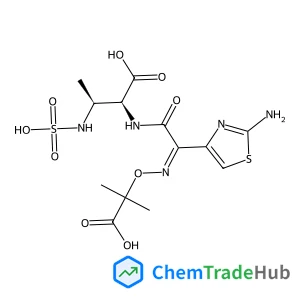
Aztreonam USP Related Compound A (Open-ring Aztreonam)
CAS Number:
87500-74-1
Molecular Formula:
C13H19N5O9S2
Recommended Suppliers






Disclaimer
This page provides academic journal information for reference and research purposes only. We are not affiliated with any journal publishers and do not handle publication submissions. For publication-related inquiries, please contact the respective journal publishers directly.
If you notice any inaccuracies in the information displayed, please contact us at support@chemtradehub.com. We will promptly review and address your concerns.