![Benzeneacetic acid, 2-[(2,6-dichlorophenyl)amino]-, compd. with 1-pyrrolidineethanol (1:1) structure](https://static.chemtradehub.com/structs/119/119623-66-4-5301.webp "Benzeneacetic acid, 2-[(2,6-dichlorophenyl)amino]-, compd. with 1-pyrrolidineethanol (1:1) structure")
Benzeneacetic acid, 2-[(2,6-dichlorophenyl)amino]-, compd. with 1-pyrrolidineethanol (1:1)
CAS Number:
119623-66-4
Molecular Formula:
C20H24Cl2N2O3
Gwangseok Yang, Chongmin Lee, Jihyun Kim, Fan Ren, Stephen J. Pearton
Graphene-based, flexible NO2 sensors on paper substrates exhibited an immediate response (32–39%) once exposed to 200 ppm NO2 gas under a strain of 0.5%. Chemical vapor deposition-grown graphene with a supporting poly(methyl methacrylate) layer was transferred onto paper substrates, followed by formation of two electrodes using silver paste. Current–voltage characteristics and dynamic sensing response were obtained under both relaxed and strained conditions. We demonstrate a facile method without complex photo-lithography and high vacuum processes for fabricating graphene-based flexible NO2 sensors on paper substrates with high sensing response.
Hiroto Tachikawa
DOI: 10.1039/B109641A
R. Mukhopadhyay, L. L. Wong, K. K. Lo, T. Pochapsky, H. A. O. Hill
DOI: 10.1039/B108107A
Michel Mons, Iliana Dimicoli, Benjamin Tardivel, François Piuzzi, Valérie Brenner, Philippe Millié
DOI: 10.1039/B108146M
R. Tóth, V. Gáspár
DOI: 10.1039/B107627B
P. Valentin
DOI: 10.1039/B109105K
Luís P. N. Rebelo, Zoran P. Visak, Jerzy Szydlowski
DOI: 10.1039/B109405J
Yoshio Nosaka, Masatsugu Nakamura, Tsutomu Hirakawa
DOI: 10.1039/B108441K
Gamil A. Guirgis, Stephen Bell, Chao Zheng, James R. Durig
DOI: 10.1039/B109222G
DOI: 10.1039/B107483K
Ilya Polishuk, Jaime Wisniak, Hugo Segura
DOI: 10.1039/B108834N
6-Bromo-2-methylimidazo[1,2-a]pyrimidine (CAS: 1111638-05-1) falls under various...
While there are no direct alternatives, similar compounds like 1-Pyrrolidineetha...
4-Methyl-2,6-bis(2-methyl-2-propanyl)phenyl methylcarbamate (CAS: 1918-11-2) is ...
2-(3-Bromo-4-fluorophenyl)-1,3-dioxolane (CAS: 77771-04-1) should be stored in a...
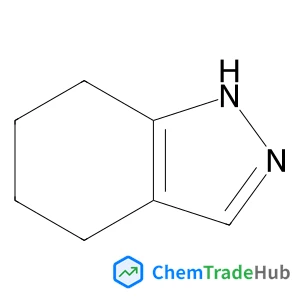
4,5,6,7-Tetrahydro-1H-indazole hydrochloride is a white crystalline solid with a...
(2R)-1-Methoxy-3-phenyl-2-propanamine is a chiral organic compound with the CAS ...
Ethyl 1-(1-phenylethyl)-1H-imidazole-5-carboxylate is used in various industries...
4-[(1E,3S)-1-(4-Hydroxyphenyl)-1,4-pentadien-3-yl]phenol (CAS: 17676-24-3) falls...
(S)-3-Amino-5-phenylpentanoic acid hydrochloride is primarily used in the pharma...
7-Methoxy-1-benzothiophene-2-carboxylic acid is typically synthesized by reactin...

Physical Chemistry Chemical Physics (PCCP) is an international journal co-owned by 19 physical chemistry and physics societies from around the world. This journal publishes original, cutting-edge research in physical chemistry, chemical physics and biophysical chemistry. To be suitable for publication in PCCP, articles must include significant innovation and/or insight into physical chemistry; this is the most important criterion that reviewers and Editors will judge against when evaluating submissions. The journal has a broad scope and welcomes contributions spanning experiment, theory, computation and data science. Topical coverage includes spectroscopy, dynamics, kinetics, statistical mechanics, thermodynamics, electrochemistry, catalysis, surface science, quantum mechanics, quantum computing and machine learning. Interdisciplinary research areas such as polymers and soft matter, materials, nanoscience, energy, surfaces/interfaces, and biophysical chemistry are welcomed if they demonstrate significant innovation and/or insight into physical chemistry. Joined experimental/theoretical studies are particularly appreciated when complementary and based on up-to-date approaches.