












Relations between harmonic frequencies of diatomic molecules
Literature Information
Publication Date
2012-11-19
DOI
10.1039/C2CP43630B
Impact Factor
3.676
Authors
Shilin Hou
View Original
Abstract
The relations between the harmonic frequencies of different molecules are revealed with the aid of the spring constants of atoms in molecules. Using the atomic spring constants in the related molecules, the force constants for a new molecule can be estimated. The simplest scheme to obtain the force constant of a given molecule is similar to a simple chemical reaction formula, such as A2 + B2 → AB, and the corresponding relation between the molecular force constants is kAB−1 = (2kA2)−1 + (2kB2)−1. For a given molecule, one can design numerous schemes to obtain its force constant from the atomic spring constants in other molecules. A high degree of periodical regularity appears in the application of different kinds of schemes to the ground states. The reliable schemes for the ground electronic states can be adopted for the excited states. Over two hundred molecules with experimental data available for comparison have been tested. The discrepancies between the calculated and the experimental harmonic frequencies can reach 1% and better; the results show that the present approach is simple in theory and handy to use. The harmonic frequencies for dozens of hetero-nuclear molecules of the transition-metal elements are also predicted.
Related Literature
Organic microporous polymer from a hexaphenylbenzene based triptycene monomer: synthesis and its gas storage properties
Chun Zhang, Lian-Hui Peng, Buyi Li, Ying Liu, Peng-Cheng Zhu, Zhen Wang, Deng-Huang Zhan, Bien Tan, Xiang-Liang Yang, Hui-Bi Xu
2013-05-08
Communication
DOI: 10.1039/C3PY00499F
One-step facile synthesis of monodisperse raspberry-like P(S–MPS–AA) colloidal particles
Yangyi Sun, Yuyong Yin, Min Chen, Shuxue Zhou, Limin Wu
2013-03-01
Paper
DOI: 10.1039/C3PY21155J
Synthesis and photovoltaic properties of copolymers based on benzo[1,2-b:4,5-b′]dithiophene and thiazole with different conjugated side groups
Xunshan Liu, Yuanshuai Huang, Zhencai Cao, Chao Weng, Huajie Chen, Songting Tan
2013-06-20
Paper
DOI: 10.1039/C3PY00614J
Atom transfer radical polymerization of hydrophilic monomers and its applications
Weiwei He, Hongjuan Jiang, Lifen Zhang, Zhenping Cheng, Xiulin Zhu
2013-01-30
Review Article
DOI: 10.1039/C3PY00122A
RAFT polymerization of dimethyl(methacryloyloxy)methyl phosphonate and its phosphonic acid derivative: a new opportunity for phosphorus-based materials
Benjamin Canniccioni, Sophie Monge, Ghislain David, Jean-Jacques Robin
2013-04-19
Paper
DOI: 10.1039/C3PY00426K
Facile fabrication and cell imaging applications of aggregation-induced emission dye-based fluorescent organic nanoparticles
Xiqi Zhang, Bin Yang, Meiying Liu, Wanyun Liu, Yiwang Chen, Yen Wei
2013-06-20
Communication
DOI: 10.1039/C3PY00712J
Hybrid organic–inorganic nanomaterial sensors for selective detection of Au3+ using rhodamine-based modified polyacrylic acid (PAA)-coated FeNPs
Noi Niamsa, Chatthai Kaewtong, Weerapol Srinonmuang, Banchob Wanno, Buncha Pulpoka, Thawatchai Tuntulani
2013-03-04
Paper
DOI: 10.1039/C3PY00229B
First RAFT/MADIX radical copolymerization of tert-butyl 2-trifluoromethacrylate with vinylidene fluoride controlled by xanthate
Yogesh Patil, Bruno Ameduri
2013-02-05
Paper
DOI: 10.1039/C3PY21139H
You might also like
Compound Q&A
Is 6-(3-Fluorophenyl)picolinic acid (CAS: 887982-40-3) safe?
6-(3-Fluorophenyl)picolinic acid is generally considered safe for laboratory use...
887982-40-36-(3-Fluorophenyl)pi...
Compound Q&A
What industries use (3R)-3-Pyrrolidinol (CAS: 2799-21-5)?
(3R)-3-Pyrrolidinol is used in the pharmaceutical industry as a precursor for dr...
2799-21-5(3R)-3-Pyrrolidinol
Compound Q&A
What precautions should be taken when handling (4R,5R)-4,5-Diethoxycarbonyl-2,2-dimethyldioxolane (CAS: 59779-75-8)?
When handling (4R,5R)-4,5-Diethoxycarbonyl-2,2-dimethyldioxolane (CAS: 59779-75-...
59779-75-8(4R,5R)-4,5-Diethoxy...
Compound Q&A
How is 1-(6-Chloroimidazo[1,2-b]pyridazin-3-yl)ethanone (CAS: 90734-71-7) typically synthesized?
1-(6-Chloroimidazo[1,2-b]pyridazin-3-yl)ethanone is often synthesized via a mult...
90734-71-71-(6-Chloroimidazo[1...
Compound Q&A
What is the market or research trend for N-Ethyl-3,4-dimethylbenzylamine (CAS: 39180-83-1)?
The market for N-Ethyl-3,4-dimethylbenzylamine (CAS: 39180-83-1) remains steady,...
39180-83-1N-Ethyl-3,4-dimethyl...
Compound Q&A
What is Tert-butyl 3-(pyrrolidin-1-yl)azetidine-1-carboxylate (CAS: 1019008-21-9)?
Tert-butyl 3-(pyrrolidin-1-yl)azetidine-1-carboxylate is a chemical compound wit...
1019008-21-9Tert-butyl 3-(pyrrol...
Compound Q&A
What regulatory guidelines apply to 1-Bromo-3-chloro-2,4-dimethoxybenzene (CAS: 1228956-93-1)?
1-Bromo-3-chloro-2,4-dimethoxybenzene (CAS: 1228956-93-1) falls under the classi...
1228956-93-11-Bromo-3-chloro-2,4...
Compound Q&A
Is 8-Bromo-2-methyl-3,4-dihydroisoquinolin-1(2H)-one (CAS: 1368622-07-4) safe?
The safety of 8-Bromo-2-methyl-3,4-dihydroisoquinolin-1(2H)-one (CAS: 1368622-07...
1368622-07-48-Bromo-2-methyl-3,4...
Compound Q&A
Is Benzyl [(3S)-2,6-dioxo-3-piperidinyl]carbamate (CAS: 22785-43-9) safe?
Benzyl [(3S)-2,6-dioxo-3-piperidinyl]carbamate is generally safe when handled wi...
22785-43-9Benzyl [(3S)-2,6-dio...
Compound Q&A
How should 1-{[4-(4,4,5,5-Tetramethyl-1,3,2-dioxaborolan-2-yl)phenyl]sulfonyl}pyrrolidine (CAS: 928657-21-0) be stored?
1-{[4-(4,4,5,5-Tetramethyl-1,3,2-dioxaborolan-2-yl)phenyl]sulfonyl}pyrrolidine s...
928657-21-01-{[4-(4,4,5,5-Tetra...
Source Journal
Physical Chemistry Chemical Physics

CiteScore:
5.5
Self-citation Rate:
10.3%
Articles per Year:
3036
Physical Chemistry Chemical Physics (PCCP) is an international journal co-owned by 19 physical chemistry and physics societies from around the world. This journal publishes original, cutting-edge research in physical chemistry, chemical physics and biophysical chemistry. To be suitable for publication in PCCP, articles must include significant innovation and/or insight into physical chemistry; this is the most important criterion that reviewers and Editors will judge against when evaluating submissions. The journal has a broad scope and welcomes contributions spanning experiment, theory, computation and data science. Topical coverage includes spectroscopy, dynamics, kinetics, statistical mechanics, thermodynamics, electrochemistry, catalysis, surface science, quantum mechanics, quantum computing and machine learning. Interdisciplinary research areas such as polymers and soft matter, materials, nanoscience, energy, surfaces/interfaces, and biophysical chemistry are welcomed if they demonstrate significant innovation and/or insight into physical chemistry. Joined experimental/theoretical studies are particularly appreciated when complementary and based on up-to-date approaches.
Recommended Compounds

![4-[(2,4-Dihydroxyphenyl)diazenyl]-5-hydroxy-2,7-naphthalenedisulfonic acid structure](https://static.chemtradehub.com/structs/362/3627-01-8-79ac.webp "4-[(2,4-Dihydroxyphenyl)diazenyl]-5-hydroxy-2,7-naphthalenedisulfonic acid structure")
4-[(2,4-Dihydroxyphenyl)diazenyl]-5-hydroxy-2,7-naphthalenedisulfonic acid
CAS Number:
3627-01-8
Molecular Formula:
C16H12N2O9S2
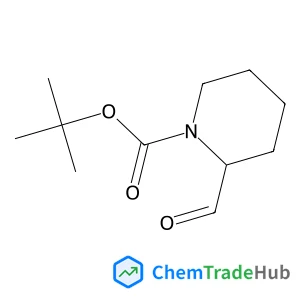
2-Methyl-2-propanyl (2R)-2-formyl-1-piperidinecarboxylate
CAS Number:
134526-69-5
Molecular Formula:
C11H19NO3
Recommended Suppliers





Disclaimer
This page provides academic journal information for reference and research purposes only. We are not affiliated with any journal publishers and do not handle publication submissions. For publication-related inquiries, please contact the respective journal publishers directly.
If you notice any inaccuracies in the information displayed, please contact us at support@chemtradehub.com. We will promptly review and address your concerns.