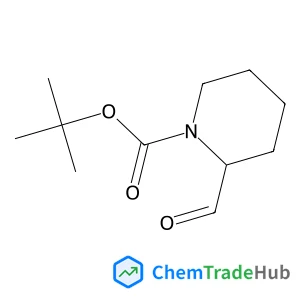
2-Methyl-2-propanyl (2R)-2-formyl-1-piperidinecarboxylate
CAS Number:
134526-69-5
Molecular Formula:
C11H19NO3
Walid M. I. Hassan, Yehea Ismail, Nageh K. Allam
The band structure and bandgap of Ta2O5 are extremely controversial issues. Herein, the use of a hybrid functional reduces the error in bandgap estimation from 95% to 5% resulting in a bandgap of 3.7 eV. This is expected to help controlling the electronic and structural properties of the material.
B. Muthuraj, Sameer Hussain, Parameswar Krishnan Iyer
DOI: 10.1039/C3PY00680H
Kai-Steffen Krannig, Jin Huang, Andreas Heise, Helmut Schlaad
DOI: 10.1039/C3PY00428G
Carlos Guerrero-Sanchez, Graeme Moad
DOI: 10.1039/C3PY00487B
Prasad V. Pawar, Shalini V. Gohil, Jay Prakash Jain, Neeraj Kumar
DOI: 10.1039/C3PY00023K
Lijun Huo, Zhaojun Li, Xia Guo, Yue Wu, Maojie Zhang, Long Ye, Shaoqing Zhang, Jianhui Hou
DOI: 10.1039/C3PY00074E
Cédric G. Jaffredo, Jean-François Carpentier, Sophie M. Guillaume
DOI: 10.1039/C3PY00401E
Xiaoji Zhou, Wenxiang Wang, Huali Yu, Junfei Zhao, Zhengbiao Zhang, Xiulin Zhu
DOI: 10.1039/C3PY00255A
Wei Teng Neo, Lee May Loo, Jing Song, Xiaobai Wang, Ching Mui Cho, Hardy Sze On Chan, Yun Zong
DOI: 10.1039/C3PY00677H
6-(3-Fluorophenyl)picolinic acid is generally considered safe for laboratory use...
(3R)-3-Pyrrolidinol is used in the pharmaceutical industry as a precursor for dr...
When handling (4R,5R)-4,5-Diethoxycarbonyl-2,2-dimethyldioxolane (CAS: 59779-75-...
1-(6-Chloroimidazo[1,2-b]pyridazin-3-yl)ethanone is often synthesized via a mult...
The market for N-Ethyl-3,4-dimethylbenzylamine (CAS: 39180-83-1) remains steady,...
Tert-butyl 3-(pyrrolidin-1-yl)azetidine-1-carboxylate is a chemical compound wit...
1-Bromo-3-chloro-2,4-dimethoxybenzene (CAS: 1228956-93-1) falls under the classi...
The safety of 8-Bromo-2-methyl-3,4-dihydroisoquinolin-1(2H)-one (CAS: 1368622-07...
Benzyl [(3S)-2,6-dioxo-3-piperidinyl]carbamate is generally safe when handled wi...
1-{[4-(4,4,5,5-Tetramethyl-1,3,2-dioxaborolan-2-yl)phenyl]sulfonyl}pyrrolidine s...

Physical Chemistry Chemical Physics (PCCP) is an international journal co-owned by 19 physical chemistry and physics societies from around the world. This journal publishes original, cutting-edge research in physical chemistry, chemical physics and biophysical chemistry. To be suitable for publication in PCCP, articles must include significant innovation and/or insight into physical chemistry; this is the most important criterion that reviewers and Editors will judge against when evaluating submissions. The journal has a broad scope and welcomes contributions spanning experiment, theory, computation and data science. Topical coverage includes spectroscopy, dynamics, kinetics, statistical mechanics, thermodynamics, electrochemistry, catalysis, surface science, quantum mechanics, quantum computing and machine learning. Interdisciplinary research areas such as polymers and soft matter, materials, nanoscience, energy, surfaces/interfaces, and biophysical chemistry are welcomed if they demonstrate significant innovation and/or insight into physical chemistry. Joined experimental/theoretical studies are particularly appreciated when complementary and based on up-to-date approaches.