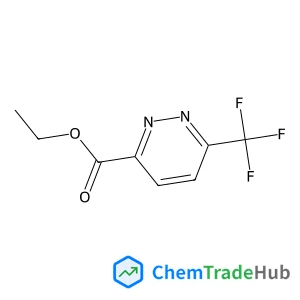
Ethyl 6-(trifluoromethyl)pyridazine-3-carboxylate
CAS Number:
1192155-06-8
Molecular Formula:
C8H7F3N2O2
Jason Rigby, Ekaterina I. Izgorodina
In this work, we assess several popular atomic partial charge schemes with the view of accurately quantifying charge distribution, dipole moments and charge transfer in routinely used ionic liquids (ILs). We investigated a series of ion pairs of imidazolium-based ILs such as [C(1−4)mim]X (where X = Cl, BF4 and NTf2) and ionic clusters of [NMe4][BF4], [C1mim][BF4] and [C1mim]Cl that were composed of two, four and eight ion pairs. Assessed partial charge schemes include restrained electrostatic potentials (RESP) employing ChelpG, Connolly and Geodesic point selection algorithms, as well as density matrix partitioning schemes including Mulliken, Löwdin and Natural Population Analysis (NPA). The quality of charge distribution was analysed using the following criteria: (1) treatment of symmetry identical atoms, (2) invariance of charge in the imidazolium ring with increasing alkyl chain and (3) recalculation to dipole moments as a measure of electronic polarisation. The RESP schemes such as Connolly and Geodesic clearly outperform the ChelpG scheme as well as the density matrix-based schemes for these three criteria. Calculated partial charges reveal that dipole moments were best represented by the RESP schemes and confirmed the presence of charge transfer in ILs to a various degree. The degree of charge transfer was dependent on anions as well as cluster size. In the ion pairs, the chloride anion showed the largest charge transfer, followed by the NTf2 and BF4 anions. In ionic clusters the charge transfer was shown to gradually converge from two to eight ion pairs in the case of the [NMe4][BF4] and [C1mim][BF4] ILs to a value, close to that for corresponding ion pairs. In contrast, charge transfer in the [C1mim]Cl clusters converges to a lower value, showing an unusually strong inter-ionic bond with the chloride anion. NPA charges were found to perform poorly, with near-unity charges being retained on the anions and cations in ion pairs and ionic clusters. Mulliken and Löwdin charges were shown to be highly basis set dependent and unpredictable with marked fluctuations in partial charges and therefore their use for ILs is particularly discouraged. Ability of the partial charge schemes to capture fluctuations in the dipole moment within the ionic clusters was also examined. The Connolly and Geodesic RESP schemes were found to slightly outperform ChelpG. Evidence to suggest that chloride-based ILs might be poor model systems for ILs is also presented.
Xunshan Liu, Yuanshuai Huang, Zhencai Cao, Chao Weng, Huajie Chen, Songting Tan
DOI: 10.1039/C3PY00614J
Stefan Naumann, Friedrich Georg Schmidt, Roman Schowner, Wolfgang Frey
DOI: 10.1039/C3PY00073G
Sujuan Zhai, Xuemei Song, Chun Feng, Xiuyu Jiang, Yongjun Li, Guolin Lu, Xiaoyu Huang
DOI: 10.1039/C3PY00474K
Shrinivas Venkataraman, Natalia Veronica, Zhi Xiang Voo, James L. Hedrick, Yi Yan Yang
DOI: 10.1039/C3PY00318C
Johnathan N. Brantley, Constance B. Bailey, Kelly M. Wiggins
DOI: 10.1039/C3PY00001J
Gregory Martin, Philippe Sonntag, Franck D'Agosto, Christophe Boisson
DOI: 10.1039/C3PY00160A
Shengyi Dong, Lingyan Gao, Jinying Li, Donghua Xu, Qizhong Zhou
DOI: 10.1039/C3PY00494E
Florian Schlütter, Tomohiko Nishiuchi, Volker Enkelmann, Klaus Müllen
DOI: 10.1039/C3PY00166K
Xiaofu Wu, Hui Tong, Lixiang Wang
DOI: 10.1039/C3PY00806A
6-(3-Fluorophenyl)picolinic acid is generally considered safe for laboratory use...
(3R)-3-Pyrrolidinol is used in the pharmaceutical industry as a precursor for dr...
When handling (4R,5R)-4,5-Diethoxycarbonyl-2,2-dimethyldioxolane (CAS: 59779-75-...
1-(6-Chloroimidazo[1,2-b]pyridazin-3-yl)ethanone is often synthesized via a mult...
The market for N-Ethyl-3,4-dimethylbenzylamine (CAS: 39180-83-1) remains steady,...
Tert-butyl 3-(pyrrolidin-1-yl)azetidine-1-carboxylate is a chemical compound wit...
1-Bromo-3-chloro-2,4-dimethoxybenzene (CAS: 1228956-93-1) falls under the classi...
The safety of 8-Bromo-2-methyl-3,4-dihydroisoquinolin-1(2H)-one (CAS: 1368622-07...
Benzyl [(3S)-2,6-dioxo-3-piperidinyl]carbamate is generally safe when handled wi...
1-{[4-(4,4,5,5-Tetramethyl-1,3,2-dioxaborolan-2-yl)phenyl]sulfonyl}pyrrolidine s...

Physical Chemistry Chemical Physics (PCCP) is an international journal co-owned by 19 physical chemistry and physics societies from around the world. This journal publishes original, cutting-edge research in physical chemistry, chemical physics and biophysical chemistry. To be suitable for publication in PCCP, articles must include significant innovation and/or insight into physical chemistry; this is the most important criterion that reviewers and Editors will judge against when evaluating submissions. The journal has a broad scope and welcomes contributions spanning experiment, theory, computation and data science. Topical coverage includes spectroscopy, dynamics, kinetics, statistical mechanics, thermodynamics, electrochemistry, catalysis, surface science, quantum mechanics, quantum computing and machine learning. Interdisciplinary research areas such as polymers and soft matter, materials, nanoscience, energy, surfaces/interfaces, and biophysical chemistry are welcomed if they demonstrate significant innovation and/or insight into physical chemistry. Joined experimental/theoretical studies are particularly appreciated when complementary and based on up-to-date approaches.
![4-[(2,4-Dihydroxyphenyl)diazenyl]-5-hydroxy-2,7-naphthalenedisulfonic acid structure](https://static.chemtradehub.com/structs/362/3627-01-8-79ac.webp "4-[(2,4-Dihydroxyphenyl)diazenyl]-5-hydroxy-2,7-naphthalenedisulfonic acid structure")
![Benzyl spiro[indole-3,4'-piperidine]-1(2H)-carboxylate hydrochloride (1:1) structure](https://static.chemtradehub.com/structs/159/159635-46-8-8de0.webp "Benzyl spiro[indole-3,4'-piperidine]-1(2H)-carboxylate hydrochloride (1:1) structure")