












Two-dimensional magnetic interplay in the tensile-strained LaCoO3 thin films
Literature Information
Publication Date
2021-01-19
DOI
10.1039/D0CP05550F
Impact Factor
3.676
Authors
Azizur Rahman, Rujun Tang, Lei Zhang, Langsheng Ling
View Original
Abstract
High-quality epitaxial LaCoO3 (LCO) thin films have been deposited on SrTiO3 (STO) substrates with pulsed laser deposition (PLD). We find that the LCO films undergo a typical ferromagnetic–paramagnetic (FM–PM) phase transition at ∼80 K. To understand the nature of magnetic phase transition, various methods, including the modified Arrott plot and critical isotherm analysis, were used to determine the critical exponents, which are β = 0.754(1) with a Curie temperature TC = 79.8(8) K and γ = 1.52(2) with TC = 79.9(2) K. The reliability of these critical exponents was confirmed using the Widom scaling relation and the scaling hypothesis. Further analysis revealed that the spin coupling within the LCO films exhibits two-dimensional (2D) long-range magnetic interaction and the magnetic exchange distance decays as J(r) ∼ r−(3.46). Our critical behavior analysis may shed new light on the further understanding of the origin of FM and the relatively fixed TC in LCO thin films.
Related Literature
Switching of emissive and NLO properties in push–pull chromophores with crescent PPV-like structures
Carmine Coluccini, Arvind K. Sharma, Marco Caricato, Angelo Sironi, Elena Cariati, Stefania Righetto, Elisa Tordin, Chiara Botta, Alessandra Forni
2012-11-26
Paper
DOI: 10.1039/C2CP43140H
Experimental investigation and modeling of the kinetics of CCl4pyrolysis behind reflected shock waves using high-repetition-rate time-of-flight mass spectrometry
M. Aghsaee, A. Drakon, A. Eremin, S. H. Dürrstein, H. Böhm, H. Somnitz, M. Fikri, C. Schulz
2013-01-22
Paper
DOI: 10.1039/C2CP42574B
Size-controlled synthesis of silver micro/nanowires as enabled by HCL oxidative etching
Caio C. S. de Oliveira, Rômulo A. Ando, Pedro H. C. Camargo
2012-11-30
Paper
DOI: 10.1039/C2CP43108D
Photoelectric probing of the interfacial trap density-of-states in ZnO nanowire field-effect transistors
Syed Raza Ali Raza, Young Tack Lee, Youn-Gyoung Chang, Pyo Jin Jeon, Jae Hoon Kim, Ryong Ha, Heon-Jin Choi, Seongil Im
2013-01-10
Communication
DOI: 10.1039/C3CP44027C
Combustion resistance of the 129Xe hyperpolarized nuclear spin state
Karl F. Stupic, Joseph S. Six, Michael D. Olsen, Galina E. Pavlovskaya, Thomas Meersmann
2012-11-06
Communication
DOI: 10.1039/C2CP43382F
A comparative VCD study of methyl mandelate in methanol, dimethyl sulfoxide, and chloroform: explicit and implicit solvation models
Mohammad Reza Poopari, Zahra Dezhahang, Yunjie Xu
2012-11-30
Paper
DOI: 10.1039/C2CP42722B
Coherent transient spectroscopy with continuous wave quantum cascade lasers
James M. R. Kirkbride, Sarah K. Causier, Elin A. McCormack, Grant A. D. Ritchie
2013-01-04
Paper
DOI: 10.1039/C2CP44116K
Optical anisotropy in packed isotropic spherical particles: indication of nanometer scale anisotropy in packing structure
Kohei Yamaguchi, Susumu Inasawa, Yukio Yamaguchi
2013-01-03
Paper
DOI: 10.1039/C2CP43402D
You might also like
Compound Q&A
Is 6-(3-Fluorophenyl)picolinic acid (CAS: 887982-40-3) safe?
6-(3-Fluorophenyl)picolinic acid is generally considered safe for laboratory use...
887982-40-36-(3-Fluorophenyl)pi...
Compound Q&A
What industries use (3R)-3-Pyrrolidinol (CAS: 2799-21-5)?
(3R)-3-Pyrrolidinol is used in the pharmaceutical industry as a precursor for dr...
2799-21-5(3R)-3-Pyrrolidinol
Compound Q&A
What precautions should be taken when handling (4R,5R)-4,5-Diethoxycarbonyl-2,2-dimethyldioxolane (CAS: 59779-75-8)?
When handling (4R,5R)-4,5-Diethoxycarbonyl-2,2-dimethyldioxolane (CAS: 59779-75-...
59779-75-8(4R,5R)-4,5-Diethoxy...
Compound Q&A
How is 1-(6-Chloroimidazo[1,2-b]pyridazin-3-yl)ethanone (CAS: 90734-71-7) typically synthesized?
1-(6-Chloroimidazo[1,2-b]pyridazin-3-yl)ethanone is often synthesized via a mult...
90734-71-71-(6-Chloroimidazo[1...
Compound Q&A
What is the market or research trend for N-Ethyl-3,4-dimethylbenzylamine (CAS: 39180-83-1)?
The market for N-Ethyl-3,4-dimethylbenzylamine (CAS: 39180-83-1) remains steady,...
39180-83-1N-Ethyl-3,4-dimethyl...
Compound Q&A
What is Tert-butyl 3-(pyrrolidin-1-yl)azetidine-1-carboxylate (CAS: 1019008-21-9)?
Tert-butyl 3-(pyrrolidin-1-yl)azetidine-1-carboxylate is a chemical compound wit...
1019008-21-9Tert-butyl 3-(pyrrol...
Compound Q&A
What regulatory guidelines apply to 1-Bromo-3-chloro-2,4-dimethoxybenzene (CAS: 1228956-93-1)?
1-Bromo-3-chloro-2,4-dimethoxybenzene (CAS: 1228956-93-1) falls under the classi...
1228956-93-11-Bromo-3-chloro-2,4...
Compound Q&A
Is 8-Bromo-2-methyl-3,4-dihydroisoquinolin-1(2H)-one (CAS: 1368622-07-4) safe?
The safety of 8-Bromo-2-methyl-3,4-dihydroisoquinolin-1(2H)-one (CAS: 1368622-07...
1368622-07-48-Bromo-2-methyl-3,4...
Compound Q&A
Is Benzyl [(3S)-2,6-dioxo-3-piperidinyl]carbamate (CAS: 22785-43-9) safe?
Benzyl [(3S)-2,6-dioxo-3-piperidinyl]carbamate is generally safe when handled wi...
22785-43-9Benzyl [(3S)-2,6-dio...
Compound Q&A
How should 1-{[4-(4,4,5,5-Tetramethyl-1,3,2-dioxaborolan-2-yl)phenyl]sulfonyl}pyrrolidine (CAS: 928657-21-0) be stored?
1-{[4-(4,4,5,5-Tetramethyl-1,3,2-dioxaborolan-2-yl)phenyl]sulfonyl}pyrrolidine s...
928657-21-01-{[4-(4,4,5,5-Tetra...
Source Journal
Physical Chemistry Chemical Physics

CiteScore:
5.5
Self-citation Rate:
10.3%
Articles per Year:
3036
Physical Chemistry Chemical Physics (PCCP) is an international journal co-owned by 19 physical chemistry and physics societies from around the world. This journal publishes original, cutting-edge research in physical chemistry, chemical physics and biophysical chemistry. To be suitable for publication in PCCP, articles must include significant innovation and/or insight into physical chemistry; this is the most important criterion that reviewers and Editors will judge against when evaluating submissions. The journal has a broad scope and welcomes contributions spanning experiment, theory, computation and data science. Topical coverage includes spectroscopy, dynamics, kinetics, statistical mechanics, thermodynamics, electrochemistry, catalysis, surface science, quantum mechanics, quantum computing and machine learning. Interdisciplinary research areas such as polymers and soft matter, materials, nanoscience, energy, surfaces/interfaces, and biophysical chemistry are welcomed if they demonstrate significant innovation and/or insight into physical chemistry. Joined experimental/theoretical studies are particularly appreciated when complementary and based on up-to-date approaches.
Recommended Compounds
![2-Methyl-2-propanyl [(2S)-1-hydroxy-3-(4-hydroxyphenyl)-2-propanyl]carbamate structure](https://static.chemtradehub.com/structs/833/83345-46-4-eec2.webp "2-Methyl-2-propanyl [(2S)-1-hydroxy-3-(4-hydroxyphenyl)-2-propanyl]carbamate structure")
2-Methyl-2-propanyl [(2S)-1-hydroxy-3-(4-hydroxyphenyl)-2-propanyl]carbamate
CAS Number:
83345-46-4
Molecular Formula:
C14H21NO4

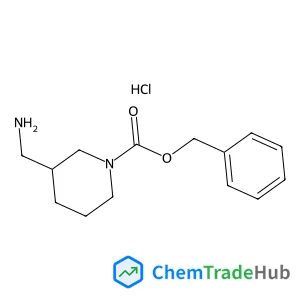
Benzyl 3-(aminomethyl)piperidine-1-carboxylate hydrochloride
CAS Number:
1186663-23-9
Molecular Formula:
C14H21ClN2O2

trans-2-(2-Methoxyphenyl)-5-oxotetrahydrofuran-3-carboxylic acid
CAS Number:
99226-02-5
Molecular Formula:
C12H12O5
Recommended Suppliers







Disclaimer
This page provides academic journal information for reference and research purposes only. We are not affiliated with any journal publishers and do not handle publication submissions. For publication-related inquiries, please contact the respective journal publishers directly.
If you notice any inaccuracies in the information displayed, please contact us at support@chemtradehub.com. We will promptly review and address your concerns.