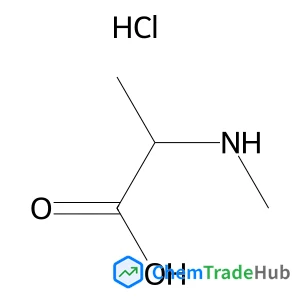
(R)-2-(Methylamino)propanoic acid hydrochloride
CAS Number:
1155878-14-0
Molecular Formula:
C4H10ClNO2
Alex-Adrian Farcaş, Attila Bende
The structural stability, charge transfer effects and strength of the spin–orbit couplings in different Ni(II)–ligand complexes have been studied at the DFT (B3LYP and CAM-B3LYP) and coupled cluster (DLPNO-CCSD(T)) levels of theory. Accordingly, two different, porphyrin- and diketo-pyrphyrin-based four-coordination macrocycles as planar ligands as well as pyridine (or pyrrole) and mesylate anion molecular groups as vertical ligands were considered in order to build metal–organic complexes with octahedral coordination configurations. For each molecular system, the identification of equilibrium geometries and the intersystem crossing (the minimum energy crossing) points between the potential energy surfaces of the singlet and triplet spin states is followed by computing the spin–orbit couplings between the two spin states. Structures, based on the diketo-pyrphyrin macrocycle as the planar ligand, show stronger six-coordination metal–organic complexes due to the extra electrostatic interaction between the positively charged central metal cation and the negatively charged vertical ligands. The results also show that the magnitude of the spin–orbit coupling is influenced by the atomic positions of deprotonations of the ligands, and implicitly the direction of the charge transfer between the ligand and the central metal ion.
Julibeth M. Martínez de la Hoz, Perla B. Balbuena
DOI: 10.1039/C2CP43517A
Mohammed Bahou, Yu-Jong Wu
DOI: 10.1039/C2CP43143B
Angel A. J. Torriero, Jaka Sunarso, Maria Forsyth, Cristina Pozo-Gonzalo
DOI: 10.1039/C2CP43177G
Aninda Chatterjee, Banibrata Maity, Debabrata Seth
DOI: 10.1039/C2CP43483K
Takamasa Momose, Yang Liu, Sida Zhou, Pavle Djuricanin, David Carty
DOI: 10.1039/C2CP43796A
Aleix Comas-Vives, Jochen Bandlow, Timo Jacob
DOI: 10.1039/C2CP43054A
Kai Chen, Haotian Wu, Qing Hua, Sujie Chang, Weixin Huang
DOI: 10.1039/C2CP44571A
Syed Raza Ali Raza, Young Tack Lee, Youn-Gyoung Chang, Pyo Jin Jeon, Jae Hoon Kim, Ryong Ha, Heon-Jin Choi, Seongil Im
DOI: 10.1039/C3CP44027C
Yifeng Liao, Emily Hoffman, Markus Wimmer, Alfons Fischer, Joshua Jacobs, Laurence Marks
DOI: 10.1039/C2CP42968C
Felix Deschler, Daniel Riedel, Bernhard Ecker
DOI: 10.1039/C2CP43876C
6-(3-Fluorophenyl)picolinic acid is generally considered safe for laboratory use...
(3R)-3-Pyrrolidinol is used in the pharmaceutical industry as a precursor for dr...
When handling (4R,5R)-4,5-Diethoxycarbonyl-2,2-dimethyldioxolane (CAS: 59779-75-...
1-(6-Chloroimidazo[1,2-b]pyridazin-3-yl)ethanone is often synthesized via a mult...
The market for N-Ethyl-3,4-dimethylbenzylamine (CAS: 39180-83-1) remains steady,...
Tert-butyl 3-(pyrrolidin-1-yl)azetidine-1-carboxylate is a chemical compound wit...
1-Bromo-3-chloro-2,4-dimethoxybenzene (CAS: 1228956-93-1) falls under the classi...
The safety of 8-Bromo-2-methyl-3,4-dihydroisoquinolin-1(2H)-one (CAS: 1368622-07...
Benzyl [(3S)-2,6-dioxo-3-piperidinyl]carbamate is generally safe when handled wi...
1-{[4-(4,4,5,5-Tetramethyl-1,3,2-dioxaborolan-2-yl)phenyl]sulfonyl}pyrrolidine s...

Physical Chemistry Chemical Physics (PCCP) is an international journal co-owned by 19 physical chemistry and physics societies from around the world. This journal publishes original, cutting-edge research in physical chemistry, chemical physics and biophysical chemistry. To be suitable for publication in PCCP, articles must include significant innovation and/or insight into physical chemistry; this is the most important criterion that reviewers and Editors will judge against when evaluating submissions. The journal has a broad scope and welcomes contributions spanning experiment, theory, computation and data science. Topical coverage includes spectroscopy, dynamics, kinetics, statistical mechanics, thermodynamics, electrochemistry, catalysis, surface science, quantum mechanics, quantum computing and machine learning. Interdisciplinary research areas such as polymers and soft matter, materials, nanoscience, energy, surfaces/interfaces, and biophysical chemistry are welcomed if they demonstrate significant innovation and/or insight into physical chemistry. Joined experimental/theoretical studies are particularly appreciated when complementary and based on up-to-date approaches.
![(2E)-4-[(1R,2S,8R,19S,21R)-14-Hydroxy-11-isopropenyl-8,23,23-trimethyl-5-(3-methyl-2-buten-1-yl)-16,20-dioxo-3,7,22-trioxaheptacyclo[17.4.1.1~8,12~.0~2,17~.0~2,21~.0~4,15~.0~6,13~]pentacosa-4(15),5,13
,17-tetraen-21-yl]-2-methyl-2-butenoic acid structure](https://static.chemtradehub.com/structs/173/173867-04-4-d2d3.webp "(2E)-4-[(1R,2S,8R,19S,21R)-14-Hydroxy-11-isopropenyl-8,23,23-trimethyl-5-(3-methyl-2-buten-1-yl)-16,20-dioxo-3,7,22-trioxaheptacyclo[17.4.1.1~8,12~.0~2,17~.0~2,21~.0~4,15~.0~6,13~]pentacosa-4(15),5,13
,17-tetraen-21-yl]-2-methyl-2-butenoic acid structure")