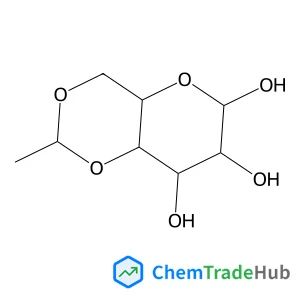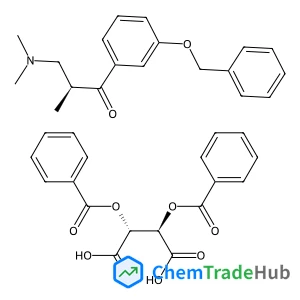
(S)-1-(3-(Benzyloxy)phenyl)-3-(dimethylamino)-2-methylpropan-1-one (2r,3r)-2,3-bis(benzoyloxy)succinate
CAS Number:
1004315-81-4
Molecular Formula:
C37H37NO10
Norihiro Suzuki, Shosuke Kiba, Yuichiro Kamachi, Nobuyoshi Miyamoto
We fabricate mesoporous silica/silicone composites in a simple way and systematically examine their thermal stability, swelling characteristic, mechanical strength, and transparency. Simple calculations show that more than 90 vol% of mesopores are filled with silicone rubbers. Compared to non-porous silica/silicone composites, mesoporous silica/silicone composites showed a lower coefficient of linear thermal expansion (CTE). In addition, dramatic improvements of the tensile strength and Young's modulus are obtained with mesoporous silica/silicone composites. Furthermore, mesoporous silica/silicone composites show higher transparency than non-porous silica/silicone composites.

Journal of Chemical Sciences

Polycyclic Aromatic Compounds

Critical Reviews in Solid State and Materials Sciences

Cellulose

Bioorganic & Medicinal Chemistry Letters

Journal of the Indian Institute of Science

Heteroatom Chemistry

Main Group Chemistry

Acta Metallurgica Sinica-English Letters

Chinese Journal of Chemistry
DOI: 10.1039/D3TB90200E
Charles C. Chusuei, Ram Chandra Nepal
DOI: 10.1039/D3NJ04054B
Aleena Pious, Shreya Muthukumar, Dharshini Karnan Singaravelu, Periyappan Nantheeswaran, Mariappan Mariappan, Arvind Sivasubramanian, Fuad Ameen, Anbazhagan Veerappan
DOI: 10.1039/D3NJ04494G
Honglian Wu, Tianci Wang, Yuting Wang, Sixi Liu, Feiqiu Wen, Gerile Oudeng, Mo Yang
DOI: 10.1039/D3TB01553J
Fatemeh Asilpour, Dariush Saberi, Alireza Hasaninejad
DOI: 10.1039/D3NJ03273F
Miaohui Yu, Tingting Fu, Wenzhai Li, Yan Zhang, Huayan Wen, Min Zheng, Moran Shi, Caiyun Liu, Meng Jin, Kechun Liu, Baocun Zhu
DOI: 10.1039/D3NJ04746F
Alexander S. Ovsyannikov, Aida I. Samigullina, Daut R. Islamov, Mikhail A. Cherosov, Ruslan G. Batulin, Airat G. Kiiamov, Aidar T. Gubaidullin, Pavel V. Dorovatovskii, Svetlana E. Solovieva, Igor S. Antipin
DOI: 10.1039/D3NJ04809H
Xuanyu Xiao, Lei Li, Hui Deng, Yuting Zhong, Wei Deng, Yuanyuan Xu, Zhiyu Chen, Jieyu Zhang, Xuefeng Hu, Yunbing Wang
DOI: 10.1039/D3TB01910A
6-(3-Fluorophenyl)picolinic acid is generally considered safe for laboratory use...
(3R)-3-Pyrrolidinol is used in the pharmaceutical industry as a precursor for dr...
When handling (4R,5R)-4,5-Diethoxycarbonyl-2,2-dimethyldioxolane (CAS: 59779-75-...
1-(6-Chloroimidazo[1,2-b]pyridazin-3-yl)ethanone is often synthesized via a mult...
The market for N-Ethyl-3,4-dimethylbenzylamine (CAS: 39180-83-1) remains steady,...
Tert-butyl 3-(pyrrolidin-1-yl)azetidine-1-carboxylate is a chemical compound wit...
1-Bromo-3-chloro-2,4-dimethoxybenzene (CAS: 1228956-93-1) falls under the classi...
The safety of 8-Bromo-2-methyl-3,4-dihydroisoquinolin-1(2H)-one (CAS: 1368622-07...
Benzyl [(3S)-2,6-dioxo-3-piperidinyl]carbamate is generally safe when handled wi...
1-{[4-(4,4,5,5-Tetramethyl-1,3,2-dioxaborolan-2-yl)phenyl]sulfonyl}pyrrolidine s...

Physical Chemistry Chemical Physics (PCCP) is an international journal co-owned by 19 physical chemistry and physics societies from around the world. This journal publishes original, cutting-edge research in physical chemistry, chemical physics and biophysical chemistry. To be suitable for publication in PCCP, articles must include significant innovation and/or insight into physical chemistry; this is the most important criterion that reviewers and Editors will judge against when evaluating submissions. The journal has a broad scope and welcomes contributions spanning experiment, theory, computation and data science. Topical coverage includes spectroscopy, dynamics, kinetics, statistical mechanics, thermodynamics, electrochemistry, catalysis, surface science, quantum mechanics, quantum computing and machine learning. Interdisciplinary research areas such as polymers and soft matter, materials, nanoscience, energy, surfaces/interfaces, and biophysical chemistry are welcomed if they demonstrate significant innovation and/or insight into physical chemistry. Joined experimental/theoretical studies are particularly appreciated when complementary and based on up-to-date approaches.
![3-[(3R,4R)-3-[(6-aminopyrimidin-4-yl)-methyl-amino]-4-methyl-1-piperidyl]-3-oxo-propanenitrile structure](https://static.chemtradehub.com/structs/164/1640971-60-3-83a4.webp "3-[(3R,4R)-3-[(6-aminopyrimidin-4-yl)-methyl-amino]-4-methyl-1-piperidyl]-3-oxo-propanenitrile structure")
![trans-2-{[(Tert-butoxy)carbonyl]amino}cyclobutane-1-carboxylic acid structure](https://static.chemtradehub.com/structs/951/951173-25-4-27cd.webp "trans-2-{[(Tert-butoxy)carbonyl]amino}cyclobutane-1-carboxylic acid structure")