












A theoretical study of the OH-initiated gas-phase oxidation mechanism of β-pinene (C10H16): first generation products
Literature Information
Publication Date
2012-01-23
DOI
10.1039/C2CP23711C
Impact Factor
3.676
Authors
J. Peeters
View Original
Abstract
An extensive mechanism for the OH-initiated oxidation of β-pinene up to the first-generation products was derived based on quantum chemical calculations, theoretical kinetics, and structure–activity relationships. The resulting mechanism deviates from earlier explicit mechanisms in several key areas, leading to a different product yield prediction. Under oxidative conditions, the inclusion of ring closure reactions of unsaturated alkoxy radicals brings the predicted nopinone and acetone yields to an agreement with the experimental data. Routes to the formation of other observed products, either speciated or observed as peaks in mass spectrometric studies, are also discussed. In pristine conditions, we predict significant acetone formation following ring closure reactions in alkylperoxy radicals; in addition, we predict some direct OH recycling in subsequent H-migration reactions in alkylperoxy radicals. The uncertainties on the key reactions are discussed. Overall, the OH-initiated oxidation of β-pinene is characterized by the formation of a few main products, and a very large number of products in minor to very small yields.
Related Literature
A Cu–Zn–Cu–Zn heterometallomacrocycle shows significant antiferromagnetic coupling between paramagnetic centres mediated by diamagnetic metal
Elena A. Buvaylo, Vladimir N. Kokozay, Olga Yu. Vassilyeva, Brian W. Skelton, Julia Jezierska, Louis C. Brunel, Andrew Ozarowski
2005-09-09
Communication
DOI: 10.1039/B509810F
Photoinduced charge separation and charge recombination of fullerene bearing dendritic poly(amidoamine) with carboxylates at the terminal in aqueous media
Yutaka Takaguchi, Yuuki Sako, Mitsuhiro Tamura
2005-09-22
Communication
DOI: 10.1039/B508793G
An unprecedented eight-connected self-penetrating network based on pentanuclear zinc cluster building blocks
Xin-Long Wang, Chao Qin, En-Bo Wang, Zhong-Min Su, Lin Xu, Stuart R. Batten
2005-08-25
Communication
DOI: 10.1039/B506398A
Highly effective phosphate electrochemical sensor based on tetrathiafulvalene
Wei Xu, Deqing Zhang, Daoben Zhu
2005-08-19
Communication
DOI: 10.1039/B509133K
First EXAFS studies on aurophilic interactions in solution
Héctor de la Riva, Aranzazu Pintado-Alba, Mark Nieuwenhuyzen, Christopher Hardacre, M. Cristina Lagunas
2005-09-08
Communication
DOI: 10.1039/B508863A
Superparamagnetic nanoparticle-supported enzymatic resolution of racemic carboxylates
Hari M. R. Gardimalla, Deendayal Mandal, Philip D. Stevens, Max Yen, Yong Gao
2005-08-11
Communication
DOI: 10.1039/B504128G
Structural and EPR characterisation of single electron and alkyl transfer products from reaction of dimethyl magnesium with bulky α-diimine ligands‡
Philip J. Bailey, Robert A. Coxall, Caroline M. Dick, Sylvie Fabre, Simon Parsons, Lesley J. Yellowlees
2005-08-17
Communication
DOI: 10.1039/B505697G
Crystalline Na–Si(NN) derivatives [Si(NN) = Si{(NCH2tBu)2C6H4-1,2}]: the silylenoid [Si(NN)OMe]−, the dianion [(NN)Si–Si(NN)]2−, and the radical anionc-[Si(NN)]3−
Floria Antolini, Barbara Gehrhus, Peter B. Hitchcock, Michael F. Lappert
2005-09-19
Communication
DOI: 10.1039/B509310D
Recognition of guanines at a double helix–coil junction in DNA by a trinuclear copper complex
Sunita Thyagarajan, Kenneth D. Karlin, Steven E. Rokita
2005-08-31
Communication
DOI: 10.1039/B509690A
You might also like
Compound Q&A
Is 6-(3-Fluorophenyl)picolinic acid (CAS: 887982-40-3) safe?
6-(3-Fluorophenyl)picolinic acid is generally considered safe for laboratory use...
887982-40-36-(3-Fluorophenyl)pi...
Compound Q&A
What industries use (3R)-3-Pyrrolidinol (CAS: 2799-21-5)?
(3R)-3-Pyrrolidinol is used in the pharmaceutical industry as a precursor for dr...
2799-21-5(3R)-3-Pyrrolidinol
Compound Q&A
What precautions should be taken when handling (4R,5R)-4,5-Diethoxycarbonyl-2,2-dimethyldioxolane (CAS: 59779-75-8)?
When handling (4R,5R)-4,5-Diethoxycarbonyl-2,2-dimethyldioxolane (CAS: 59779-75-...
59779-75-8(4R,5R)-4,5-Diethoxy...
Compound Q&A
How is 1-(6-Chloroimidazo[1,2-b]pyridazin-3-yl)ethanone (CAS: 90734-71-7) typically synthesized?
1-(6-Chloroimidazo[1,2-b]pyridazin-3-yl)ethanone is often synthesized via a mult...
90734-71-71-(6-Chloroimidazo[1...
Compound Q&A
What is the market or research trend for N-Ethyl-3,4-dimethylbenzylamine (CAS: 39180-83-1)?
The market for N-Ethyl-3,4-dimethylbenzylamine (CAS: 39180-83-1) remains steady,...
39180-83-1N-Ethyl-3,4-dimethyl...
Compound Q&A
What is Tert-butyl 3-(pyrrolidin-1-yl)azetidine-1-carboxylate (CAS: 1019008-21-9)?
Tert-butyl 3-(pyrrolidin-1-yl)azetidine-1-carboxylate is a chemical compound wit...
1019008-21-9Tert-butyl 3-(pyrrol...
Compound Q&A
What regulatory guidelines apply to 1-Bromo-3-chloro-2,4-dimethoxybenzene (CAS: 1228956-93-1)?
1-Bromo-3-chloro-2,4-dimethoxybenzene (CAS: 1228956-93-1) falls under the classi...
1228956-93-11-Bromo-3-chloro-2,4...
Compound Q&A
Is 8-Bromo-2-methyl-3,4-dihydroisoquinolin-1(2H)-one (CAS: 1368622-07-4) safe?
The safety of 8-Bromo-2-methyl-3,4-dihydroisoquinolin-1(2H)-one (CAS: 1368622-07...
1368622-07-48-Bromo-2-methyl-3,4...
Compound Q&A
Is Benzyl [(3S)-2,6-dioxo-3-piperidinyl]carbamate (CAS: 22785-43-9) safe?
Benzyl [(3S)-2,6-dioxo-3-piperidinyl]carbamate is generally safe when handled wi...
22785-43-9Benzyl [(3S)-2,6-dio...
Compound Q&A
How should 1-{[4-(4,4,5,5-Tetramethyl-1,3,2-dioxaborolan-2-yl)phenyl]sulfonyl}pyrrolidine (CAS: 928657-21-0) be stored?
1-{[4-(4,4,5,5-Tetramethyl-1,3,2-dioxaborolan-2-yl)phenyl]sulfonyl}pyrrolidine s...
928657-21-01-{[4-(4,4,5,5-Tetra...
Source Journal
Physical Chemistry Chemical Physics

CiteScore:
5.5
Self-citation Rate:
10.3%
Articles per Year:
3036
Physical Chemistry Chemical Physics (PCCP) is an international journal co-owned by 19 physical chemistry and physics societies from around the world. This journal publishes original, cutting-edge research in physical chemistry, chemical physics and biophysical chemistry. To be suitable for publication in PCCP, articles must include significant innovation and/or insight into physical chemistry; this is the most important criterion that reviewers and Editors will judge against when evaluating submissions. The journal has a broad scope and welcomes contributions spanning experiment, theory, computation and data science. Topical coverage includes spectroscopy, dynamics, kinetics, statistical mechanics, thermodynamics, electrochemistry, catalysis, surface science, quantum mechanics, quantum computing and machine learning. Interdisciplinary research areas such as polymers and soft matter, materials, nanoscience, energy, surfaces/interfaces, and biophysical chemistry are welcomed if they demonstrate significant innovation and/or insight into physical chemistry. Joined experimental/theoretical studies are particularly appreciated when complementary and based on up-to-date approaches.
Recommended Compounds
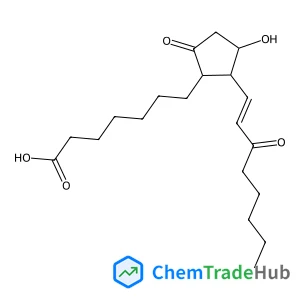
(11alpha,13E)-11-Hydroxy-9,15-dioxoprost-13-en-1-oic acid
CAS Number:
22973-19-9
Molecular Formula:
C20H32O5
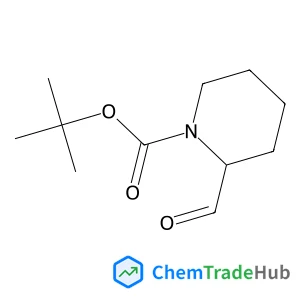
2-Methyl-2-propanyl (2R)-2-formyl-1-piperidinecarboxylate
CAS Number:
134526-69-5
Molecular Formula:
C11H19NO3
![Benzyl spiro[indole-3,4'-piperidine]-1(2H)-carboxylate hydrochloride (1:1) structure](https://static.chemtradehub.com/structs/159/159635-46-8-8de0.webp "Benzyl spiro[indole-3,4'-piperidine]-1(2H)-carboxylate hydrochloride (1:1) structure")
Benzyl spiro[indole-3,4'-piperidine]-1(2H)-carboxylate hydrochloride (1:1)
CAS Number:
159635-46-8
Molecular Formula:
C20H23ClN2O2
![[4-Chloro-3-(diethylcarbamoyl)phenyl]boronic acid structure](https://static.chemtradehub.com/structs/871/871332-68-2-0e3b.webp "[4-Chloro-3-(diethylcarbamoyl)phenyl]boronic acid structure")
[4-Chloro-3-(diethylcarbamoyl)phenyl]boronic acid
CAS Number:
871332-68-2
Molecular Formula:
C11H15BClNO3
Recommended Suppliers





Disclaimer
This page provides academic journal information for reference and research purposes only. We are not affiliated with any journal publishers and do not handle publication submissions. For publication-related inquiries, please contact the respective journal publishers directly.
If you notice any inaccuracies in the information displayed, please contact us at support@chemtradehub.com. We will promptly review and address your concerns.