



Electronic and magnetic properties of the two-dimensional C4H-type polymer with strain effects, intrinsic defects and foreign atom substitutions
Literature Information
Publication Date
2012-01-06
DOI
10.1039/C2CP23494G
Impact Factor
3.676
Authors
Yandong Ma, Ying Dai, Meng Guo, Chengwang Niu, Zhenkui Zhang, Baibiao Huang
View Original
Abstract
Following the two-dimensional periodic single-layer sheet successful synthesized experimentally very recently [Adv. Mater., 2011, 23, 4497], we present systematically the electronic and magnetic properties of this novel polymer (referred to as C4H) without and with strain-modifying, vacancy-doping, and nonmetal element (B, N, and P) doping by means of first-principles calculations. It was found that: (a) the C4H sheet is a nonmagnetic semiconductor with a wide indirect band gap. (b) The atomic structure, binding energies and electronic properties of the C4H sheet could be significantly modified by applying strain. (c) Vacancy defects can lead to intrinsic magnetism in C4H and, surprisingly, the induced spin polarization has large spatial extension; especially, room-temperature ferromagnetism in H vacancies-doped case is quite feasible. (d) Substitution of B, P and N at the unhydrogenated C site could form a local magnetic moment, whereas no spin-polarization could be induced for that with N at the hydrogenated C site. The present study provides theoretical insight leading to a better understanding of novel 2D structures, and further experimental studies are expected to confirm the attractive predictions.
Recommended Journals

Electroanalysis

Bioorganic & Medicinal Chemistry Letters

Chinese Journal of Chemistry

Main Group Chemistry

NDT & E International

Medicinal Chemistry Research

Journal of the Indian Institute of Science

Polycyclic Aromatic Compounds

Critical Reviews in Solid State and Materials Sciences

Herald of the Russian Academy of Sciences
Related Literature
Computational studies of electrochemical CO2 reduction on subnanometer transition metal clusters
Cong Liu, Haiying He, Peter Zapol, Larry A. Curtiss
2014-08-12
Paper
DOI: 10.1039/C4CP02690J
Particle aggregation mechanisms in ionic liquids
Istvan Szilagyi, Tamas Szabo, Anthony Desert, Gregor Trefalt, Tamas Oncsik, Michal Borkovec
2014-04-07
Paper
DOI: 10.1039/C4CP00804A
Spectro-microscopic photoemission evidence of charge uncompensated areas in Pb(Zr,Ti)O3(001) layers
Dana Georgeta Popescu, Marius Adrian Huşanu, Lucian Trupinǎ, Luminiţa Hrib, Lucian Pintilie, Alexei Barinov, Silvano Lizzit, Paolo Lacovig, Cristian Mihail Teodorescu
2014-11-05
Paper
DOI: 10.1039/C4CP04546G
Direct observation of key photoinduced dynamics in a potential nano-delivery vehicle of cancer drugs
Samim Sardar, Siddhi Chaudhuri, Prasenjit Kar, Soumik Sarkar, Samir Kumar Pal
2014-10-28
Paper
DOI: 10.1039/C4CP03749A
Conformational changes of globular proteins upon adsorption on a hydrophobic surface
Yevgeny Moskovitz, Simcha Srebnik
2014-04-16
Paper
DOI: 10.1039/C4CP00354C
Reactive simulations of the activation barrier to dissolution of amorphous silica in water
Michael Kagan, Glenn K. Lockwood, Stephen H. Garofalini
2014-04-09
Paper
DOI: 10.1039/C4CP00030G
Shock wave and modeling study of the thermal decomposition reactions of pentafluoroethane and 2-H-heptafluoropropane
C. J. Cobos, L. Sölter, E. Tellbach
2013-12-18
Paper
DOI: 10.1039/C3CP54274B
Theoretical investigation and design of high-efficiency dithiafulvenyl-based sensitizers for dye-sensitized solar cells: the impacts of elongating π-spacers and rigidifying dithiophene
Wei Li, Jian Wang, Jie Chen, Fu-Quan Bai, Hong-Xing Zhang
2014-03-31
Paper
DOI: 10.1039/C4CP00968A
High DNP efficiency of TEMPONE radicals in liquid toluene at low concentrations
Nikolay Enkin, Guoquan Liu, Igor Tkach, Marina Bennati
2014-03-20
Communication
DOI: 10.1039/C4CP00854E
A designed bithiopheneimide-based conjugated polymer for organic photovoltaic with ultrafast charge transfer at donor/PC71BM interface: theoretical study and characterization
Shuang-Bao Li, Yu-Ai Duan, Yun Geng, Hai-Bin Li, Jian-Zhao Zhang, Hong-Liang Xu, Min Zhang, Zhong-Min Su
2014-09-03
Paper
DOI: 10.1039/C4CP03022B
You might also like
Compound Q&A
How should waste containing N-Methoxy-N-methyl-1,3-thiazole-5-carboxamide (CAS: 898825-89-3) be handled?
Waste containing N-Methoxy-N-methyl-1,3-thiazole-5-carboxamide (CAS: 898825-89-3...
898825-89-3N-Methoxy-N-methyl-1...
Compound Q&A
How should N-(4-Biphenylyl)dibenzo[b,d]furan-4-amine (CAS: 1318338-47-4) be stored?
N-(4-Biphenylyl)dibenzo[b,d]furan-4-amine should be stored in a tightly sealed c...
1318338-47-4N-(4-Biphenylyl)dibe...
Compound Q&A
What is the market or research trend for 3-Acetamido-5-amino-2,4,6-triiodobenzoic acid (CAS: 1713-07-1)?
The market for 3-Acetamido-5-amino-2,4,6-triiodobenzoic acid (CAS: 1713-07-1) is...
1713-07-13-Acetamido-5-amino-...
Compound Q&A
How should Benzyl 2-O-acetyl-3,4,6-tri-O-benzyl-beta-D-galactopyranoside (CAS: 61820-03-9) be stored?
Benzyl 2-O-acetyl-3,4,6-tri-O-benzyl-beta-D-galactopyranoside (CAS: 61820-03-9) ...
61820-03-9Benzyl 2-O-acetyl-3,...
Compound Q&A
What regulatory guidelines apply to 2-Ethylpiperazine dihydrochloride (CAS: 438050-52-3)?
2-Ethylpiperazine dihydrochloride (CAS: 438050-52-3) is regulated under the Glob...
438050-52-32-Ethylpiperazine di...
Compound Q&A
What regulatory guidelines apply to 1,1'-[1,3-Phenylenebis(methylene)]bis(3-methyl-1H-pyrrole-2,5-dione) (CAS: 119462-56-5)?
1,1'-[1,3-Phenylenebis(methylene)]bis(3-methyl-1H-pyrrole-2,5-dione) (CAS: 11946...
119462-56-51,1'-[1,3-Phenyleneb...
Compound Q&A
Are there alternatives to 5-Fluoro-2-(1-pyrrolidinyl)pyridine (CAS: 1287217-79-1) in synthesis?
Several alternatives can be used in the synthesis of 5-Fluoro-2-(1-pyrrolidinyl)...
1287217-79-15-Fluoro-2-(1-pyrrol...
Compound Q&A
What precautions should be taken when handling 1-((2R,3R,4R,5R)-5-((bis(4-methoxyphenyl)(phenyl)methoxy)methyl)-4-hydroxy-3-methoxytetrahydrofuran-2-yl)-5-methylpyrimidine-2,4(1H,3H)-dione (CAS: 153631-19-7)?
Proper personal protective equipment (PPE) must be worn when handling this compo...
153631-19-71-((2R,3R,4R,5R)-5-(...
Compound Q&A
What precautions should be taken when handling 6-Bromoimidazo[1,2-a]pyridin-8-amine (CAS: 676371-00-9)?
When handling 6-Bromoimidazo[1,2-a]pyridin-8-amine, it is important to wear appr...
676371-00-96-Bromoimidazo[1,2-a...
Compound Q&A
Are there alternatives to (2S,4R)-4-(4-Nitrobenzyl)pyrrolidine-2-carboxylic acid hydrochloride (CAS: 1049740-22-8) in synthesis?
Alternatives to (2S,4R)-4-(4-Nitrobenzyl)pyrrolidine-2-carboxylic acid hydrochlo...
1049740-22-8(2S,4R)-4-(4-Nitrobe...
Source Journal
Physical Chemistry Chemical Physics

CiteScore:
5.5
Self-citation Rate:
10.3%
Articles per Year:
3036
Physical Chemistry Chemical Physics (PCCP) is an international journal co-owned by 19 physical chemistry and physics societies from around the world. This journal publishes original, cutting-edge research in physical chemistry, chemical physics and biophysical chemistry. To be suitable for publication in PCCP, articles must include significant innovation and/or insight into physical chemistry; this is the most important criterion that reviewers and Editors will judge against when evaluating submissions. The journal has a broad scope and welcomes contributions spanning experiment, theory, computation and data science. Topical coverage includes spectroscopy, dynamics, kinetics, statistical mechanics, thermodynamics, electrochemistry, catalysis, surface science, quantum mechanics, quantum computing and machine learning. Interdisciplinary research areas such as polymers and soft matter, materials, nanoscience, energy, surfaces/interfaces, and biophysical chemistry are welcomed if they demonstrate significant innovation and/or insight into physical chemistry. Joined experimental/theoretical studies are particularly appreciated when complementary and based on up-to-date approaches.
Recommended Compounds

![[(5-Methyl-1,3,4-thiadiazol-2-yl)sulfanyl]acetic acid structure](https://static.chemtradehub.com/structs/509/50918-26-8-4ce8.webp "[(5-Methyl-1,3,4-thiadiazol-2-yl)sulfanyl]acetic acid structure")
[(5-Methyl-1,3,4-thiadiazol-2-yl)sulfanyl]acetic acid
CAS Number:
50918-26-8
Molecular Formula:
C5H6N2O2S2
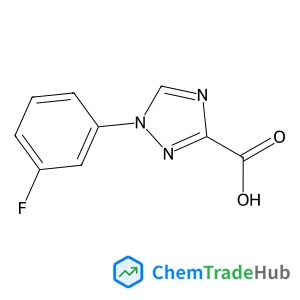
1-(3-Fluorophenyl)-1H-1,2,4-triazole-3-carboxylic acid
CAS Number:
1292369-51-7
Molecular Formula:
C9H6FN3O2
Recommended Suppliers




Disclaimer
This page provides academic journal information for reference and research purposes only. We are not affiliated with any journal publishers and do not handle publication submissions. For publication-related inquiries, please contact the respective journal publishers directly.
If you notice any inaccuracies in the information displayed, please contact us at support@chemtradehub.com. We will promptly review and address your concerns.