


Computational studies of electrochemical CO2 reduction on subnanometer transition metal clusters
Literature Information
Publication Date
2014-08-12
DOI
10.1039/C4CP02690J
Impact Factor
3.676
Authors
Cong Liu, Haiying He, Peter Zapol, Larry A. Curtiss
View Original
Abstract
Computational studies of electrochemical reduction of CO2 to CO, HCOOH and CH4 were carried out using tetra-atomic transition metal clusters (Fe4, Co4, Ni4, Cu4 and Pt4) at the B3LYP level of theory. Novel catalytic properties were discovered for these subnanometer clusters, suggesting that they may be good candidate materials for CO2 reduction. The calculated overpotentials for producing CH4 are in the order, Co4 < Fe4 < Ni4 < Cu4 < Pt4, with both Co4 and Fe4 having overpotentials less than 1 V. Investigation of the effects of supports found that a Cu4 cluster on a graphene defect site has a limiting potential for producing CH4 comparable to that of a Cu (111) surface. However, due to the strong electronic interaction with the Cu4 cluster, the defective graphene support has the advantage of significantly increasing the limiting potentials for the reactions competing with CH4, such as the hydrogen evolution reaction (HER) and CO production.
Recommended Journals

Herald of the Russian Academy of Sciences

Journal of the Indian Institute of Science

Critical Reviews in Solid State and Materials Sciences

Journal of Chemical Sciences

Biocatalysis and Biotransformation

Journal of Asian Natural Products Research

Bioorganic & Medicinal Chemistry Letters

Main Group Chemistry

Topics in Catalysis

Chinese Journal of Chemistry
Related Literature
Characterization of the H2 sensing mechanism of Pd-promoted SnO2 by XAS in operando conditions
Thomas Neisius, Bernard Chenevier, Aleksandre M. Gaskov, Michel Labeau
2005-09-19
Communication
DOI: 10.1039/B509826B
The direct α-zincation of amides, phosphonates and phosphine oxides by H–Zn exchange
Mark L. Hlavinka, Jeffrey F. Greco, John R. Hagadorn
2005-09-23
Communication
DOI: 10.1039/B509190J
PNA forms an i-motif
Yamuna Krishnan-Ghosh, Elaine Stephens, Shankar Balasubramanian
2005-09-23
Communication
DOI: 10.1039/B510405J
Synthesis and spectroscopic observation of dendrimer-encapsulated gold nanoclusters
M. Linh Tran, Andrei V. Zvyagin, Taras Plakhotnik
2006-05-03
Communication
DOI: 10.1039/B602079H
Three-dimensional motion and transformation of a photoelectrochemical actuator
Kazutake Takada, Taichi Miyazaki, Nobutaka Tanaka, Tetsu Tatsuma
2006-04-11
Communication
DOI: 10.1039/B600442C
Metal complexes of selenophosphinates from reactions with (R2PSe)2Se: [M(R2PSe2)n] (M = ZnII, CdII, PbII, InIII, GaIII, CuI, BiIII, NiII; R = iPr, Ph) and [MoV2O2Se2(Se2PiPr2)2]
Chinh Q. Nguyen, Adekunle Adeogun, Mohammad Afzaal, Mohammad A. Malik, Paul O'Brien
2006-04-21
Communication
DOI: 10.1039/B603198F
Direction of unusual mixed-ligand metal–organic frameworks: a new type of 3-D polythreading involving 1-D and 2-D structural motifs and a 2-fold interpenetrating porous network
Miao Du, Xiu-Juan Jiang, Xiao-Jun Zhao
2005-10-07
Communication
DOI: 10.1039/B509875K
A novel mediatorless microbial fuel cell based on direct biocatalysis of Escherichia coli
Tian Zhang, Changzheng Cui, Shengli Chen, Xinping Ai, Hanxi Yang, Ping Shen, Zhenrong Peng
2006-04-25
Communication
DOI: 10.1039/B600876C
Hemiaminals as substrates for sulfur ylides: Direct asymmetric syntheses of functionalised pyrrolidines and piperidines
Christoforos G. Kokotos, Varinder K. Aggarwal
2006-04-13
Communication
DOI: 10.1039/B602226J
You might also like
Compound Q&A
What are the main uses of 1H-Indazole-6-carbonitrile (CAS: 141290-59-7)?
1H-Indazole-6-carbonitrile finds applications in pharmaceuticals, where it serve...
141290-59-71H-Indazole-6-carbon...
Compound Q&A
How should waste containing Dioctyl (2E)-2-butenedioate (CAS: 2997-85-5) be handled?
Waste containing Dioctyl (2E)-2-butenedioate (CAS: 2997-85-5) should be collecte...
2997-85-5Dioctyl (2E)-2-buten...
Compound Q&A
What industries use Sodium [(1,2-benzoxazol-3-ylmethyl)sulfonyl]azanide (CAS: 68291-98-5)?
Sodium [(1,2-benzoxazol-3-ylmethyl)sulfonyl]azanide is primarily used in pharmac...
68291-98-5Sodium [(1,2-benzoxa...
Compound Q&A
Are there alternatives to Dimethyl 4-(4,4,5,5-tetramethyl-1,3,2-dioxaborolan-2-yl)-2,6-pyridinedicarboxylate (CAS: 741709-66-0) in synthesis?
Dimethyl 4-(4,4,5,5-tetramethyl-1,3,2-dioxaborolan-2-yl)-2,6-pyridinedicarboxyla...
741709-66-0Dimethyl 4-(4,4,5,5-...
Compound Q&A
How should waste containing 2-Fluoro-6-hydrazinopyridine (CAS: 80714-39-2) be handled?
Waste containing 2-Fluoro-6-hydrazinopyridine (CAS: 80714-39-2) should be manage...
80714-39-22-Fluoro-6-hydrazino...
Compound Q&A
What is 6-Formyl-2-pyridinecarboxylic acid (CAS: 499214-11-8)?
6-Formyl-2-pyridinecarboxylic acid is an organic compound with the molecular for...
499214-11-86-Formyl-2-pyridinec...
Compound Q&A
What is the market or research trend for 3-(3,4-dimethoxyphenyl)-2,5-dimethyl-N-(2-morpholin-4-ylethyl)pyrazolo[1,5-a]pyrimidin-7-amine (CAS: 900874-91-1)?
Research trends for this compound indicate a focus on its potential applications...
900874-91-13-(3,4-dimethoxyphen...
Compound Q&A
How is 9H-Tribenzo[b,d,f]azepine (CAS: 29875-73-8) typically synthesized?
9H-Tribenzo[b,d,f]azepine is typically synthesized via a multi-step process invo...
29875-73-89H-Tribenzo[b,d,f]az...
Compound Q&A
How is 1-Cyclopropyl-7-ethoxy-6-fluoro-8-methoxy-4-oxo-1,4-dihydro-3-quinolinecarboxylic acid (CAS: 1797982-51-4) typically synthesized?
1-Cyclopropyl-7-ethoxy-6-fluoro-8-methoxy-4-oxo-1,4-dihydro-3-quinolinecarboxyli...
1797982-51-41-Cyclopropyl-7-etho...
Compound Q&A
How should waste containing Methyl 3-oxo-1,2,3,4-tetrahydro-6-quinoxalinecarboxylate (CAS: 671820-52-3) be handled?
Waste containing Methyl 3-oxo-1,2,3,4-tetrahydro-6-quinoxalinecarboxylate (CAS: ...
671820-52-3Methyl 3-oxo-1,2,3,4...
Source Journal
Physical Chemistry Chemical Physics

CiteScore:
5.5
Self-citation Rate:
10.3%
Articles per Year:
3036
Physical Chemistry Chemical Physics (PCCP) is an international journal co-owned by 19 physical chemistry and physics societies from around the world. This journal publishes original, cutting-edge research in physical chemistry, chemical physics and biophysical chemistry. To be suitable for publication in PCCP, articles must include significant innovation and/or insight into physical chemistry; this is the most important criterion that reviewers and Editors will judge against when evaluating submissions. The journal has a broad scope and welcomes contributions spanning experiment, theory, computation and data science. Topical coverage includes spectroscopy, dynamics, kinetics, statistical mechanics, thermodynamics, electrochemistry, catalysis, surface science, quantum mechanics, quantum computing and machine learning. Interdisciplinary research areas such as polymers and soft matter, materials, nanoscience, energy, surfaces/interfaces, and biophysical chemistry are welcomed if they demonstrate significant innovation and/or insight into physical chemistry. Joined experimental/theoretical studies are particularly appreciated when complementary and based on up-to-date approaches.
Recommended Compounds

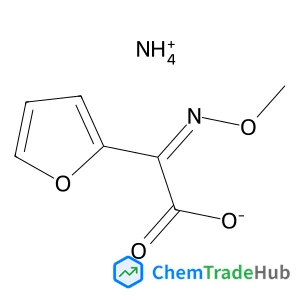
Ammonium (Z)-2-(furan-2-yl)-2-(methoxyimino)acetate
CAS Number:
97148-39-5
Molecular Formula:
C7H10N2O4
Recommended Suppliers






Disclaimer
This page provides academic journal information for reference and research purposes only. We are not affiliated with any journal publishers and do not handle publication submissions. For publication-related inquiries, please contact the respective journal publishers directly.
If you notice any inaccuracies in the information displayed, please contact us at support@chemtradehub.com. We will promptly review and address your concerns.