


Shock wave and modeling study of the thermal decomposition reactions of pentafluoroethane and 2-H-heptafluoropropane
Literature Information
Publication Date
2013-12-18
DOI
10.1039/C3CP54274B
Impact Factor
3.676
Authors
C. J. Cobos, L. Sölter, E. Tellbach
View Original
Abstract
The thermal decomposition reactions of CF3CF2H and CF3CFHCF3 have been studied in shock waves by monitoring the appearance of CF2 radicals. Temperatures in the range 1400–2000 K and Ar bath gas concentrations in the range (2–10) × 10−5 mol cm−3 were employed. It is shown that the reactions are initiated by C–C bond fission and not by HF elimination. Differing conclusions in the literature about the primary decomposition products, such as deduced from experiments at very low pressures, are attributed to unimolecular falloff effects. By increasing the initial reactant concentrations in Ar from 60 to 1000 ppm, a retardation of CF2 formation was observed while the final CF2 yields remained close to two CF2 per C2F5H or three CF2 per C3F7H decomposed. This is explained by secondary bimolecular reactions which lead to comparably stable transient species like CF3H, releasing CF2 at a slower rate. Quantum-chemical calculations and kinetic modeling help to identify the reaction pathways and provide estimates of rate constants for a series of primary and secondary reactions in the decomposition mechanism.
Recommended Journals

Biocatalysis and Biotransformation

Acta Metallurgica Sinica-English Letters

Journal of Chemical Sciences

Bioorganic & Medicinal Chemistry Letters

Chinese Journal of Chemistry

NDT & E International

Medicinal Chemistry Research

Journal of Asian Natural Products Research

Electroanalysis

Herald of the Russian Academy of Sciences
Related Literature
A comparison of inductively coupled plasma torch-sample introduction configurations using simplex optimisation
Paper
DOI: 10.1039/JA9860100265
High-efficiency electrocatalyst for N2 conversion to NH3 based on Au nanoparticles loaded on defective WO3−x
Youzeng Li, Pengfei Yan, Jun Chen, Yumei Ren, Yannan Zhou, Tianpei Ge, Jun Chen
2019-10-02
Communication
DOI: 10.1039/C9CC06550D
Hydrogen bonded supramolecular assemblies based on neutral square-planar palladium(ii) complexes
Martin B. Smith, Sophie H. Dale, Simon J. Coles, Thomas Gelbrich, Michael B. Hursthouse, Mark E. Light, Peter N. Horton
2007-01-08
Paper
DOI: 10.1039/B616337H
Use of the fluorogenic Al3+–quinolinyl-azo-naphtholato complex for the determination of F− in aqueous medium by visible light excitation and application in ground water fluoride analysis
Sunanda Dey, Debashis Mallick, Chittaranjan Sinha
2019-08-07
Paper
DOI: 10.1039/C9AY01418G
Cathodic electrochemical activation of Co3O4 nanoarrays: a smart strategy to significantly boost the hydrogen evolution activity
Li Yang, Huang Zhou, Xin Qin, Xiaodong Guo, Guanwei Cui, Abdullah M. Asiri, Xuping Sun
2018-01-31
Communication
DOI: 10.1039/C7CC09416G
A more universal and stable method for lactate dehydrogenase isoenzyme test
Peijuan Li, Nanhai Qiu, Li Zhang, Guishu Zhong, Fancai Zeng
2019-07-17
Paper
DOI: 10.1039/C9AY01327J
Intrinsic anisotropic crystallization of gold into microplates
Sanju Francis, Lalit Varshney
2015-10-02
Communication
DOI: 10.1039/C5CE01615K
PCBM doped with fluorene-based polyelectrolytes as electron transporting layers for improving the performance of planar heterojunction perovskite solar cells
Wei-Jie Huang, Pang-Hua Huang, Sheng-Hsiung Yang
2016-10-25
Communication
DOI: 10.1039/C6CC07062K
You might also like
Compound Q&A
What are the main uses of 1H-Indazole-6-carbonitrile (CAS: 141290-59-7)?
1H-Indazole-6-carbonitrile finds applications in pharmaceuticals, where it serve...
141290-59-71H-Indazole-6-carbon...
Compound Q&A
How should waste containing Dioctyl (2E)-2-butenedioate (CAS: 2997-85-5) be handled?
Waste containing Dioctyl (2E)-2-butenedioate (CAS: 2997-85-5) should be collecte...
2997-85-5Dioctyl (2E)-2-buten...
Compound Q&A
What industries use Sodium [(1,2-benzoxazol-3-ylmethyl)sulfonyl]azanide (CAS: 68291-98-5)?
Sodium [(1,2-benzoxazol-3-ylmethyl)sulfonyl]azanide is primarily used in pharmac...
68291-98-5Sodium [(1,2-benzoxa...
Compound Q&A
Are there alternatives to Dimethyl 4-(4,4,5,5-tetramethyl-1,3,2-dioxaborolan-2-yl)-2,6-pyridinedicarboxylate (CAS: 741709-66-0) in synthesis?
Dimethyl 4-(4,4,5,5-tetramethyl-1,3,2-dioxaborolan-2-yl)-2,6-pyridinedicarboxyla...
741709-66-0Dimethyl 4-(4,4,5,5-...
Compound Q&A
How should waste containing 2-Fluoro-6-hydrazinopyridine (CAS: 80714-39-2) be handled?
Waste containing 2-Fluoro-6-hydrazinopyridine (CAS: 80714-39-2) should be manage...
80714-39-22-Fluoro-6-hydrazino...
Compound Q&A
What is 6-Formyl-2-pyridinecarboxylic acid (CAS: 499214-11-8)?
6-Formyl-2-pyridinecarboxylic acid is an organic compound with the molecular for...
499214-11-86-Formyl-2-pyridinec...
Compound Q&A
What is the market or research trend for 3-(3,4-dimethoxyphenyl)-2,5-dimethyl-N-(2-morpholin-4-ylethyl)pyrazolo[1,5-a]pyrimidin-7-amine (CAS: 900874-91-1)?
Research trends for this compound indicate a focus on its potential applications...
900874-91-13-(3,4-dimethoxyphen...
Compound Q&A
How is 9H-Tribenzo[b,d,f]azepine (CAS: 29875-73-8) typically synthesized?
9H-Tribenzo[b,d,f]azepine is typically synthesized via a multi-step process invo...
29875-73-89H-Tribenzo[b,d,f]az...
Compound Q&A
How is 1-Cyclopropyl-7-ethoxy-6-fluoro-8-methoxy-4-oxo-1,4-dihydro-3-quinolinecarboxylic acid (CAS: 1797982-51-4) typically synthesized?
1-Cyclopropyl-7-ethoxy-6-fluoro-8-methoxy-4-oxo-1,4-dihydro-3-quinolinecarboxyli...
1797982-51-41-Cyclopropyl-7-etho...
Compound Q&A
How should waste containing Methyl 3-oxo-1,2,3,4-tetrahydro-6-quinoxalinecarboxylate (CAS: 671820-52-3) be handled?
Waste containing Methyl 3-oxo-1,2,3,4-tetrahydro-6-quinoxalinecarboxylate (CAS: ...
671820-52-3Methyl 3-oxo-1,2,3,4...
Source Journal
Physical Chemistry Chemical Physics

CiteScore:
5.5
Self-citation Rate:
10.3%
Articles per Year:
3036
Physical Chemistry Chemical Physics (PCCP) is an international journal co-owned by 19 physical chemistry and physics societies from around the world. This journal publishes original, cutting-edge research in physical chemistry, chemical physics and biophysical chemistry. To be suitable for publication in PCCP, articles must include significant innovation and/or insight into physical chemistry; this is the most important criterion that reviewers and Editors will judge against when evaluating submissions. The journal has a broad scope and welcomes contributions spanning experiment, theory, computation and data science. Topical coverage includes spectroscopy, dynamics, kinetics, statistical mechanics, thermodynamics, electrochemistry, catalysis, surface science, quantum mechanics, quantum computing and machine learning. Interdisciplinary research areas such as polymers and soft matter, materials, nanoscience, energy, surfaces/interfaces, and biophysical chemistry are welcomed if they demonstrate significant innovation and/or insight into physical chemistry. Joined experimental/theoretical studies are particularly appreciated when complementary and based on up-to-date approaches.
Recommended Compounds
![(1S)-1,5-Anhydro-1-[3-(1-benzothiophen-2-ylmethyl)-4-fluorophenyl]-D-glucitol structure](https://static.chemtradehub.com/structs/761/761423-87-4-dbeb.webp "(1S)-1,5-Anhydro-1-[3-(1-benzothiophen-2-ylmethyl)-4-fluorophenyl]-D-glucitol structure")
(1S)-1,5-Anhydro-1-[3-(1-benzothiophen-2-ylmethyl)-4-fluorophenyl]-D-glucitol
CAS Number:
761423-87-4
Molecular Formula:
C21H21FO5S
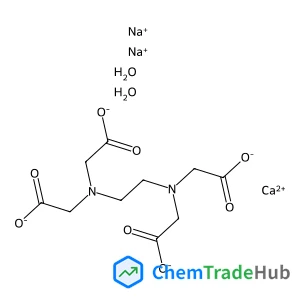
EthylenediaminetetraaceticacidcalciumDisodiumsalthydrate
CAS Number:
23411-34-9
Molecular Formula:
C10H16CaN2Na2O10
Recommended Suppliers







Disclaimer
This page provides academic journal information for reference and research purposes only. We are not affiliated with any journal publishers and do not handle publication submissions. For publication-related inquiries, please contact the respective journal publishers directly.
If you notice any inaccuracies in the information displayed, please contact us at support@chemtradehub.com. We will promptly review and address your concerns.