












Surface contacts strongly influence the elasticity and thermal conductivity of silica nanoparticle fibers
Literature Information
Publication Date
2020-12-10
DOI
10.1039/D0CP05377E
Impact Factor
3.676
Authors
Bohai Liu, Sudatta Das, Xiangfan Xu, Jingli Xie, Xu Deng, George Fytas
View Original
Abstract
Granular materials are often encountered in science and engineering disciplines, in which controlling the particle contacts is one of the critical issues for the design, engineering, and utilization of their desired properties. The achievable rapid fabrication of nanoparticles with tunable physical and chemical properties facilitates tailoring the macroscopic properties of particle assemblies through contacts at the nanoscale. Models have been developed to predict the mechanical properties of macroscopic granular materials; however, their predicted power in the case of nanoparticle assemblies is still uncertain. Here, we investigate the influence of nanocontacts on the elasticity and thermal conductivity of a granular fiber comprised of close-packed silica nanoparticles. A complete elastic moduli characterization was realized by non-contact and non-destructive Brillouin light spectroscopy, which also allowed resolving the stiffness of the constituent particles in situ. In the framework of effective medium models, the strong enhancement of the elastic moduli is attributed to the formation of adhesive nanocontacts with physical and/or chemical bondings. The nanoparticle contacts are also responsible for the increase in the fiber thermal conductivity that emphasizes the role of interface thermal resistance, which tends to be ignored in most porosity models. This insight into the fundamental understanding of structure–property relationships advances knowledge on the manipulation of granular systems at the nanoscale.
Related Literature
Local surface structure effect on reactivity of molecules confined between metallic surfaces
Julibeth M. Martínez de la Hoz, Perla B. Balbuena
2012-11-30
Paper
DOI: 10.1039/C2CP43517A
Two-dimensional SixGe1−x films with variable composition made via multilayer colloidal template-guided ionic liquid electrodeposition
Wuhong Xin, Jiupeng Zhao, Dengteng Ge, Yanbo Ding, Yao Li, Frank Endres
2012-12-04
Paper
DOI: 10.1039/C2CP43983B
Graphene oxide based surface-enhanced Raman scattering probes for cancer cell imaging
Zhiming Liu, Zhouyi Guo, Huiqing Zhong, Xiaochu Qin, Mingming Wan, Biwen Yang
2013-01-03
Paper
DOI: 10.1039/C2CP43715E
The photophysics of 7-(N,N′-diethylamino)coumarin-3-carboxylic acid in water/AOT/isooctane reverse micelles: an excitation wavelength dependent study
Aninda Chatterjee, Banibrata Maity, Debabrata Seth
2012-11-27
Paper
DOI: 10.1039/C2CP43483K
Is ballistic transportation or quantum confinement responsible for changes in the electrical properties of thin polymer films?
Jean-Pierre Veder, Kunal Patel, Junqiao Lee, Muhammad Tanzirul Alam, Andrew Nelson, Roland De Marco
2012-11-26
Communication
DOI: 10.1039/C2CP43333H
Other origins for the fluorescence modulation of single dye molecules in open-circuit and short-circuit devices
Jefri S. Teguh, Michael Kurniawan, Xiangyang Wu, Tze Chien Sum, Edwin K. L. Yeow
2012-11-08
Communication
DOI: 10.1039/C2CP43284F
Tuning the photodriven electron transport within the columnar perylenediimide stacks by changing the π-extent of the electron donors
Mustafa Supur
2013-01-03
Paper
DOI: 10.1039/C2CP44106C
Proton transfer chains in cold plasmas of H2 with small amounts of N2. The prevalence of NH4+
Esther Carrasco, Isabel Tanarro, Víctor J. Herrero, José Cernicharo
2012-11-30
Paper
DOI: 10.1039/C2CP43438E
Electrochemistry of nickel nanoparticles is controlled by surface oxide layers
Yi-Ge Zhou, Neil V. Rees, Richard G. Compton
2012-11-16
Communication
DOI: 10.1039/C2CP43618C
Hysteresis and the role of nucleation and growth in the hydrogenation of Mg nanolayers
Lennard Mooij, Bernard Dam
2013-01-08
Paper
DOI: 10.1039/C3CP44441D
You might also like
Compound Q&A
Is 6-(3-Fluorophenyl)picolinic acid (CAS: 887982-40-3) safe?
6-(3-Fluorophenyl)picolinic acid is generally considered safe for laboratory use...
887982-40-36-(3-Fluorophenyl)pi...
Compound Q&A
What industries use (3R)-3-Pyrrolidinol (CAS: 2799-21-5)?
(3R)-3-Pyrrolidinol is used in the pharmaceutical industry as a precursor for dr...
2799-21-5(3R)-3-Pyrrolidinol
Compound Q&A
What precautions should be taken when handling (4R,5R)-4,5-Diethoxycarbonyl-2,2-dimethyldioxolane (CAS: 59779-75-8)?
When handling (4R,5R)-4,5-Diethoxycarbonyl-2,2-dimethyldioxolane (CAS: 59779-75-...
59779-75-8(4R,5R)-4,5-Diethoxy...
Compound Q&A
How is 1-(6-Chloroimidazo[1,2-b]pyridazin-3-yl)ethanone (CAS: 90734-71-7) typically synthesized?
1-(6-Chloroimidazo[1,2-b]pyridazin-3-yl)ethanone is often synthesized via a mult...
90734-71-71-(6-Chloroimidazo[1...
Compound Q&A
What is the market or research trend for N-Ethyl-3,4-dimethylbenzylamine (CAS: 39180-83-1)?
The market for N-Ethyl-3,4-dimethylbenzylamine (CAS: 39180-83-1) remains steady,...
39180-83-1N-Ethyl-3,4-dimethyl...
Compound Q&A
What is Tert-butyl 3-(pyrrolidin-1-yl)azetidine-1-carboxylate (CAS: 1019008-21-9)?
Tert-butyl 3-(pyrrolidin-1-yl)azetidine-1-carboxylate is a chemical compound wit...
1019008-21-9Tert-butyl 3-(pyrrol...
Compound Q&A
What regulatory guidelines apply to 1-Bromo-3-chloro-2,4-dimethoxybenzene (CAS: 1228956-93-1)?
1-Bromo-3-chloro-2,4-dimethoxybenzene (CAS: 1228956-93-1) falls under the classi...
1228956-93-11-Bromo-3-chloro-2,4...
Compound Q&A
Is 8-Bromo-2-methyl-3,4-dihydroisoquinolin-1(2H)-one (CAS: 1368622-07-4) safe?
The safety of 8-Bromo-2-methyl-3,4-dihydroisoquinolin-1(2H)-one (CAS: 1368622-07...
1368622-07-48-Bromo-2-methyl-3,4...
Compound Q&A
Is Benzyl [(3S)-2,6-dioxo-3-piperidinyl]carbamate (CAS: 22785-43-9) safe?
Benzyl [(3S)-2,6-dioxo-3-piperidinyl]carbamate is generally safe when handled wi...
22785-43-9Benzyl [(3S)-2,6-dio...
Compound Q&A
How should 1-{[4-(4,4,5,5-Tetramethyl-1,3,2-dioxaborolan-2-yl)phenyl]sulfonyl}pyrrolidine (CAS: 928657-21-0) be stored?
1-{[4-(4,4,5,5-Tetramethyl-1,3,2-dioxaborolan-2-yl)phenyl]sulfonyl}pyrrolidine s...
928657-21-01-{[4-(4,4,5,5-Tetra...
Source Journal
Physical Chemistry Chemical Physics

CiteScore:
5.5
Self-citation Rate:
10.3%
Articles per Year:
3036
Physical Chemistry Chemical Physics (PCCP) is an international journal co-owned by 19 physical chemistry and physics societies from around the world. This journal publishes original, cutting-edge research in physical chemistry, chemical physics and biophysical chemistry. To be suitable for publication in PCCP, articles must include significant innovation and/or insight into physical chemistry; this is the most important criterion that reviewers and Editors will judge against when evaluating submissions. The journal has a broad scope and welcomes contributions spanning experiment, theory, computation and data science. Topical coverage includes spectroscopy, dynamics, kinetics, statistical mechanics, thermodynamics, electrochemistry, catalysis, surface science, quantum mechanics, quantum computing and machine learning. Interdisciplinary research areas such as polymers and soft matter, materials, nanoscience, energy, surfaces/interfaces, and biophysical chemistry are welcomed if they demonstrate significant innovation and/or insight into physical chemistry. Joined experimental/theoretical studies are particularly appreciated when complementary and based on up-to-date approaches.
Recommended Compounds
![(2E)-4-[(1R,2S,8R,19S,21R)-14-Hydroxy-11-isopropenyl-8,23,23-trimethyl-5-(3-methyl-2-buten-1-yl)-16,20-dioxo-3,7,22-trioxaheptacyclo[17.4.1.1~8,12~.0~2,17~.0~2,21~.0~4,15~.0~6,13~]pentacosa-4(15),5,13
,17-tetraen-21-yl]-2-methyl-2-butenoic acid structure](https://static.chemtradehub.com/structs/173/173867-04-4-d2d3.webp "(2E)-4-[(1R,2S,8R,19S,21R)-14-Hydroxy-11-isopropenyl-8,23,23-trimethyl-5-(3-methyl-2-buten-1-yl)-16,20-dioxo-3,7,22-trioxaheptacyclo[17.4.1.1~8,12~.0~2,17~.0~2,21~.0~4,15~.0~6,13~]pentacosa-4(15),5,13
,17-tetraen-21-yl]-2-methyl-2-butenoic acid structure")
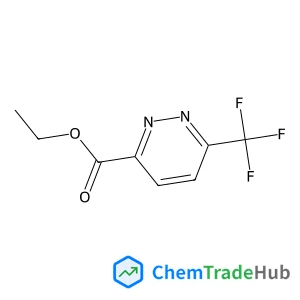
Ethyl 6-(trifluoromethyl)pyridazine-3-carboxylate
CAS Number:
1192155-06-8
Molecular Formula:
C8H7F3N2O2


Recommended Suppliers




Disclaimer
This page provides academic journal information for reference and research purposes only. We are not affiliated with any journal publishers and do not handle publication submissions. For publication-related inquiries, please contact the respective journal publishers directly.
If you notice any inaccuracies in the information displayed, please contact us at support@chemtradehub.com. We will promptly review and address your concerns.