![[1-(5-Methyl-2-pyridinyl)-1H-pyrazol-4-yl]methanol structure](https://static.chemtradehub.com/structs/143/1439822-99-7-6cc9.webp "[1-(5-Methyl-2-pyridinyl)-1H-pyrazol-4-yl]methanol structure")
[1-(5-Methyl-2-pyridinyl)-1H-pyrazol-4-yl]methanol
CAS Number:
1439822-99-7
Molecular Formula:
C10H11N3O
Karan Bobuatong, Sangita Karanjit, Hidehiro Sakurai
The aerobic oxidation of methanol to formic acid catalyzed by Au20− has been investigated quantum chemically using density functional theory with the M06 functional. Possible reaction pathways are examined taking account of full structure relaxation of the Au20−cluster. The proposed reaction mechanism consists of three elementary steps: (1) formation of formaldehyde from methoxy species activated by a superoxo-like anion on the gold cluster; (2) nucleophilic addition by the hydroxyl group of a hydroperoxyl-like complex to formaldehyde resulting in a hemiacetal intermediate; and (3) formation of formic acid by hydrogen transfer from the hemiacetal intermediate to atomic oxygen attached to the gold cluster. A comparison of the computed energetics of various elementary steps indicates that C–H bond dissociation of the methoxy species leading to formation of formaldehyde is the rate-determining step. A possible reaction pathway involving single-step hydrogen abstraction, a concerted mechanism, is also discussed. The stabilities of reactants, intermediates and transition state structures are governed by the coordination number of the gold atoms, charge distribution, cooperative effect and structural distortion, which are the key parameters for understanding the relationship between the structure of the gold cluster and catalytic activity in the aerobic oxidation of alcohols.
Miaohui Yu, Tingting Fu, Wenzhai Li, Yan Zhang, Huayan Wen, Min Zheng, Moran Shi, Caiyun Liu, Meng Jin, Kechun Liu, Baocun Zhu
DOI: 10.1039/D3NJ04746F
Yiting Wang, Jie Zheng, Changjian He, Xiaochun Li, Yichuan Rui, Bohejin Tang
DOI: 10.1039/D3NJ04872A
Panneerselvam Devibala, Balu Balambiga, Predhanekar M. Imran, Samuthira Nagarajan
DOI: 10.1039/D3NJ03993E
Misba Majood, Radhika Chaurasia, Rupesh, Akanksha Singh, Tapan Dey, Omnarayan Agrawal, Yogesh Kumar Verma, Monalisa Mukherjee
DOI: 10.1039/D3TB01674A
Zihan Ma, Lishuang Wang, Tingting Chen, Guangning Wang
DOI: 10.1039/D3NJ04883G
Zhenyu Shu, Xiaoli Zheng, Sailong Wei, Meng Ma, Huiwen He, Yanqin Shi, Xiangyang Gong, Si Chen, Xu Wang
DOI: 10.1039/D3TB01706K
Zheng Li, Jia Wan, Wanbo Zhu, Yingjie Wang, Yuan Chen, Baoliang Lu, Junchen Zhu, Chen Zhu, Xianzuo Zhang
DOI: 10.1039/D3TB01830J
Fatemeh Pirouzi, Hossein Eshghi, Hossein Sabet-Sarvestani
DOI: 10.1039/D3NJ90185H
Wei Cao, Zezhi Lin, Daoyi Zheng, Jianjun Zhang, Weili Heng, Yuanfeng Wei, Yuan Gao, Shuai Qian
DOI: 10.1039/D3TB01612A
6-(3-Fluorophenyl)picolinic acid is generally considered safe for laboratory use...
(3R)-3-Pyrrolidinol is used in the pharmaceutical industry as a precursor for dr...
When handling (4R,5R)-4,5-Diethoxycarbonyl-2,2-dimethyldioxolane (CAS: 59779-75-...
1-(6-Chloroimidazo[1,2-b]pyridazin-3-yl)ethanone is often synthesized via a mult...
The market for N-Ethyl-3,4-dimethylbenzylamine (CAS: 39180-83-1) remains steady,...
Tert-butyl 3-(pyrrolidin-1-yl)azetidine-1-carboxylate is a chemical compound wit...
1-Bromo-3-chloro-2,4-dimethoxybenzene (CAS: 1228956-93-1) falls under the classi...
The safety of 8-Bromo-2-methyl-3,4-dihydroisoquinolin-1(2H)-one (CAS: 1368622-07...
Benzyl [(3S)-2,6-dioxo-3-piperidinyl]carbamate is generally safe when handled wi...
1-{[4-(4,4,5,5-Tetramethyl-1,3,2-dioxaborolan-2-yl)phenyl]sulfonyl}pyrrolidine s...

Physical Chemistry Chemical Physics (PCCP) is an international journal co-owned by 19 physical chemistry and physics societies from around the world. This journal publishes original, cutting-edge research in physical chemistry, chemical physics and biophysical chemistry. To be suitable for publication in PCCP, articles must include significant innovation and/or insight into physical chemistry; this is the most important criterion that reviewers and Editors will judge against when evaluating submissions. The journal has a broad scope and welcomes contributions spanning experiment, theory, computation and data science. Topical coverage includes spectroscopy, dynamics, kinetics, statistical mechanics, thermodynamics, electrochemistry, catalysis, surface science, quantum mechanics, quantum computing and machine learning. Interdisciplinary research areas such as polymers and soft matter, materials, nanoscience, energy, surfaces/interfaces, and biophysical chemistry are welcomed if they demonstrate significant innovation and/or insight into physical chemistry. Joined experimental/theoretical studies are particularly appreciated when complementary and based on up-to-date approaches.
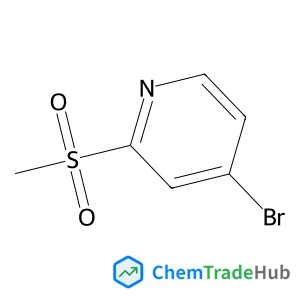
![(3R,4aR,7aS,9aR,10S,11R,13aR,13bS,15aS,15bR)-3,11-Dihydroxy-10-(hydroxymethyl)-4,4,7a,10,13a,15b-hexamethyl-1,2,3,4,4a,7,7a,8,9,9a,10,11,12,13,13a,13b,14,15,15a,15b-icosahydro-5H-naphtho[2',1':4,5]cyc
lohepta[1,2-a]naphthalen-5-one structure](https://static.chemtradehub.com/structs/538/53800-21-8-9f18.webp "(3R,4aR,7aS,9aR,10S,11R,13aR,13bS,15aS,15bR)-3,11-Dihydroxy-10-(hydroxymethyl)-4,4,7a,10,13a,15b-hexamethyl-1,2,3,4,4a,7,7a,8,9,9a,10,11,12,13,13a,13b,14,15,15a,15b-icosahydro-5H-naphtho[2',1':4,5]cyc
lohepta[1,2-a]naphthalen-5-one structure")