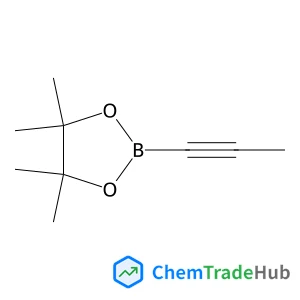
4,4,5,5-Tetramethyl-2-(1-propyn-1-YL)-1,3,2-dioxaborolane
CAS Number:
347389-75-7
Molecular Formula:
C9H15BO2
Zhenyu Shu, Xiaoli Zheng, Sailong Wei, Meng Ma, Huiwen He, Yanqin Shi, Xiangyang Gong, Si Chen, Xu Wang
Radiomic features have demonstrated reliable outcomes in tumor grading and detecting precancerous lesions in medical imaging analysis. However, the repeatability and stability of these features have faced criticism. In this study, we aim to enhance the repeatability and stability of radiomic features by introducing a novel CT-responsive hydrogel material. The newly developed CT-responsive hydrogel, mineralized by in situ metal ions, exhibits exceptional repeatability, stability, and uniformity. Moreover, by adjusting the concentration of metal ions, it achieves remarkable CT similarity comparable to that of human organs on CT scans. To create a phantom, the hydrogel was molded into a universal model, displaying controllable CT values ranging from 53 HU to 58 HU, akin to human liver tissue. Subsequently, 1218 radiomic features were extracted from the CT-responsive hydrogel organ simulation phantom. Impressively, 85–97.2% of the extracted features exhibited good repeatability and stability during coefficient of variability analysis. This finding emphasizes the potential of CT-responsive hydrogel in consistently extracting the same features, providing a novel approach to address the issue of repeatability in radiomic features.
Graeme J. Ackland
DOI: 10.1039/C7CP03729E
Pablo de Castro, Peter Sollich
DOI: 10.1039/C7CP04062H
Charusheela Ramanan, Marco Ferretti, Henny van Roon, Vladimir I. Novoderezhkin, Rienk van Grondelle
DOI: 10.1039/C7CP03038J
K. Wilma, T. Unger, M. Hollfelder, C. Hunger, A. Lang, A. G. Gürek, S. Gekle, R. Hildner
DOI: 10.1039/C7CP04026A
Ioannis G. Kevrekidis
DOI: 10.1039/C7CP03260A
Jun Li, Changjian Xie, Hua Guo
DOI: 10.1039/C7CP04578F
Sheng Yu, Quinton Rice, Tikaram Neupane, Bagher Tabibi, Qiliang Li, Felix Jaetae Seo
DOI: 10.1039/C7CP04385F
I. M. Jauris, A. J. G. Zarbin, C. S. Umpierres, C. Saucier, E. C. Lima, S. B. Fagan, I. Zanella, F. M. Machado
DOI: 10.1039/C7CP04272H
Emilia Piosik, Michał Kotkowiak, Izabela Korbecka, Zbigniew Galewski, Tomasz Martyński
DOI: 10.1039/C7CP03514D
6-(3-Fluorophenyl)picolinic acid is generally considered safe for laboratory use...
(3R)-3-Pyrrolidinol is used in the pharmaceutical industry as a precursor for dr...
When handling (4R,5R)-4,5-Diethoxycarbonyl-2,2-dimethyldioxolane (CAS: 59779-75-...
1-(6-Chloroimidazo[1,2-b]pyridazin-3-yl)ethanone is often synthesized via a mult...
The market for N-Ethyl-3,4-dimethylbenzylamine (CAS: 39180-83-1) remains steady,...
Tert-butyl 3-(pyrrolidin-1-yl)azetidine-1-carboxylate is a chemical compound wit...
1-Bromo-3-chloro-2,4-dimethoxybenzene (CAS: 1228956-93-1) falls under the classi...
The safety of 8-Bromo-2-methyl-3,4-dihydroisoquinolin-1(2H)-one (CAS: 1368622-07...
Benzyl [(3S)-2,6-dioxo-3-piperidinyl]carbamate is generally safe when handled wi...
1-{[4-(4,4,5,5-Tetramethyl-1,3,2-dioxaborolan-2-yl)phenyl]sulfonyl}pyrrolidine s...
Journal of Materials Chemistry A, B & C cover high quality studies across all fields of materials chemistry. The journals focus on those theoretical or experimental studies that report new understanding, applications, properties and synthesis of materials. The journals have a strong history of publishing quality reports of interest to interdisciplinary communities and providing an efficient and rigorous service through peer review and publication. The journals are led by an international team of Editors-in-Chief and Associate Editors who are all active researchers in their fields. Journal of Materials Chemistry A, B & C are separated by the intended application of the material studied. Broadly, applications in energy and sustainability are of interest to Journal of Materials Chemistry A, applications in biology and medicine are of interest to Journal of Materials Chemistry B, and applications in optical, magnetic and electronic devices are of interest to Journal of Materials Chemistry C. More than one Journal of Materials Chemistry journal may be suitable for certain fields and researchers are encouraged to submit their paper to the journal that they feel best fits for their particular article. Example topic areas within the scope of Journal of Materials Chemistry B are listed below. This list is neither exhaustive nor exclusive. Antifouling coatings Biocompatible materials Bioelectronics Bioimaging Biomimetics Biomineralisation Bionics Biosensors Diagnostics Drug delivery Gene delivery Immunobiology Nanomedicine Regenerative medicine & Tissue engineering Scaffolds Soft robotics Stem cells Therapeutic devices image block All articles published in Journal of Materials Chemistry B from 2019 onwards will be indexed in MEDLINE®. Articles that primarily focus on providing insight into the underlying science and performance of biomaterials within a biological environment are more suited to our companion journal, Biomaterials Science.
![1-Benzyl-1,7-diazaspiro[4.4]nonane dihydrochloride structure](https://static.chemtradehub.com/structs/115/1159822-71-5-0320.webp "1-Benzyl-1,7-diazaspiro[4.4]nonane dihydrochloride structure")