












Exploring similarities in reactivity of superatom species: a combined theoretical and experimental investigation
Literature Information
Publication Date
2011-12-19
DOI
10.1039/C2CP23243J
Impact Factor
3.676
Authors
Eric C. Tyo, Melanie Nöβler, Sabine Rabe, Christopher L. Harmon, Roland Mitrić, A. W. Castleman, Jr.
View Original
Abstract
The replacement of group 10-based materials by superatoms has gained great attention due to studies presenting similarities in electronic character and reactive nature between pairs. The current study extends the concept to systems of larger and varied composition as the pairs PdO+ and ZrO2+ as well as NiO+ and TiO2+ are interacted with C2H4 and CO through DFT calculations and guided-ion-beam mass spectrometry. It is determined that the pairs readily oxidize C2H4 while oxygen transfer is limited towards CO. Interestingly, within the reaction profiles for oxidation of C2H4 by PdO+ and NiO+, a spin crossover is observed which greatly increases the exothermicity of the process. This investigation presents a major step in identifying replacements for expensive group 10 metals in catalytic materials.
Related Literature
Synthesis of functionalized disiloxanes with nonconventional fluorescence via oxa-Michael addition reaction
Rui Wang, Shengyu Feng, Gang Yi, Dengxu Wang
2023-11-23
Paper
DOI: 10.1039/D3NJ04004F
A glutathione-responsive PEGylated nanogel with doxorubicin-conjugation for cancer therapy
Qiang Wang, Zhen Pei, Zhipeng He, Wei Guo, Lingna Han
2023-11-21
Paper
DOI: 10.1039/D3TB01731A
Porphyrin–anthracene covalent organic frameworks for sustainable photosterilization
Jing-Xuan Guo, Tian-Yue Gu, Hao-Ze Li
2023-11-04
Paper
DOI: 10.1039/D3TB02017G
The construction of hierarchical assemblies with in situ generation of chemotherapy drugs to enhance the efficacy of chemodynamic therapy for multi-modal anti-tumor treatments
Wei-Nan Zhao, Hongjuan Li, Shiguo Sun, Yongqian Xu
2023-10-25
Paper
DOI: 10.1039/D3TB01564E
Polymeric engineering of AIEgens for NIR-II fluorescence imaging and detection of abdominal metastases of ovarian cancer in vivo
Xiaobo Zhou, Yuhan Zeng, Shijie Li, Ke Zhang, Lingfeng Zhao, Guo Li, Qi Wang, Haiwei Ji, Mingmin Wu, Jinxia Liu, Yuling Qin, Wei Feng, Li Wu
2023-10-10
Communication
DOI: 10.1039/D3TB01750H
Synthesis of novel chromeno[1,6]naphthyridine derivatives in PEG-400 via catalyst-free, one-pot, and multicomponent reactions
Fatemeh Asilpour, Dariush Saberi, Alireza Hasaninejad
2023-11-15
Paper
DOI: 10.1039/D3NJ03273F
Flexible electrochemical sensor for highly sensitive and selective non-enzymatic detection of creatinine via electrodeposited copper over polymelamine formaldehyde
Daisy Mehta, Alankar Kafle, Tharamani C. Nagaiah
2023-10-11
Paper
DOI: 10.1039/D3TB01528A
Exploring the magnetic, electric and magnetodielectric properties of (1 − x)Ba0.9Ni0.1Ti0.9Mn0.1O3–xCo0.9Mn0.1Fe1.9V0.1O4 multiferroic composites
Showket Ahmad Bhat, Mohd Ikram
2023-12-15
Paper
DOI: 10.1039/D3NJ05096C
Nitrate anions embedded in rigid and cationic 3D energetic MOFs constructed by the chelating ligand towards insensitive energetic materials
Qin Wang, Jiao-Lin Weng, Ying Huang, Fu Yang, Hao-Hui Xie, Fei Tan
2023-11-28
Paper
DOI: 10.1039/D3NJ04910H
You might also like
Compound Q&A
Is 6-(3-Fluorophenyl)picolinic acid (CAS: 887982-40-3) safe?
6-(3-Fluorophenyl)picolinic acid is generally considered safe for laboratory use...
887982-40-36-(3-Fluorophenyl)pi...
Compound Q&A
What industries use (3R)-3-Pyrrolidinol (CAS: 2799-21-5)?
(3R)-3-Pyrrolidinol is used in the pharmaceutical industry as a precursor for dr...
2799-21-5(3R)-3-Pyrrolidinol
Compound Q&A
What precautions should be taken when handling (4R,5R)-4,5-Diethoxycarbonyl-2,2-dimethyldioxolane (CAS: 59779-75-8)?
When handling (4R,5R)-4,5-Diethoxycarbonyl-2,2-dimethyldioxolane (CAS: 59779-75-...
59779-75-8(4R,5R)-4,5-Diethoxy...
Compound Q&A
How is 1-(6-Chloroimidazo[1,2-b]pyridazin-3-yl)ethanone (CAS: 90734-71-7) typically synthesized?
1-(6-Chloroimidazo[1,2-b]pyridazin-3-yl)ethanone is often synthesized via a mult...
90734-71-71-(6-Chloroimidazo[1...
Compound Q&A
What is the market or research trend for N-Ethyl-3,4-dimethylbenzylamine (CAS: 39180-83-1)?
The market for N-Ethyl-3,4-dimethylbenzylamine (CAS: 39180-83-1) remains steady,...
39180-83-1N-Ethyl-3,4-dimethyl...
Compound Q&A
What is Tert-butyl 3-(pyrrolidin-1-yl)azetidine-1-carboxylate (CAS: 1019008-21-9)?
Tert-butyl 3-(pyrrolidin-1-yl)azetidine-1-carboxylate is a chemical compound wit...
1019008-21-9Tert-butyl 3-(pyrrol...
Compound Q&A
What regulatory guidelines apply to 1-Bromo-3-chloro-2,4-dimethoxybenzene (CAS: 1228956-93-1)?
1-Bromo-3-chloro-2,4-dimethoxybenzene (CAS: 1228956-93-1) falls under the classi...
1228956-93-11-Bromo-3-chloro-2,4...
Compound Q&A
Is 8-Bromo-2-methyl-3,4-dihydroisoquinolin-1(2H)-one (CAS: 1368622-07-4) safe?
The safety of 8-Bromo-2-methyl-3,4-dihydroisoquinolin-1(2H)-one (CAS: 1368622-07...
1368622-07-48-Bromo-2-methyl-3,4...
Compound Q&A
Is Benzyl [(3S)-2,6-dioxo-3-piperidinyl]carbamate (CAS: 22785-43-9) safe?
Benzyl [(3S)-2,6-dioxo-3-piperidinyl]carbamate is generally safe when handled wi...
22785-43-9Benzyl [(3S)-2,6-dio...
Compound Q&A
How should 1-{[4-(4,4,5,5-Tetramethyl-1,3,2-dioxaborolan-2-yl)phenyl]sulfonyl}pyrrolidine (CAS: 928657-21-0) be stored?
1-{[4-(4,4,5,5-Tetramethyl-1,3,2-dioxaborolan-2-yl)phenyl]sulfonyl}pyrrolidine s...
928657-21-01-{[4-(4,4,5,5-Tetra...
Source Journal
Physical Chemistry Chemical Physics

CiteScore:
5.5
Self-citation Rate:
10.3%
Articles per Year:
3036
Physical Chemistry Chemical Physics (PCCP) is an international journal co-owned by 19 physical chemistry and physics societies from around the world. This journal publishes original, cutting-edge research in physical chemistry, chemical physics and biophysical chemistry. To be suitable for publication in PCCP, articles must include significant innovation and/or insight into physical chemistry; this is the most important criterion that reviewers and Editors will judge against when evaluating submissions. The journal has a broad scope and welcomes contributions spanning experiment, theory, computation and data science. Topical coverage includes spectroscopy, dynamics, kinetics, statistical mechanics, thermodynamics, electrochemistry, catalysis, surface science, quantum mechanics, quantum computing and machine learning. Interdisciplinary research areas such as polymers and soft matter, materials, nanoscience, energy, surfaces/interfaces, and biophysical chemistry are welcomed if they demonstrate significant innovation and/or insight into physical chemistry. Joined experimental/theoretical studies are particularly appreciated when complementary and based on up-to-date approaches.
Recommended Compounds
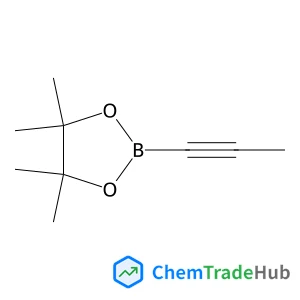
4,4,5,5-Tetramethyl-2-(1-propyn-1-YL)-1,3,2-dioxaborolane
CAS Number:
347389-75-7
Molecular Formula:
C9H15BO2
Recommended Suppliers






Disclaimer
This page provides academic journal information for reference and research purposes only. We are not affiliated with any journal publishers and do not handle publication submissions. For publication-related inquiries, please contact the respective journal publishers directly.
If you notice any inaccuracies in the information displayed, please contact us at support@chemtradehub.com. We will promptly review and address your concerns.