












Dynamical behavior of highly concentrated trehalose water solutions: a dielectric spectroscopy study
Literature Information
Publication Date
2012-01-26
DOI
10.1039/C2CP22402J
Impact Factor
3.676
Authors
Sara Emanuela Pagnotta
View Original
Abstract
Trehalose solutions were investigated by means of broadband dielectric spectroscopy at different water contents, ranging from an anhydrous sample to wC = 40%. While the structural α-relaxation was detectable only in the low hydration and dry samples, and in a quite limited range of temperatures, two secondary processes were presented and characterized in all the solutions investigated. In particular, the fastest secondary process displayed a characteristic behavior widely observed in other small organic glass formers. It had an Arrhenius-like temperature dependence, it sped up and increased the dielectric strength when adding water and finally it possessed an activation energy compatible with the breaking/formation of two hydrogen bonds. From all these indications it was plausible to attribute it to water dipole reorientation dynamics. The slower secondary process was again well described by an Arrhenius-like function, now the relaxation time at high temperature was only slightly dependent on the exact water amount but the activation energy was markedly dependent on it. The molecular origin of this process was tentatively attributed to the motion of the entire molecule involving rotation of the two monosugar rings around the glycosidic bond.
Related Literature
The enzymology of clavam and carbapenem biosynthesis
Nadia J. Kershaw, Matthew E. C. Caines, Mark C. Sleeman, Christopher J. Schofield
2005-08-08
Feature Article
DOI: 10.1039/B505964J
Design, self-assembly, and photophysical properties of pentameric metallomacrocycles: [M5(N-hexyl[1,2-bis(2,2′:6′,2″-terpyridin-4-yl)]carbazole)5][M = Fe(ii), Ru(ii), and Zn(ii)]
Seok-Ho Hwang, Pingshan Wang, Charles N. Moorefield, Luis A. Godínez, Juan Manríquez, Erika Bustos
2005-08-23
Communication
DOI: 10.1039/B509662F
Organometallic chemistry, biology and medicine: ruthenium arene anticancer complexes
2005-08-26
Feature Article
DOI: 10.1039/B508531B
Strongly luminescent binuclear aluminium chelate with polymer-like molecular packing and solution-processibility
Juan Qiao, Li. D. Wang, Jun. F. Xie, Gang. T. Lei, Guo. S. Wu, Yong Qiu
2005-08-16
Communication
DOI: 10.1039/B506907F
Visible light-induced selective oxidation of cyclohexane to cyclohexanone on Cr–Si binary oxide with molecular oxygen
Yasuhiro Shiraishi, Yugo Teshima, Takayuki Hirai
2005-08-17
Communication
DOI: 10.1039/B508172F
New approach to sulfonated diphosphine complexes: synthesis and amphoteric behaviour of zwitterionic [Mn+(CO4{(PPh2)2C(H)SO3−}]
Javier Ruiz, Mario Ceroni, Marilín Vivanco, Marta P. Gonzalo, Santiago García-Granda, Francisco van der Maelen
2005-09-05
Communication
DOI: 10.1039/B507600E
The depth of molecular recognition: voltage-sensitive blockage of synthetic multifunctional pores with refined architecture
Yoann Baudry, Masamichi Nishihara, Naomi Sakai, Stefan Matile
2005-09-05
Communication
DOI: 10.1039/B509610C
A ligand-free solid-supported system for Sonogashira couplings: applications in nucleoside chemistry
Neil K. Garg, Carolyn C. Woodroofe, Christopher J. Lacenere, Stephen R. Quake, Brian M. Stoltz
2005-08-12
Communication
DOI: 10.1039/B505737J
Catalytically active palladium pyridylidene complexes: pyridinium ionic liquids as N-heterocyclic carbene precursors
Martin Albrecht, Helen Stoeckli-Evans
2005-08-22
Communication
DOI: 10.1039/B508225K
Surprising reactions of a 2H-azaphosphirene complex with a silylene
Emanuel Ionescu, Barbara Gehrhus, Peter B. Hitchcock, Martin Nieger, Rainer Streubel
2005-09-05
Communication
DOI: 10.1039/B509567K
You might also like
Compound Q&A
Is 6-(3-Fluorophenyl)picolinic acid (CAS: 887982-40-3) safe?
6-(3-Fluorophenyl)picolinic acid is generally considered safe for laboratory use...
887982-40-36-(3-Fluorophenyl)pi...
Compound Q&A
What industries use (3R)-3-Pyrrolidinol (CAS: 2799-21-5)?
(3R)-3-Pyrrolidinol is used in the pharmaceutical industry as a precursor for dr...
2799-21-5(3R)-3-Pyrrolidinol
Compound Q&A
What precautions should be taken when handling (4R,5R)-4,5-Diethoxycarbonyl-2,2-dimethyldioxolane (CAS: 59779-75-8)?
When handling (4R,5R)-4,5-Diethoxycarbonyl-2,2-dimethyldioxolane (CAS: 59779-75-...
59779-75-8(4R,5R)-4,5-Diethoxy...
Compound Q&A
How is 1-(6-Chloroimidazo[1,2-b]pyridazin-3-yl)ethanone (CAS: 90734-71-7) typically synthesized?
1-(6-Chloroimidazo[1,2-b]pyridazin-3-yl)ethanone is often synthesized via a mult...
90734-71-71-(6-Chloroimidazo[1...
Compound Q&A
What is the market or research trend for N-Ethyl-3,4-dimethylbenzylamine (CAS: 39180-83-1)?
The market for N-Ethyl-3,4-dimethylbenzylamine (CAS: 39180-83-1) remains steady,...
39180-83-1N-Ethyl-3,4-dimethyl...
Compound Q&A
What is Tert-butyl 3-(pyrrolidin-1-yl)azetidine-1-carboxylate (CAS: 1019008-21-9)?
Tert-butyl 3-(pyrrolidin-1-yl)azetidine-1-carboxylate is a chemical compound wit...
1019008-21-9Tert-butyl 3-(pyrrol...
Compound Q&A
What regulatory guidelines apply to 1-Bromo-3-chloro-2,4-dimethoxybenzene (CAS: 1228956-93-1)?
1-Bromo-3-chloro-2,4-dimethoxybenzene (CAS: 1228956-93-1) falls under the classi...
1228956-93-11-Bromo-3-chloro-2,4...
Compound Q&A
Is 8-Bromo-2-methyl-3,4-dihydroisoquinolin-1(2H)-one (CAS: 1368622-07-4) safe?
The safety of 8-Bromo-2-methyl-3,4-dihydroisoquinolin-1(2H)-one (CAS: 1368622-07...
1368622-07-48-Bromo-2-methyl-3,4...
Compound Q&A
Is Benzyl [(3S)-2,6-dioxo-3-piperidinyl]carbamate (CAS: 22785-43-9) safe?
Benzyl [(3S)-2,6-dioxo-3-piperidinyl]carbamate is generally safe when handled wi...
22785-43-9Benzyl [(3S)-2,6-dio...
Compound Q&A
How should 1-{[4-(4,4,5,5-Tetramethyl-1,3,2-dioxaborolan-2-yl)phenyl]sulfonyl}pyrrolidine (CAS: 928657-21-0) be stored?
1-{[4-(4,4,5,5-Tetramethyl-1,3,2-dioxaborolan-2-yl)phenyl]sulfonyl}pyrrolidine s...
928657-21-01-{[4-(4,4,5,5-Tetra...
Source Journal
Physical Chemistry Chemical Physics

CiteScore:
5.5
Self-citation Rate:
10.3%
Articles per Year:
3036
Physical Chemistry Chemical Physics (PCCP) is an international journal co-owned by 19 physical chemistry and physics societies from around the world. This journal publishes original, cutting-edge research in physical chemistry, chemical physics and biophysical chemistry. To be suitable for publication in PCCP, articles must include significant innovation and/or insight into physical chemistry; this is the most important criterion that reviewers and Editors will judge against when evaluating submissions. The journal has a broad scope and welcomes contributions spanning experiment, theory, computation and data science. Topical coverage includes spectroscopy, dynamics, kinetics, statistical mechanics, thermodynamics, electrochemistry, catalysis, surface science, quantum mechanics, quantum computing and machine learning. Interdisciplinary research areas such as polymers and soft matter, materials, nanoscience, energy, surfaces/interfaces, and biophysical chemistry are welcomed if they demonstrate significant innovation and/or insight into physical chemistry. Joined experimental/theoretical studies are particularly appreciated when complementary and based on up-to-date approaches.
Recommended Compounds
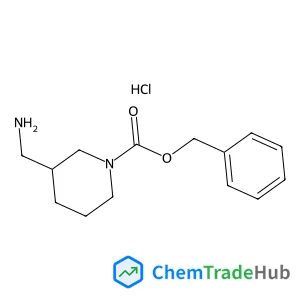
Benzyl 3-(aminomethyl)piperidine-1-carboxylate hydrochloride
CAS Number:
1186663-23-9
Molecular Formula:
C14H21ClN2O2

4-Cyclohexene-1,2-dicarboxylic acid, 1,2-dimethyl ester, (1R,2R)-rel-
CAS Number:
17673-68-6
Molecular Formula:
C10H14O4
Recommended Suppliers





Disclaimer
This page provides academic journal information for reference and research purposes only. We are not affiliated with any journal publishers and do not handle publication submissions. For publication-related inquiries, please contact the respective journal publishers directly.
If you notice any inaccuracies in the information displayed, please contact us at support@chemtradehub.com. We will promptly review and address your concerns.