



An efficient bi-functional permselective separator coated with cubic type-Li7La3Zr2O12 and activated carbon for lithium–sulfur batteries
Literature Information
Publication Date
2020-05-06
DOI
10.1039/D0SE00594K
Impact Factor
6.367
Authors
N. Angulakshmi, R. Baby Dhanalakshmi, Paulina Półrolniczak, Mariusz Walkowiak, Pengfei Xie, Xiaohui Tian, Yingke Zhou, A. Manuel Stephan
View Original
Abstract
Controlling the shuttling of lithium polysulphides (LiPS) to enhance the utilization of elemental sulfur has been considered as an important issue to improve the energy density and coulombic efficiency of lithium–sulfur batteries. The present work is aimed at demonstrating a simple preparation of a bi-functional trilayer membrane by coating Li7La3Zr2O12 and activated carbon on either side of the commercial membrane (Celgard 2320). The coated membrane was characterized by ionic conductivity, thermogravimetric and contact angle analyses. In the trilayer membrane, each component acts for a particular purpose: the activated carbon not only acts as a barrier for the migration of polysulfide but also provides additional pathways for electron transport for the insulating sulphur cathode, while the porous Celgard separator facilitates the migration of lithium ion, and the Li7La3Zr2O12 not only promotes the lithium ion migration by percolation but also prevents polysulfide shuttling via the electrostatic repulsive force. The coated membrane offered higher ionic conductivity and thermal stability compared to the uncoated one. The lithium–sulfur battery with the coated separator delivered higher specific discharge capacity than the uncoated separator. XPS studies revealed the absence of polysulfide deposition on the lithium metal surface after the charge–discharge cycling, which further confirms the suppression of polysulfide shuttling by permselective membranes.
Recommended Journals

Catalysis Today

Construction and Building Materials

Diamond and Related Materials

Bio-Medical Materials and Engineering

Journal of Computer-Aided Molecular Design

Journal of Physical Organic Chemistry

Advanced Composite Materials

Current Medicinal Chemistry

Cement and Concrete Composites

Applied Composite Materials
Related Literature
From 0-dimension to 1-dimensions: Au nanocrystals as versatile plasmonic photocatalyst for broadband light induced RAFT polymerization
Junle Zhang, Mengya Li, Yanjie He, Xiaomeng Zhang, Zhe Cui, Peng Fu, Minying Liu, Xiaoguang Qiao, Qingxiang Zhao, Xinchang Pang
2021-03-25
Paper
DOI: 10.1039/D1PY00088H
Hierarchical ordering and multilayer structure of poly(ε-caprolactone) end-functionalized by a liquid crystalline unit: role of polymer crystallization
Wenqing Xu, Xing Li, Wenhua Yuan, Jian Zhou
2021-07-05
Paper
DOI: 10.1039/D1PY00702E
A highly efficient metal-free protocol for the synthesis of linear polydicyclopentadiene
Xuejin Yang, Laura M. Murphy, Scott M. Grayson
2021-04-14
Paper
DOI: 10.1039/D1PY00191D
Purpurin derivatives as visible-light photosensitizers for 3D printing and valuable biological applications
Pauline Sautrot-Ba, Vlasta Brezová, Jean-Pierre Malval, Annalisa Chiappone, Louise Breloy, Samir Abbad-Andaloussi, Davy-Louis Versace
2021-03-24
Paper
DOI: 10.1039/D1PY00126D
Nitroreductase-responsive polymeric micelles based on 4-nitrobenzyl and AIE moieties for intracellular doxorubicin release
Xue-Yi Sun, Ya-Xuan Liang, Cheng-Yan Wu, Quan Tang, Rui Liu, Zhong-Lin Lu, Lan He
2021-04-05
Paper
DOI: 10.1039/D1PY00232E
Understanding and controlling the glass transition of HTPB oligomers
Eleftheria Dossi, Jacob Earnshaw, Laurence Ellison, Gabriella Rabello dos Santos, Hamish Cavaye, Douglas J. Cleaver
2021-04-07
Paper
DOI: 10.1039/D1PY00233C
A pillar[5]arene-based 3D polymer network for efficient iodine capture in aqueous solution
Jiajun Cao, Huangtianzhi Zhu, Liqing Shangguan, Yuezhou Liu, Peiren Liu, Qi Li, Yitao Wu
2021-05-27
Communication
DOI: 10.1039/D1PY00535A
Practical phosphorylation of polymers: an easy access to fully alcohol soluble synthetically and industrially important polymers
Gokhan Sagdic, Ozgun Daglar, Ufuk Saim Gunay, Emrah Cakmakci, Gurkan Hizal, Umit Tunca, Hakan Durmaz
2021-07-05
Paper
DOI: 10.1039/D1PY00726B
You might also like
Compound Q&A
What industries use (1R,3S)-1,3-Cyclopentanediol (CAS: 16326-97-9)?
(1R,3S)-1,3-Cyclopentanediol finds applications in various industries. In the ph...
16326-97-9(1R,3S)-1,3-Cyclopen...
Compound Q&A
What precautions should be taken when handling N'-[4-(Dimethylamino)phenyl]-N,N-dimethyl-1,4-benzenediamine (CAS: 637-31-0)?
When handling N'-[4-(Dimethylamino)phenyl]-N,N-dimethyl-1,4-benzenediamine, it i...
637-31-0N'-[4-(Dimethylamino...
Compound Q&A
Are there alternatives to 5-(2,4-Difluorophenyl)-2-methoxypyrimidine (CAS: 1352318-16-1) in synthesis?
There are several alternatives to 5-(2,4-Difluorophenyl)-2-methoxypyrimidine in ...
1352318-16-15-(2,4-Difluoropheny...
Compound Q&A
What regulatory guidelines apply to 1-(3-Methoxyphenoxy)propan-2-ol (CAS: 382141-68-6)?
1-(3-Methoxyphenoxy)propan-2-ol (CAS: 382141-68-6) must comply with the Globally...
382141-68-61-(3-Methoxyphenoxy)...
Compound Q&A
Is Tetrodotoxin Citrate (CAS: 18660-81-6) safe?
Tetrodotoxin Citrate is extremely dangerous and should be handled with extreme c...
18660-81-6Tetrodotoxin Citrate
Compound Q&A
What are the main uses of 2-Methyl-2-propanyl [(1R,3S)-3-hydroxycyclopentyl]carbamate (CAS: 225641-84-9)?
2-Methyl-2-propanyl [(1R,3S)-3-hydroxycyclopentyl]carbamate (CAS: 225641-84-9) i...
225641-84-92-Methyl-2-propanyl ...
Compound Q&A
How should waste containing 4-(2-Hydroxyhexafluoroisopropyl)Benzoic Acid (CAS: 16261-80-6) be handled?
Waste containing 4-(2-Hydroxyhexafluoroisopropyl)Benzoic Acid (CAS: 16261-80-6) ...
16261-80-64-(2-Hydroxyhexafluo...
Compound Q&A
How is 2-Methyl-2-proanyl {(2S)-1-[(benzyloxy)amino]-3-hydroxy-3-methyl-1-oxo-2-butanyl}carbamate (CAS: 102507-19-7) typically synthesized?
2-Methyl-2-proanyl {(2S)-1-[(benzyloxy)amino]-3-hydroxy-3-methyl-1-oxo-2-butanyl...
102507-19-72-Methyl-2-propanyl ...
Compound Q&A
What is Benzeneethanamine, α-ethyl-, hydrochloride (1:1) (CAS: 20735-15-3)?
Benzeneethanamine, α-ethyl-, hydrochloride (1:1) is an organic compound with the...
20735-15-3Benzeneethanamine, α...
Compound Q&A
Are there alternatives to 3-{(E)-[4-(Dimethylamino)phenyl]diazenyl}benzoic acid (CAS: 20691-84-3) in synthesis?
In the synthesis of compounds similar to 3-{(E)-[4-(Dimethylamino)phenyl]diazeny...
20691-84-33-{(E)-[4-(Dimethyla...
Source Journal
Recommended Compounds
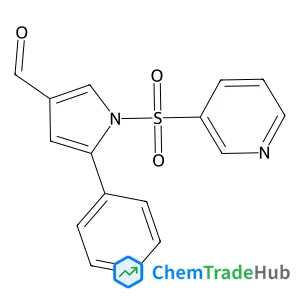
5-Phenyl-1-(pyridin-3-ylsulfonyl)-1H-pyrrole-3-carbaldehyde
CAS Number:
881676-90-0
Molecular Formula:
C16H12N2O3S
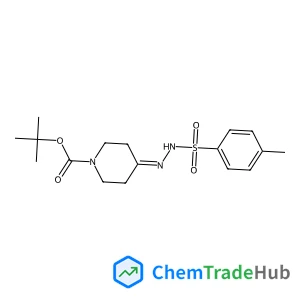
tert-Butyl 4-(2-(p-Tolylsulfonyl)hydrazono)piperidine-1-carboxylate
CAS Number:
1046478-89-0
Molecular Formula:
C17H25N3O4S
Recommended Suppliers





Disclaimer
This page provides academic journal information for reference and research purposes only. We are not affiliated with any journal publishers and do not handle publication submissions. For publication-related inquiries, please contact the respective journal publishers directly.
If you notice any inaccuracies in the information displayed, please contact us at support@chemtradehub.com. We will promptly review and address your concerns.