












![Pyrazolo[1,5-a]pyridine-3-carbothioamide structure](https://static.chemtradehub.com/structs/885/885275-44-5-aae0.webp "Pyrazolo[1,5-a]pyridine-3-carbothioamide structure")
Structures, spectroscopic properties and redox potentials of quaterpyridyl Ru(ii) photosensitizer and its derivatives for solar energy cell: a density functional study
Literature Information
Publication Date
2011-07-07
DOI
10.1039/C1CP00030F
Impact Factor
3.676
Authors
Qing-Jiang Pan, Yuan-Ru Guo, Li Li, Samuel O. Odoh, Hong-Gang Fu, Hong-Xing Zhang
View Original
Abstract
Scalar relativistic density functional theory (DFT) has been used to explore the spectroscopic and redox properties of Ruthenium-type photovoltaic sensitizers, trans-[Ru(RL)(NCS)2] (RL = 4,4′′′-di-R-4′,4′′-bis(carboxylic acid)-2,2′ : 6′,2′′ : 6′′,2′′′-quaterpyridine, R = H (1), Me (2), tBu (3) and COOH (4); RL = 4,4′′′-di-R-4′,4′′-bis(carboxylic acid)-cycloquaterpyridine, R = COOH (5)). The geometries of the molecular ground, univalent cationic and triplet excited states of 1–5 were optimized. In complexes 1–4, the quaterpyridine ligand retains its planarity in the molecular, cationic and excited states, although the CN-Ru angle representing the SCN → Ru coordination approaches 180° in the univalent cationic and triplet excited states. The theoretically designed complex 5 displays a curved cycloquaterpyridine ligand with significantly distorted SCN → Ru coordination. The electron spin density distributions reveal that one electron is removed from the Ru/NCS moieties upon oxidation and the triplet excited state is due to the Ru/NCS → polypyridine charge transfer (MLCT/L'LCT). The experimental absorption spectra were well reproduced by the time-dependent DFT calculations. In the visible region, two MLCT/L'LCT absorption bands were calculated to be at 652 and 506 nm for 3, agreeing with experimental values of 637 and 515 nm, respectively. The replacement of the R- group with -COOH stabilizes the lower-energy unoccupied orbitals of π* character in the quaterpyridine ligand in 4. This results in a large red shift for these two MLCT/L'LCT bands. In contrast, the lower-energy MLCT/L'LCT peak of 5 nearly disappears due to the introduction of cycloquaterpyridine ligand. The higher energy bands in 5 however become broader and more intense. As far as absorption in the visible region is concerned, the theoretically designed 5 may be a very promising sensitizer for DSSC. In addition, the redox potentials of 1–5 were calculated and discussed, in conjunction with photosensitizers such as cis-[Ru(L1)2(X)2] (L1 = 4,4′-bis(carboxylic acid)-2,2′-bipyridine; X = NCS− (6), Cl− (7) and CN− (8)), cis-[Ru(L1′)2(NCS)2] (L1′ = 4,7-bis(carboxylic acid)-1,10-phenanthroline, 9), [NH4][Ru(L2)(NCS)3] (L2 = 4,4′,4′′-tris(carboxylic acid)-2,2′ : 6′,2′′-terpyridine, 10) and [Ru(L2)(NCS)3]− (11).
Related Literature
Allocolchicinoids bearing a Michael acceptor fragment for possible irreversible binding of tubulin
Ekaterina S. Sazanova, Iuliia A. Gracheva, Diane Allegro, Pascale Barbier, Elena V. Svirshchevskaya, Alexey Yu Fedorov
2020-06-04
Research Article
DOI: 10.1039/D0MD00060D
Wheat pathogen Zymoseptoria tritici N-myristoyltransferase inhibitors: on-target antifungal activity and an unusual metabolic defense mechanism
Cory A. Ocasio, Benjamin Strutton, Jo Mattocks, Andrew J. Corran
2020-05-13
Paper
DOI: 10.1039/D0CB00020E
Exploring the chemical space of 1,2,3-triazolyl triclosan analogs for discovery of new antileishmanial chemotherapeutic agents
Julia Fernández de Luco, Alejandro I. Recio-Balsells, Diego G. Ghiano, Ana Bortolotti, Juán Manuel Belardinelli, Nina Liu, Pascal Hoffmann, Christian Lherbet, Peter J. Tonge, Babu Tekwani
2020-11-05
Research Article
DOI: 10.1039/D0MD00291G
Posttranslational modifications of α-conotoxins: sulfotyrosine and C-terminal amidation stabilise structures and increase acetylcholine receptor binding
Thao N. T. Ho, Han Siean Lee, Shilpa Swaminathan, Lewis Goodwin, Nishant Rai, Brianna Ushay, Richard J. Lewis, K. Johan Rosengren, Anne C. Conibear
2021-07-26
Research Article
DOI: 10.1039/D1MD00182E
Functionalized resorcinarenes effectively disrupt the aggregation of αA66-80 crystallin peptide related to cataracts
Kwaku Twum, Avik Bhattacharjee, Erving T. Laryea, Josephine Esposto, George Omolloh, Shaelyn Mortensen, Maya Jaradi, Naomi L. Stock, Bianca Elias, Elan Pszenica, Theresa M. McCormick, Ngong Kodiah Beyeh
2021-11-01
Research Article
DOI: 10.1039/D1MD00294E
A second generation of 1,2,4-oxadiazole derivatives with enhanced solubility for inhibition of 3-hydroxykynurenine transaminase (HKT) from Aedes aegypti
Larissa G. Maciel, Andrey da S. Barbosa, Edilson B. de Alencar-Filho, Thereza A. Soares, Janaína V. dos Anjos
2020-12-09
Research Article
DOI: 10.1039/D0MD00305K
Assessment of the rules related to gaining activity against Gram-negative bacteria
Eleonora Diamanti, Alexandra Siemens, Boris Illarionov, Jörg Haupenthal, Markus Fischer, Matthias Witschel
2021-03-03
Research Article
DOI: 10.1039/D0MD00409J
You might also like
Compound Q&A
What are the main uses of 1-(3-Aminophenyl)-3-[(3R)-1-(3,3-dimethyl-2-oxobutyl)-2-oxo-5-(2-pyridinyl)-2,3-dihydro-1H-1,4-benzodiazepin-3-yl]urea (CAS: 155412-88-7)?
This compound is mainly used as an intermediate in the synthesis of antipsychoti...
155412-88-71-(3-Aminophenyl)-3-...
Compound Q&A
How should waste containing 1-(D-Ribofuranosyl)-1,4-dihydro-3-pyridinecarboxamide (CAS: 19132-12-8) be handled?
Waste containing 1-(D-Ribofuranosyl)-1,4-dihydro-3-pyridinecarboxamide (CAS: 191...
19132-12-81-(D-Ribofuranosyl)-...
Compound Q&A
What regulatory guidelines apply to 2-Methyl-2-propanyl 3-bromo-3-(hydroxymethyl)-1-azetidinecarboxylate (CAS: 2007919-81-3)?
2-Methyl-2-propanyl 3-bromo-3-(hydroxymethyl)-1-azetidinecarboxylate (CAS: 20079...
2007919-81-32-Methyl-2-propanyl ...
Compound Q&A
What is N-(4-Chloro-2-pyridinyl)acetamide (CAS: 245056-66-0)?
N-(4-Chloro-2-pyridinyl)acetamide (CAS: 245056-66-0) is a chemical compound with...
245056-66-0N-(4-Chloro-2-pyridi...
Compound Q&A
What is 5-Chloro-2-hydroxybenzoic acid (CAS: 321-14-2)?
5-Chloro-2-hydroxybenzoic acid, also known as 5-chlorosalicylic acid, is an arom...
321-14-25-Chloro-2-hydroxybe...
Compound Q&A
What precautions should be taken when handling 1,1-Dichloro-1-fluoroethane (CAS: 1717-00-6)?
When handling 1,1-Dichloro-1-fluoroethane (CAS: 1717-00-6), it is important to u...
1717-00-61,1-Dichloro-1-fluor...
Compound Q&A
What are the physical and chemical properties of Fmoc-(2S,3R)-3-phenylpyrrolidine-2-carboxylic acid (CAS: 281655-32-1)?
Fmoc-(2S,3R)-3-phenylpyrrolidine-2-carboxylic acid is a white crystalline solid ...
281655-32-1Fmoc-(2S,3R)-3-pheny...
Compound Q&A
What are the main uses of 4-Amino-5-bromo-2-pyridinecarboxylic acid (CAS: 1363381-01-4)?
4-Amino-5-bromo-2-pyridinecarboxylic acid is primarily used as a precursor in th...
1363381-01-44-Amino-5-bromo-2-py...
Compound Q&A
What precautions should be taken when handling (S)-tert-butyl 2-((2-(4-bromophenyl)-2-oxoethyl)carbamoyl)pyrrolidine-1-carboxylate (CAS: 1007881-98-2)?
Handling this compound should be done with personal protective equipment (PPE) i...
1007881-98-2(S)-tert-butyl 2-((2...
Compound Q&A
What precautions should be taken when handling 8-bromo-2,2-dimethyl-3,4-dihydro-2H-1,4-benzoxazin-3-one (CAS: 688363-73-7)?
When handling 8-bromo-2,2-dimethyl-3,4-dihydro-2H-1,4-benzoxazin-3-one, use prop...
688363-73-78-bromo-2,2-dimethyl...
Source Journal
Physical Chemistry Chemical Physics

CiteScore:
5.5
Self-citation Rate:
10.3%
Articles per Year:
3036
Physical Chemistry Chemical Physics (PCCP) is an international journal co-owned by 19 physical chemistry and physics societies from around the world. This journal publishes original, cutting-edge research in physical chemistry, chemical physics and biophysical chemistry. To be suitable for publication in PCCP, articles must include significant innovation and/or insight into physical chemistry; this is the most important criterion that reviewers and Editors will judge against when evaluating submissions. The journal has a broad scope and welcomes contributions spanning experiment, theory, computation and data science. Topical coverage includes spectroscopy, dynamics, kinetics, statistical mechanics, thermodynamics, electrochemistry, catalysis, surface science, quantum mechanics, quantum computing and machine learning. Interdisciplinary research areas such as polymers and soft matter, materials, nanoscience, energy, surfaces/interfaces, and biophysical chemistry are welcomed if they demonstrate significant innovation and/or insight into physical chemistry. Joined experimental/theoretical studies are particularly appreciated when complementary and based on up-to-date approaches.
Recommended Compounds
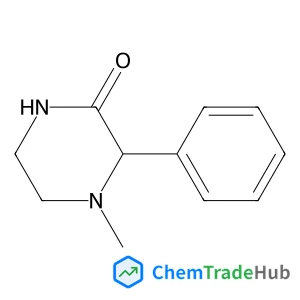
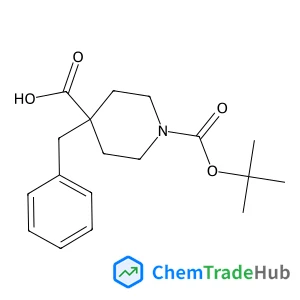
4-Benzyl-1-(tert-butoxycarbonyl)piperidine-4-carboxylic acid
CAS Number:
170838-87-6
Molecular Formula:
C18H25NO4
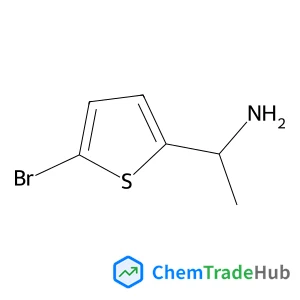
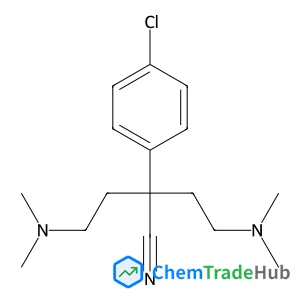
2-(4-Chlorophenyl)-4-(dimethylamino)-2-(2-(dimethylamino)ethyl)butanenitrile
CAS Number:
1246816-57-8
Molecular Formula:
C16H24ClN3
Recommended Suppliers




Disclaimer
This page provides academic journal information for reference and research purposes only. We are not affiliated with any journal publishers and do not handle publication submissions. For publication-related inquiries, please contact the respective journal publishers directly.
If you notice any inaccuracies in the information displayed, please contact us at support@chemtradehub.com. We will promptly review and address your concerns.