












A specific UPLC-ESI-MS/MS method for analysis of cyadox and its three main metabolites in fish samples
Literature Information
Publication Date
2011-12-15
DOI
10.1039/C1AY05523B
Impact Factor
2.896
Authors
Linli Cheng, Zhanhui Wang, Jianzhong Shen, Linxia Li, Haixia Wu, Suxia Zhang
View Original
Abstract
A rapid and sensitive ultra-performance liquid chromatography tandem mass spectrometry (UPLC-MS/MS) method was developed for the determination of cyadox (CYX) and its three major metabolites, quinoxaline-2-carboxylic acid (QCA), 1-desoxycyadox (1-DCYX) and 1,4-bisdesoxycyadox (BDCYX) in fish. Samples were extracted with acetonitrile–0.5 M hydrochloric acid (9 + 1) and cleaned up using Oasis MAX cartridges. The total time taken for separation by UPLC was less than 5 min. The four target compounds were then determined by ESI-MS/MS. At the fortified levels of 2–50 μg kg−1 in fish, recoveries of all the compounds ranged from 80.2% to 88.2%, with a relative standard deviation of 6.8 to 14.6%. Limits of detection for CYX, QCA, 1–DCYX and BDCYX were 0.52, 1.07, 0.69 and 0.38 μg kg−1, respectively.
Related Literature
Synthesis and characterization of a pH-responsive mesalazine-polynorbornene supramolecular assembly
Vajk Farkas, Gábor Turczel, János Deme, László Trif, Anvar Mirzaei, Dang Vu Hai, Sándor Kéki, Péter Huszthy, Róbert Tuba
2021-03-05
Paper
DOI: 10.1039/D1PY00194A
Modeling ultrasound-induced molecular weight decrease of polymers with multiple scissile azo-mechanophores
Mathieu A. Ayer, Cheyenne H. Liu, Christoph Weder
2021-06-22
Paper
DOI: 10.1039/D1PY00420D
Polyamides containing a biorenewable aromatic monomer based on coumalate esters: from synthesis to evaluation of the thermal and mechanical properties
Jurrie Noordijk, Bert Gebben, Monique H. M. Meeusen-Wierts, Katrien V. Bernaerts
2021-03-23
Paper
DOI: 10.1039/D1PY00005E
Morphological modulation of azobenzene-containing tubular polymersomes
Lishan Li, Yiwen Li, Shuyuan Wang, Liandong Ye, Wei Zhang, Nianchen Zhou, Zhengbiao Zhang, Xiulin Zhu
2021-04-26
Paper
DOI: 10.1039/D1PY00099C
The synergistic effect of rigid and flexible substituents on insertion polymerization with α-diimine nickel and palladium catalysts
Zijuan Hai, Zhou Lu, Shuaikang Li, Zhong-Yan Cao, Shengyu Dai
2021-07-30
Paper
DOI: 10.1039/D1PY00812A
Detection and evaluation of polymer–polymer interactions in dilute solutions of associating polymers
Georges M. Pavlov, Anna A. Gosteva, Olga V. Okatova, Olga A. Dommes, Irina I. Gavrilova
2021-03-22
Paper
DOI: 10.1039/D0PY01725F
Polymer defect engineering – conductive 2D organic platelets from precise thiophene-doped polyethylene
Oksana Suraeva, Beomjin Jeong, Kamal Asadi, Katharina Landfester, Ingo Lieberwirth
2021-03-02
Paper
DOI: 10.1039/D1PY00117E
A quinine-based quaternized polymer: a potent scaffold with bactericidal properties without resistance
Huan-Huan Ding, Mu-Han Zhao, Le Zhai, Jian-Bin Zhen, Le-Yun Sun, Jia-Zhu Chigan, Cheng Chen, Jia-Qi Li, Han Gao, Ke-Wu Yang
2021-03-25
Paper
DOI: 10.1039/D0PY01751E
High molar mass poly(ricinoleic acid) via entropy-driven ring-opening metathesis polymerization
Marc A. Hillmyer
2021-03-23
Paper
DOI: 10.1039/D1PY00185J
You might also like
Compound Q&A
What industries use (1R,3S)-1,3-Cyclopentanediol (CAS: 16326-97-9)?
(1R,3S)-1,3-Cyclopentanediol finds applications in various industries. In the ph...
16326-97-9(1R,3S)-1,3-Cyclopen...
Compound Q&A
What precautions should be taken when handling N'-[4-(Dimethylamino)phenyl]-N,N-dimethyl-1,4-benzenediamine (CAS: 637-31-0)?
When handling N'-[4-(Dimethylamino)phenyl]-N,N-dimethyl-1,4-benzenediamine, it i...
637-31-0N'-[4-(Dimethylamino...
Compound Q&A
Are there alternatives to 5-(2,4-Difluorophenyl)-2-methoxypyrimidine (CAS: 1352318-16-1) in synthesis?
There are several alternatives to 5-(2,4-Difluorophenyl)-2-methoxypyrimidine in ...
1352318-16-15-(2,4-Difluoropheny...
Compound Q&A
What regulatory guidelines apply to 1-(3-Methoxyphenoxy)propan-2-ol (CAS: 382141-68-6)?
1-(3-Methoxyphenoxy)propan-2-ol (CAS: 382141-68-6) must comply with the Globally...
382141-68-61-(3-Methoxyphenoxy)...
Compound Q&A
Is Tetrodotoxin Citrate (CAS: 18660-81-6) safe?
Tetrodotoxin Citrate is extremely dangerous and should be handled with extreme c...
18660-81-6Tetrodotoxin Citrate
Compound Q&A
What are the main uses of 2-Methyl-2-propanyl [(1R,3S)-3-hydroxycyclopentyl]carbamate (CAS: 225641-84-9)?
2-Methyl-2-propanyl [(1R,3S)-3-hydroxycyclopentyl]carbamate (CAS: 225641-84-9) i...
225641-84-92-Methyl-2-propanyl ...
Compound Q&A
How should waste containing 4-(2-Hydroxyhexafluoroisopropyl)Benzoic Acid (CAS: 16261-80-6) be handled?
Waste containing 4-(2-Hydroxyhexafluoroisopropyl)Benzoic Acid (CAS: 16261-80-6) ...
16261-80-64-(2-Hydroxyhexafluo...
Compound Q&A
How is 2-Methyl-2-proanyl {(2S)-1-[(benzyloxy)amino]-3-hydroxy-3-methyl-1-oxo-2-butanyl}carbamate (CAS: 102507-19-7) typically synthesized?
2-Methyl-2-proanyl {(2S)-1-[(benzyloxy)amino]-3-hydroxy-3-methyl-1-oxo-2-butanyl...
102507-19-72-Methyl-2-propanyl ...
Compound Q&A
What is Benzeneethanamine, α-ethyl-, hydrochloride (1:1) (CAS: 20735-15-3)?
Benzeneethanamine, α-ethyl-, hydrochloride (1:1) is an organic compound with the...
20735-15-3Benzeneethanamine, α...
Compound Q&A
Are there alternatives to 3-{(E)-[4-(Dimethylamino)phenyl]diazenyl}benzoic acid (CAS: 20691-84-3) in synthesis?
In the synthesis of compounds similar to 3-{(E)-[4-(Dimethylamino)phenyl]diazeny...
20691-84-33-{(E)-[4-(Dimethyla...
Source Journal
Analytical Methods

CiteScore:
5.1
Self-citation Rate:
3.7%
Articles per Year:
655
Analytical Methods welcomes early applications of new analytical and bioanalytical methods and technology demonstrating the potential for societal impact. We require that methods and technology reported in the journal are sufficiently innovative, robust, accurate, and compared to other available methods for the intended application. Developments with interdisciplinary approaches are particularly welcome. Systems should be proven with suitably complex and analytically challenging samples. We encourage developments within, but not limited to, the following technologies and applications: global health, point-of-care and molecular diagnostics biosensors and bioengineering drug development and pharmaceutical analysis applied microfluidics and nanotechnology omics studies, such as proteomics, metabolomics or glycomics environmental, agricultural and food science neuroscience biochemical and clinical analysis forensic analysis industrial process and method development
Recommended Compounds
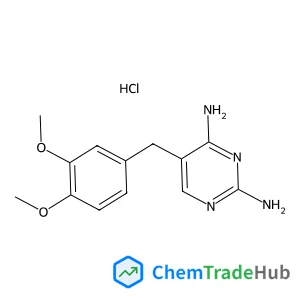
5-(3,4-Dimethoxybenzyl)-2,4-pyrimidinediamine hydrochloride (1:1)
CAS Number:
2507-23-5
Molecular Formula:
C13H17ClN4O2

tert-Butyl 4-(2-(p-Tolylsulfonyl)hydrazono)piperidine-1-carboxylate
CAS Number:
1046478-89-0
Molecular Formula:
C17H25N3O4S

Recommended Suppliers






Disclaimer
This page provides academic journal information for reference and research purposes only. We are not affiliated with any journal publishers and do not handle publication submissions. For publication-related inquiries, please contact the respective journal publishers directly.
If you notice any inaccuracies in the information displayed, please contact us at support@chemtradehub.com. We will promptly review and address your concerns.