












Rheo-attenuated total reflectance infrared spectroscopy: a new tool to study biopolymers
Literature Information
Publication Date
2011-01-17
DOI
10.1039/C0CP02599B
Impact Factor
3.676
Authors
Maxime Boulet-Audet, Fritz Vollrath, Chris Holland
View Original
Abstract
Whilst rheology is the reference technique to study the mechanical properties of unspun silk, we know little of the structure and the dynamics that generate them. By coupling infrared spectroscopy and shearing forces to study silk fibroin conversion, we are introducing a novel tool to address this gap in our knowledge. Here the silk conversion process has been studied dynamically using polarized attenuated total reflectance Fourier transform infrared spectroscopy whilst applying shear, thus revealing silk protein conformation and molecular orientation in situ. Our results show that the silk conversion process starts with a pre-alignment of the proteins followed by a rapid growth of the β-sheet formation and then a subsequent deceleration of the growth. We propose that this tool will provide further insight into not only silk but any biopolymer solution, opening a new window into biological materials.
Related Literature
Do primary carriers of both positive charge and unpaired electron spin exist in irradiated propylene carbonate?
2016-12-08
Communication
DOI: 10.1039/C6CP07477D
OH production from the photolysis of isoprene-derived peroxy radicals: cross-sections, quantum yields and atmospheric implications
Robert F. Hansen, Tom R. Lewis, Lee Graham
2016-12-12
Paper
DOI: 10.1039/C6CP06718B
Probing nonlinear optical coefficients in self-assembled peptide nanotubes
Soma Khanra, Kartik Ghosh, Fabio F. Ferreira, Wendel A. Alves, Francesco Punzo, Ping Yu, Suchismita Guha
2017-01-04
Paper
DOI: 10.1039/C6CP07879F
Quantum ergodicity breaking in semi-classical electron transfer dynamics
2016-12-20
Paper
DOI: 10.1039/C6CP07206B
Negative thermal expansion in 2H CuScO2 originating from the cooperation of transverse thermal vibrations of Cu and O atoms
Qiang Sun
2016-12-12
Paper
DOI: 10.1039/C6CP07589D
Luminophores of tunable colors from ternary Ag–In–S and quaternary Ag–In–Zn–S nanocrystals covering the visible to near-infrared spectral range
Grzegorz Gabka, Piotr Bujak, Kamil Kotwica, Andrzej Ostrowski, Wojciech Lisowski, Janusz W. Sobczak, Adam Pron
2016-12-02
Paper
DOI: 10.1039/C6CP07008F
N-ethyl-N-methylpyrrolidinium bis(fluorosulfonyl)imide-electrospun polyvinylidene fluoride composite electrolytes: characterization and lithium cell studies
Yundong Zhou, Xiaoen Wang, Haijin Zhu, Michel Armand, Maria Forsyth, George W. Greene, Jennifer M. Pringle, Patrick C. Howlett
2016-12-19
Paper
DOI: 10.1039/C6CP07415D
An unexpected bridge between chemical bonding indicators and electrical conductivity through the localization tensor
Ángel Martín Pendás, José Manuel Guevara-Vela, Daniel Menéndez Crespo, Aurora Costales, Evelio Francisco
2016-12-12
Paper
DOI: 10.1039/C6CP07617C
Uniform and perfectly linear current–voltage characteristics of nitrogen-doped armchair graphene nanoribbons for nanowires
Lingling Liu, Xiao-Fei Li, Qing Yan, Qin-Kun Li, Xiang-Hua Zhang, Mingsen Deng, Qi Qiu
2016-11-29
Communication
DOI: 10.1039/C6CP06640B
Double electron–electron resonance with multiple non-selective chirp refocusing
Andrin Doll, Gunnar Jeschke
2016-12-08
Paper
DOI: 10.1039/C6CP07262C
You might also like
Compound Q&A
Is 2-(2-chloroacetamido)-3-phenylpropanoic acid (CAS: 7765-11-9) safe?
2-(2-Chloroacetamido)-3-phenylpropanoic acid (CAS: 7765-11-9) is generally consi...
7765-11-92-(2-chloroacetamido...
Compound Q&A
Is 2-(Benzyloxy)-5-bromobenzoic acid (CAS: 62176-31-2) safe?
2-(Benzyloxy)-5-bromobenzoic acid can be handled safely if appropriate precautio...
62176-31-22-(Benzyloxy)-5-brom...
Compound Q&A
What is (4-Methyl-1,2,5-oxadiazol-3-yl)methanamine hydrochloride (CAS: 1159825-48-5)?
(4-Methyl-1,2,5-oxadiazol-3-yl)methanamine hydrochloride is a chemical compound ...
1159825-48-5(4-Methyl-1,2,5-oxad...
Compound Q&A
What is 2-(5-Hexylthiophen-2-yl)-4,4,5,5-tetramethyl-1,3,2-dioxaborolane (CAS: 917985-54-7)?
2-(5-Hexylthiophen-2-yl)-4,4,5,5-tetramethyl-1,3,2-dioxaborolane (CAS: 917985-54...
917985-54-72-(5-Hexylthiophen-2...
Compound Q&A
Are there alternatives to 4-(8-Methyl-9H-1,3-dioxolo[4,5-h][2,3]benzodiazepin-5-yl)benzenamine (CAS: 102771-26-6) in synthesis?
While 4-(8-Methyl-9H-1,3-dioxolo[4,5-h][2,3]benzodiazepin-5-yl)benzenamine (CAS:...
102771-26-64-(8-Methyl-9H-1,3-d...
Compound Q&A
What is the market or research trend for tert-butyl 3-hydroxy-4,5,7,8-tetrahydro-2H-pyrazolo[3,4-d]azepine-6-carboxylate (CAS: 851376-80-2)?
The market for tert-butyl 3-hydroxy-4,5,7,8-tetrahydro-2H-pyrazolo[3,4-d]azepine...
851376-80-2tert-butyl 3-hydroxy...
Compound Q&A
How should waste containing 3,5-Diamino-1H-pyrazole-4-carbonitrile (CAS: 6844-58-2) be handled?
Waste containing 3,5-Diamino-1H-pyrazole-4-carbonitrile (CAS: 6844-58-2) should ...
6844-58-23,5-Diamino-1H-pyraz...
Compound Q&A
How is (6-Fluoro-3-pyridinyl)boronic acid (CAS: 351019-18-6) typically synthesized?
(6-Fluoro-3-pyridinyl)boronic acid can be synthesized through the reaction of 6-...
351019-18-6(6-Fluoro-3-pyridiny...
Compound Q&A
What industries use Dibenzyl carbonimidoylbiscarbamate (CAS: 10065-79-9)?
Dibenzyl carbonimidoylbiscarbamate (CAS: 10065-79-9) finds applications in vario...
10065-79-9Dibenzyl carbonimido...
Compound Q&A
What is the market or research trend for (beta,beta,2,3,4,5,6-~2~H_7_)Phenylalanine (CAS: 74228-83-4)?
The market for (beta,beta,2,3,4,5,6-~2~H_7_)Phenylalanine (CAS: 74228-83-4) is g...
74228-83-4(beta,beta,2,3,4,5,6...
Source Journal
Physical Chemistry Chemical Physics

CiteScore:
5.5
Self-citation Rate:
10.3%
Articles per Year:
3036
Physical Chemistry Chemical Physics (PCCP) is an international journal co-owned by 19 physical chemistry and physics societies from around the world. This journal publishes original, cutting-edge research in physical chemistry, chemical physics and biophysical chemistry. To be suitable for publication in PCCP, articles must include significant innovation and/or insight into physical chemistry; this is the most important criterion that reviewers and Editors will judge against when evaluating submissions. The journal has a broad scope and welcomes contributions spanning experiment, theory, computation and data science. Topical coverage includes spectroscopy, dynamics, kinetics, statistical mechanics, thermodynamics, electrochemistry, catalysis, surface science, quantum mechanics, quantum computing and machine learning. Interdisciplinary research areas such as polymers and soft matter, materials, nanoscience, energy, surfaces/interfaces, and biophysical chemistry are welcomed if they demonstrate significant innovation and/or insight into physical chemistry. Joined experimental/theoretical studies are particularly appreciated when complementary and based on up-to-date approaches.
Recommended Compounds
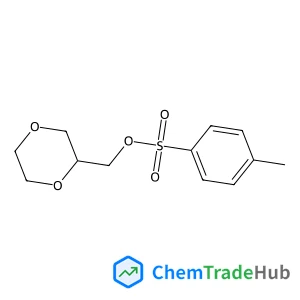
(S)-(1,4-Dioxan-2-yl)methyl 4-methylbenzenesulfonate
CAS Number:
917882-64-5
Molecular Formula:
C12H16O5S
![{3-[Bis(4-hydroxyphenyl)methyl]-1-[2-(dimethylamino)ethyl]-1H-indol-2-yl}[4-(2-chlorophenyl)-1-piperazinyl]methanone structure](https://static.chemtradehub.com/structs/170/170365-25-0-e4d7.webp "{3-[Bis(4-hydroxyphenyl)methyl]-1-[2-(dimethylamino)ethyl]-1H-indol-2-yl}[4-(2-chlorophenyl)-1-piperazinyl]methanone structure")
{3-[Bis(4-hydroxyphenyl)methyl]-1-[2-(dimethylamino)ethyl]-1H-indol-2-yl}[4-(2-chlorophenyl)-1-piperazinyl]methanone
CAS Number:
170365-25-0
Molecular Formula:
C36H37ClN4O3
Recommended Suppliers




Disclaimer
This page provides academic journal information for reference and research purposes only. We are not affiliated with any journal publishers and do not handle publication submissions. For publication-related inquiries, please contact the respective journal publishers directly.
If you notice any inaccuracies in the information displayed, please contact us at support@chemtradehub.com. We will promptly review and address your concerns.