












Fabrication of CuInS2 films from electrodeposited Cu/In bilayers: effects of preheat treatment on their structural, photoelectrochemical and solar cell properties
Literature Information
Publication Date
2011-03-07
DOI
10.1039/C0CP02204G
Impact Factor
3.676
Authors
Sun Min Lee, Shigeru Ikeda, Tetsuro Yagi, Takashi Harada, Ahmed Ennaoui, Michio Matsumura
View Original
Abstract
Polycrystalline CuInS2 films were fabricated by sulfurization of electrodeposited Cu and In metallic precursor films in a Cu-rich composition at 520 °C in H2S (5% in Ar). Structural analyses revealed that the adherence of the thus-formed CuInS2 film to the Mo substrate was strongly dependent on heating profiles of the Cu/In bilayer film: a CuInS2 film with poor adherence having many crevices was formed when the Cu/In bilayer film was heated monotonously from room temperature to 520 °C in Ar within 25 min followed by sulfurization, whereas CuInS2 films with good adherence were obtained when the Cu/In films were pretreated at 110 °C in Ar for 10–60 min just before increasing the temperature up to 520 °C for sulfurization. It was also clarified that the CuInS2 film obtained without 110 °C pretreatment had pinholes inside the film, whereas the CuInS2 films formed after 110 °C pretreatment showed no notable pinholes. Photoelectrochemical responses of these CuInS2 films in an electrolyte solution containing Eu(III) indicated that the CuInS2 films obtained after 110 °C pretreatment had higher external quantum efficiency (EQE) values than those of films obtained without 110 °C pretreatment, mainly due to better adherence of 110 °C pretreated CuInS2 films to the Mo substrate than the CuInS2 film obtained without 110 °C pretreatment. The performance of solar cells with an Al:ZnO/Zn(S,O)/CdS/CuInS2/Mo structure also depended on the structural characteristics of the CuInS2 films, i.e., preliminary conversion efficiencies of ca. 5% were obtained for devices based on the CuInS2 films obtained after 110 °C pretreatment, whereas the device prepared by the CuInS2 film without 110 °C pretreatment showed the conversion efficiency less than 1.5%.
Related Literature
Understanding the phase formation kinetics of nano-crystalline kesterite deposited on mesoscopic scaffolds via in situ multi-wavelength Raman-monitored annealing
Zhuoran Wang, Samir Elouatik, George P. Demopoulos
2016-09-30
Paper
DOI: 10.1039/C6CP05759D
Light-induced dipole moment modulation in diarylethenes: a fundamental study
Andrea Bianco, Giorgio Ferrari, Rossella Castagna, Andrea Rossi, Marco Carminati, Giorgio Pariani, Matteo Tommasini
2016-10-17
Paper
DOI: 10.1039/C6CP05609A
Core-excited and shape resonances of uracil
Mark A. Fennimore, Spiridoula Matsika
2016-10-20
Paper
DOI: 10.1039/C6CP05342D
Influences of heterogeneous native contact energy and many-body interactions on the prediction of protein folding mechanisms
Zhuqing Zhang, Yanhua Ouyang, Tao Chen
2016-10-19
Paper
DOI: 10.1039/C6CP06181H
Metallic cyanoacetylides of copper, silver and gold: generation and structural characterization
Carlos Cabezas, Carmen Barrientos, Antonio Largo, Jean-Claude Guillemin, J. L. Alonso
2016-09-20
Paper
DOI: 10.1039/C6CP04474C
XPS enables visualization of electrode potential screening in an ionic liquid medium with temporal- and lateral-resolution
M. T. Camci, P. Aydogan, B. Ulgut, C. Kocabas, S. Suzer
2016-08-15
Paper
DOI: 10.1039/C6CP04933H
Adsorption of water and ethanol on noble and transition-metal substrates: a density functional investigation within van der Waals corrections
Rafael L. H. Freire, Adam Kiejna, Juarez L. F. Da Silva
2016-09-27
Paper
DOI: 10.1039/C6CP05620B
Amyloid beta peptides inside a reconstituted cell-like liposomal system: aggregation, FRET, fluorescence oscillations and solvation dynamics
Somen Nandi, Rajdeep Chowdhury, Abhijit Saha, Kankan Bhattacharyya
2016-10-13
Paper
DOI: 10.1039/C6CP06143E
Preparation and electrochemical properties of Li2MoO3/C composites for rechargeable Li-ion batteries
Yotaro Shirao, Kei Kubota, Shinichi Komaba
2016-09-26
Paper
DOI: 10.1039/C6CP05162F
Mechanically induced cis-to-trans isomerization of carbon–carbon double bonds using atomic force microscopy
Milad Radiom, Phally Kong, Plinio Maroni, Mark Schäfer, Andreas F. M. Kilbinger, Michal Borkovec
2016-10-21
Paper
DOI: 10.1039/C6CP05696B
You might also like
Compound Q&A
How is Ethyl 4-chlorothieno[2,3-b]pyridine-5-carboxylate (CAS: 59713-58-5) typically synthesized?
Ethyl 4-chlorothieno[2,3-b]pyridine-5-carboxylate (CAS: 59713-58-5) can be synth...
59713-58-5Ethyl 4-chlorothieno...
Compound Q&A
What regulatory guidelines apply to 5-Methyl-1H-indole-3-carbaldehyde (CAS: 52562-50-2)?
5-Methyl-1H-indole-3-carbaldehyde (CAS: 52562-50-2) is subject to various regula...
52562-50-25-Methyl-1H-indole-3...
Compound Q&A
What are the physical and chemical properties of (1,3-Dimethyl-2,4-dioxo-1,2,3,4-tetrahydro-5-pyrimidinyl)boronic acid (CAS: 223418-73-3)?
(1,3-Dimethyl-2,4-dioxo-1,2,3,4-tetrahydro-5-pyrimidinyl)boronic acid is a white...
223418-73-3(1,3-Dimethyl-2,4-di...
Compound Q&A
How should waste containing Sulfocostunolide A (CAS: 1016983-51-9) be handled?
Waste containing Sulfocostunolide A (CAS: 1016983-51-9) should be handled with c...
1016983-51-9Sulfocostunolide A
Compound Q&A
What precautions should be taken when handling Murraxocin (CAS: 88478-44-8)?
When handling Murraxocin (CAS: 88478-44-8), ensure proper personal protective eq...
88478-44-8Murraxocin
Compound Q&A
What are the physical and chemical properties of Formvar (CAS: 63148-64-1)?
Formvar (CAS: 63148-64-1) is an alkyd resin characterized by a high molecular we...
63148-64-1Formvar(R)
Compound Q&A
Is (S)-4-benzyl-2-((benzyloxy)methyl)morpholine (CAS: 205242-66-6) safe?
(S)-4-benzyl-2-((benzyloxy)methyl)morpholine is generally safe when handled with...
205242-66-6(S)-4-benzyl-2-((ben...
Compound Q&A
What industries use Methyl 1-(5-bromo-2-pyrimidinyl)cyclopropanecarboxylate (CAS: 1447607-69-3)?
Methyl 1-(5-bromo-2-pyrimidinyl)cyclopropanecarboxylate (CAS: 1447607-69-3) is p...
1447607-69-3Methyl 1-(5-bromo-2-...
Compound Q&A
Is 2-Methyl-1-phenyl-1-propanamine hydrochloride (CAS: 24290-47-9) safe?
2-Methyl-1-phenyl-1-propanamine hydrochloride (CAS: 24290-47-9) is generally con...
24290-47-92-Methyl-1-phenyl-1-...
Compound Q&A
How is 3-(4-Bromophenyl)-2-methylpropanoic acid (CAS: 66735-01-1) typically synthesized?
3-(4-Bromophenyl)-2-methylpropanoic acid is synthesized through a multi-step pro...
66735-01-13-(4-Bromophenyl)-2-...
Source Journal
Physical Chemistry Chemical Physics

CiteScore:
5.5
Self-citation Rate:
10.3%
Articles per Year:
3036
Physical Chemistry Chemical Physics (PCCP) is an international journal co-owned by 19 physical chemistry and physics societies from around the world. This journal publishes original, cutting-edge research in physical chemistry, chemical physics and biophysical chemistry. To be suitable for publication in PCCP, articles must include significant innovation and/or insight into physical chemistry; this is the most important criterion that reviewers and Editors will judge against when evaluating submissions. The journal has a broad scope and welcomes contributions spanning experiment, theory, computation and data science. Topical coverage includes spectroscopy, dynamics, kinetics, statistical mechanics, thermodynamics, electrochemistry, catalysis, surface science, quantum mechanics, quantum computing and machine learning. Interdisciplinary research areas such as polymers and soft matter, materials, nanoscience, energy, surfaces/interfaces, and biophysical chemistry are welcomed if they demonstrate significant innovation and/or insight into physical chemistry. Joined experimental/theoretical studies are particularly appreciated when complementary and based on up-to-date approaches.
Recommended Compounds
![2-(Methylsulfonyl)-2,4,5,6-tetrahydropyrrolo[3,4-c]pyrazole structure](https://static.chemtradehub.com/structs/122/1226781-80-1-09d5.webp "2-(Methylsulfonyl)-2,4,5,6-tetrahydropyrrolo[3,4-c]pyrazole structure")
2-(Methylsulfonyl)-2,4,5,6-tetrahydropyrrolo[3,4-c]pyrazole
CAS Number:
1226781-80-1
Molecular Formula:
C6H9N3O2S
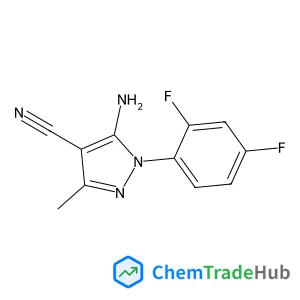
5-Amino-1-(2,4-difluorophenyl)-3-methyl-1H-pyrazole-4-carbonitrile
CAS Number:
1020057-92-4
Molecular Formula:
C11H8F2N4

trans-4-(4-Morpholinyl)cyclohexanol hydrochloride (1:1)
CAS Number:
1588441-09-1
Molecular Formula:
C10H20ClNO2
![9,9'-Spirobi[fluoren]-2-amine structure](https://static.chemtradehub.com/structs/118/118951-68-1-0d14.webp "9,9'-Spirobi[fluoren]-2-amine structure")
Recommended Suppliers




Disclaimer
This page provides academic journal information for reference and research purposes only. We are not affiliated with any journal publishers and do not handle publication submissions. For publication-related inquiries, please contact the respective journal publishers directly.
If you notice any inaccuracies in the information displayed, please contact us at support@chemtradehub.com. We will promptly review and address your concerns.