


Amyloid beta peptides inside a reconstituted cell-like liposomal system: aggregation, FRET, fluorescence oscillations and solvation dynamics
Literature Information
Publication Date
2016-10-13
DOI
10.1039/C6CP06143E
Impact Factor
3.676
Authors
Somen Nandi, Rajdeep Chowdhury, Abhijit Saha, Kankan Bhattacharyya
View Original
Abstract
Aggregations of amyloid-beta (Aβ) peptides were studied inside a reconstituted cell like liposomal system using time-resolved confocal microscopy. Fluorescence correlation spectroscopy (FCS) and confocal images indicate that Aβ forms a very large aggregate in bulk and more efficiently, in the bilayer region of the liposome, respectively. The aggregates formed inside the liposome gradually migrate out to bulk water. FRET, from HiLyte Fluor 488 (covalently attached to an Aβ peptide) to TRITC (tetramethylrhodamine isothiocyanate) covalently attached to a DHPE lipid present in the bilayer, reveals intermittent oscillations in the time scale of ∼0.5 s. This is attributed to the structural fluctuations of the membrane of the liposome. The solvation dynamics of Aβ in monomer and in oligomeric state is studied by monitoring the emission of HiLyte Fluor 488. The solvation dynamics of the Aβ monomer is similar to that of oligomeric aggregates in the liposome.
Recommended Journals

Journal of Physics and Chemistry of Solids

Journal of Heterocyclic Chemistry

Organic Preparations and Procedures International

Journal of Organometallic Chemistry

Planta Medica

Proceedings of the National Academy of Sciences of the United States of America

Science

Science Progress

European Journal of Wood and Wood Products

Molecular Pharmacology
Related Literature
Supramolecular H-bonded porous networks at surfaces: exploiting primary and secondary interactions in a bi-component melamine–xanthine system‡
Artur Ciesielski, Sébastien Haar, Gábor Paragi, Zoltán Kupihár, Zoltán Kele, Stefano Masiero, Célia Fonseca Guerra, Gian Piero Spada, Lajos Kovács, Paolo Samorì
2013-03-15
Communication
DOI: 10.1039/C3CP50891A
Separation of cobalt and nickel by solvent extraction with two mutually immiscible ionic liquids
Sil Wellens, Ben Thijs, Claudia Möller, Koen Binnemans
2013-04-12
Paper
DOI: 10.1039/C3CP50819F
Infiltrating sulfur in hierarchical architecture MWCNT@meso C core–shell nanocomposites for lithium–sulfur batteries
Yingchao Yu, Weidong Zhou, Hao Chen, Francis J. DiSalvo, Héctor D. Abruña
2013-04-12
Communication
DOI: 10.1039/C3CP51551F
Nanopore-type black silicon anti-reflection layers fabricated by a one-step silver-assisted chemical etching
Yen-Tien Lu
2013-05-08
Paper
DOI: 10.1039/C3CP51835C
Complex three-dimensional polymer–metal core–shell structures towards emission control
De-Gong Wang, Li-Gang Niu, Bin-Bin Xu, Jun-Feng Song, Qi-Dai Chen, Hong-Bo Sun
2013-03-22
Paper
DOI: 10.1039/C3CP44051F
Electron spin resonance studies of trityl OX063 at a concentration optimal for DNP
Lloyd Lumata, Zoltan Kovacs, Johan van Tol, Lu Yu, Likai Song
2013-05-08
Paper
DOI: 10.1039/C3CP50186H
STM tip-assisted single molecule chemistry
Aidi Zhao, Shijing Tan, Bin Li, Bing Wang, Jinlong Yang, J. G. Hou
2013-05-20
Perspective
DOI: 10.1039/C3CP51446C
Stepping stones in the electron transport from cells to electrodes in Geobacter sulfurreducens biofilms
Pablo Sebastián Bonanni, Diego Massazza, Juan Pablo Busalmen
2013-05-01
Perspective
DOI: 10.1039/C3CP50411E
You might also like
Compound Q&A
How is Ethyl 4-chlorothieno[2,3-b]pyridine-5-carboxylate (CAS: 59713-58-5) typically synthesized?
Ethyl 4-chlorothieno[2,3-b]pyridine-5-carboxylate (CAS: 59713-58-5) can be synth...
59713-58-5Ethyl 4-chlorothieno...
Compound Q&A
What regulatory guidelines apply to 5-Methyl-1H-indole-3-carbaldehyde (CAS: 52562-50-2)?
5-Methyl-1H-indole-3-carbaldehyde (CAS: 52562-50-2) is subject to various regula...
52562-50-25-Methyl-1H-indole-3...
Compound Q&A
What are the physical and chemical properties of (1,3-Dimethyl-2,4-dioxo-1,2,3,4-tetrahydro-5-pyrimidinyl)boronic acid (CAS: 223418-73-3)?
(1,3-Dimethyl-2,4-dioxo-1,2,3,4-tetrahydro-5-pyrimidinyl)boronic acid is a white...
223418-73-3(1,3-Dimethyl-2,4-di...
Compound Q&A
How should waste containing Sulfocostunolide A (CAS: 1016983-51-9) be handled?
Waste containing Sulfocostunolide A (CAS: 1016983-51-9) should be handled with c...
1016983-51-9Sulfocostunolide A
Compound Q&A
What precautions should be taken when handling Murraxocin (CAS: 88478-44-8)?
When handling Murraxocin (CAS: 88478-44-8), ensure proper personal protective eq...
88478-44-8Murraxocin
Compound Q&A
What are the physical and chemical properties of Formvar (CAS: 63148-64-1)?
Formvar (CAS: 63148-64-1) is an alkyd resin characterized by a high molecular we...
63148-64-1Formvar(R)
Compound Q&A
Is (S)-4-benzyl-2-((benzyloxy)methyl)morpholine (CAS: 205242-66-6) safe?
(S)-4-benzyl-2-((benzyloxy)methyl)morpholine is generally safe when handled with...
205242-66-6(S)-4-benzyl-2-((ben...
Compound Q&A
What industries use Methyl 1-(5-bromo-2-pyrimidinyl)cyclopropanecarboxylate (CAS: 1447607-69-3)?
Methyl 1-(5-bromo-2-pyrimidinyl)cyclopropanecarboxylate (CAS: 1447607-69-3) is p...
1447607-69-3Methyl 1-(5-bromo-2-...
Compound Q&A
Is 2-Methyl-1-phenyl-1-propanamine hydrochloride (CAS: 24290-47-9) safe?
2-Methyl-1-phenyl-1-propanamine hydrochloride (CAS: 24290-47-9) is generally con...
24290-47-92-Methyl-1-phenyl-1-...
Compound Q&A
How is 3-(4-Bromophenyl)-2-methylpropanoic acid (CAS: 66735-01-1) typically synthesized?
3-(4-Bromophenyl)-2-methylpropanoic acid is synthesized through a multi-step pro...
66735-01-13-(4-Bromophenyl)-2-...
Source Journal
Physical Chemistry Chemical Physics

CiteScore:
5.5
Self-citation Rate:
10.3%
Articles per Year:
3036
Physical Chemistry Chemical Physics (PCCP) is an international journal co-owned by 19 physical chemistry and physics societies from around the world. This journal publishes original, cutting-edge research in physical chemistry, chemical physics and biophysical chemistry. To be suitable for publication in PCCP, articles must include significant innovation and/or insight into physical chemistry; this is the most important criterion that reviewers and Editors will judge against when evaluating submissions. The journal has a broad scope and welcomes contributions spanning experiment, theory, computation and data science. Topical coverage includes spectroscopy, dynamics, kinetics, statistical mechanics, thermodynamics, electrochemistry, catalysis, surface science, quantum mechanics, quantum computing and machine learning. Interdisciplinary research areas such as polymers and soft matter, materials, nanoscience, energy, surfaces/interfaces, and biophysical chemistry are welcomed if they demonstrate significant innovation and/or insight into physical chemistry. Joined experimental/theoretical studies are particularly appreciated when complementary and based on up-to-date approaches.
Recommended Compounds
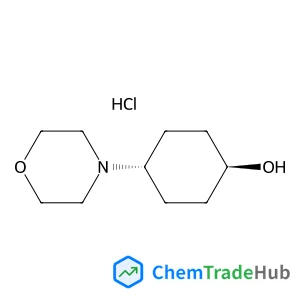
trans-4-(4-Morpholinyl)cyclohexanol hydrochloride (1:1)
CAS Number:
1588441-09-1
Molecular Formula:
C10H20ClNO2
Recommended Suppliers





Disclaimer
This page provides academic journal information for reference and research purposes only. We are not affiliated with any journal publishers and do not handle publication submissions. For publication-related inquiries, please contact the respective journal publishers directly.
If you notice any inaccuracies in the information displayed, please contact us at support@chemtradehub.com. We will promptly review and address your concerns.