













Mechanically induced cis-to-trans isomerization of carbon–carbon double bonds using atomic force microscopy
Literature Information
Publication Date
2016-10-21
DOI
10.1039/C6CP05696B
Impact Factor
3.676
Authors
Milad Radiom, Phally Kong, Plinio Maroni, Mark Schäfer, Andreas F. M. Kilbinger, Michal Borkovec
View Original
Abstract
Cis-to-trans isomerization of carbon–carbon double bonds can be induced by the application of mechanical force. Using single molecule force spectroscopy by means of atomic force microscopy (AFM) we pulled polymer molecules which contained cis double bonds in the backbone. In the force versus extension profiles of these polymers, a sudden extension increase is observed which is due to the conversion of shorter cis isomers into longer trans isomers. The added length to the polymer results in relaxation in probed force. We find that the isomerization occurs at forces of 800 ± 60 pN, independent of AFM tip and solid substrate chemistries. Investigation of similar polymers which exclusively contained single bonds in the backbone showed no evidence of a similar transition.
Related Literature
Picosecond self-diffusion in ethanol–water mixtures
Tilo Seydel, Robert M. Edkins, Katharina Edkins
2019-04-16
Paper
DOI: 10.1039/C9CP01982K
Effects of sulfation and the environment on the structure of chondroitin sulfate studied via Raman optical activity
Václav Profant, Christian Johannessen, Ewan W. Blanch, Petr Bouř, Vladimír Baumruk
2019-03-14
Paper
DOI: 10.1039/C9CP00472F
tert-Butyl peroxy radical: ground and first excited state energetics and fundamental frequencies
Peter R. Franke, Gary E. Douberly
2019-04-23
Paper
DOI: 10.1039/C9CP01476D
Delayed vibrational modulation of the solvated GFP chromophore into a conical intersection
Miles A. Taylor, Cheng Chen
2019-04-22
Paper
DOI: 10.1039/C9CP01077G
A theoretical study of several fully hydrogenated borophenes
Li Shao, Xiangyang Duan, Yan Li, Qingxin Yuan, Bo Gao, Honggang Ye, Pei Ding
2019-03-14
Paper
DOI: 10.1039/C9CP00468H
Theory of cyclic voltammetry in random arrays of cylindrical microelectrodes applied to carbon felt electrodes for vanadium redox flow batteries
Tim Tichter, Dirk Andrae, Jacob Mayer, Jonathan Schneider, Marcus Gebhard, Christina Roth
2019-03-04
Paper
DOI: 10.1039/C9CP00548J
Theoretical study of C-arylations with aryl halides to determine the reaction mechanism, the effect of substituents and heteroatoms
Rocío Durán, Barbara Herrera
2019-04-29
Paper
DOI: 10.1039/C8CP07752E
Tunable photoluminescence from interconnected graphene network with potential to enhance the efficiency of a hybrid Si nanowire solar cell
Iuliana Mihalache, Eugeniu Vasile, Cristina Pachiu, Sandra A. V. Eremia, Antonio Radoi, Mihaela Kusko
2019-04-12
Paper
DOI: 10.1039/C9CP00751B
Water flow in carbon nanotubes: the role of tube chirality
Alan Sam, Vishnu Prasad K., Sarith P. Sathian
2019-02-26
Paper
DOI: 10.1039/C9CP00429G
You might also like
Compound Q&A
How is Ethyl 4-chlorothieno[2,3-b]pyridine-5-carboxylate (CAS: 59713-58-5) typically synthesized?
Ethyl 4-chlorothieno[2,3-b]pyridine-5-carboxylate (CAS: 59713-58-5) can be synth...
59713-58-5Ethyl 4-chlorothieno...
Compound Q&A
What regulatory guidelines apply to 5-Methyl-1H-indole-3-carbaldehyde (CAS: 52562-50-2)?
5-Methyl-1H-indole-3-carbaldehyde (CAS: 52562-50-2) is subject to various regula...
52562-50-25-Methyl-1H-indole-3...
Compound Q&A
What are the physical and chemical properties of (1,3-Dimethyl-2,4-dioxo-1,2,3,4-tetrahydro-5-pyrimidinyl)boronic acid (CAS: 223418-73-3)?
(1,3-Dimethyl-2,4-dioxo-1,2,3,4-tetrahydro-5-pyrimidinyl)boronic acid is a white...
223418-73-3(1,3-Dimethyl-2,4-di...
Compound Q&A
How should waste containing Sulfocostunolide A (CAS: 1016983-51-9) be handled?
Waste containing Sulfocostunolide A (CAS: 1016983-51-9) should be handled with c...
1016983-51-9Sulfocostunolide A
Compound Q&A
What precautions should be taken when handling Murraxocin (CAS: 88478-44-8)?
When handling Murraxocin (CAS: 88478-44-8), ensure proper personal protective eq...
88478-44-8Murraxocin
Compound Q&A
What are the physical and chemical properties of Formvar (CAS: 63148-64-1)?
Formvar (CAS: 63148-64-1) is an alkyd resin characterized by a high molecular we...
63148-64-1Formvar(R)
Compound Q&A
Is (S)-4-benzyl-2-((benzyloxy)methyl)morpholine (CAS: 205242-66-6) safe?
(S)-4-benzyl-2-((benzyloxy)methyl)morpholine is generally safe when handled with...
205242-66-6(S)-4-benzyl-2-((ben...
Compound Q&A
What industries use Methyl 1-(5-bromo-2-pyrimidinyl)cyclopropanecarboxylate (CAS: 1447607-69-3)?
Methyl 1-(5-bromo-2-pyrimidinyl)cyclopropanecarboxylate (CAS: 1447607-69-3) is p...
1447607-69-3Methyl 1-(5-bromo-2-...
Compound Q&A
Is 2-Methyl-1-phenyl-1-propanamine hydrochloride (CAS: 24290-47-9) safe?
2-Methyl-1-phenyl-1-propanamine hydrochloride (CAS: 24290-47-9) is generally con...
24290-47-92-Methyl-1-phenyl-1-...
Compound Q&A
How is 3-(4-Bromophenyl)-2-methylpropanoic acid (CAS: 66735-01-1) typically synthesized?
3-(4-Bromophenyl)-2-methylpropanoic acid is synthesized through a multi-step pro...
66735-01-13-(4-Bromophenyl)-2-...
Source Journal
Physical Chemistry Chemical Physics

CiteScore:
5.5
Self-citation Rate:
10.3%
Articles per Year:
3036
Physical Chemistry Chemical Physics (PCCP) is an international journal co-owned by 19 physical chemistry and physics societies from around the world. This journal publishes original, cutting-edge research in physical chemistry, chemical physics and biophysical chemistry. To be suitable for publication in PCCP, articles must include significant innovation and/or insight into physical chemistry; this is the most important criterion that reviewers and Editors will judge against when evaluating submissions. The journal has a broad scope and welcomes contributions spanning experiment, theory, computation and data science. Topical coverage includes spectroscopy, dynamics, kinetics, statistical mechanics, thermodynamics, electrochemistry, catalysis, surface science, quantum mechanics, quantum computing and machine learning. Interdisciplinary research areas such as polymers and soft matter, materials, nanoscience, energy, surfaces/interfaces, and biophysical chemistry are welcomed if they demonstrate significant innovation and/or insight into physical chemistry. Joined experimental/theoretical studies are particularly appreciated when complementary and based on up-to-date approaches.
Recommended Compounds
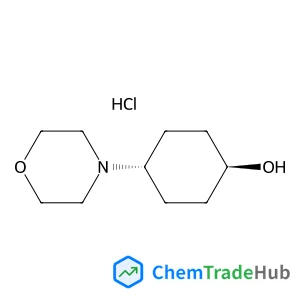
trans-4-(4-Morpholinyl)cyclohexanol hydrochloride (1:1)
CAS Number:
1588441-09-1
Molecular Formula:
C10H20ClNO2
![Imidazo[1,5-a]pyrazine structure](https://static.chemtradehub.com/structs/274/274-49-7-d749.webp "Imidazo[1,5-a]pyrazine structure")
Recommended Suppliers





Disclaimer
This page provides academic journal information for reference and research purposes only. We are not affiliated with any journal publishers and do not handle publication submissions. For publication-related inquiries, please contact the respective journal publishers directly.
If you notice any inaccuracies in the information displayed, please contact us at support@chemtradehub.com. We will promptly review and address your concerns.