













Influences of heterogeneous native contact energy and many-body interactions on the prediction of protein folding mechanisms
Literature Information
Publication Date
2016-10-19
DOI
10.1039/C6CP06181H
Impact Factor
3.676
Authors
Zhuqing Zhang, Yanhua Ouyang, Tao Chen
View Original
Abstract
Since single-point mutant perturbation has been used to probe protein folding mechanisms in experiments, the ϕ-value has become a critical parameter to infer the transition state (TS) for two-state proteins. Experimentally, large scale analysis has shown a nearly single uniform ϕ-value with normally distributed error from 24 different proteins; moreover, in zero stability conditions, the intrinsic variable ϕ0 is around 0.36. To explore how and to what extent theoretical models can capture experimental phenomena, we here use structure-based explicit chain coarse-grained models to investigate the influence of single-point mutant perturbation on protein folding for single domain two-state proteins. Our results indicate that uniform, additive contact energetic interactions cannot predict experimental Brønsted plots well. Those points deviate largely from the main data sets in Brønsted plots, are mostly hydrophobic, and are located in N- and C-terminal contacting regions. Heterogenous contact energy, which is dependent on sequence separation, can narrow the point dispersion in a Brønsted plot. Moreover, we demonstrate that combining many-body interactions with heterogeneous native contact energy can present mean ϕ-values consistent with experimental findings, with a comparable distributed error. This indicates that for more accurate elucidation of protein folding mechanisms by residue-level structure-based models, these elements should be considered.
Related Literature
Visible light-induced OH radicals in Ga2O3: an EPR study
Zeev Tzitrinovich, Anat Lipovsky, Aharon Gedanken, Rachel Lubart
2013-06-11
Paper
DOI: 10.1039/C3CP00102D
Coordination self-assembly of bromo-phenyl and pyridyl functionalized porphyrins with Fe on an Au(111) surface
Xiao Feng Mao, Tao Lin, Jinne Adisoejoso, Ziliang Shi, Xue Song Shang, Pei Nian Liu, Nian Lin
2013-06-04
Communication
DOI: 10.1039/C3CP50779C
pH in atomic scale simulations of electrochemical interfaces
Jan Rossmeisl, Rizwan Ahmed, Vladimir Tripković, Mårten E. Björketun
2013-05-10
Communication
DOI: 10.1039/C3CP51083B
Nanopore-type black silicon anti-reflection layers fabricated by a one-step silver-assisted chemical etching
Yen-Tien Lu
2013-05-08
Paper
DOI: 10.1039/C3CP51835C
Dependence on the structure and surface polarity of ZnS photocatalytic activities of water splitting: first-principles calculations
Hai Xiao, Xiaohong Wen, William A. Goddard III, Song Li, Gaowu Qin
2013-04-22
Paper
DOI: 10.1039/C3CP50330E
Stepping stones in the electron transport from cells to electrodes in Geobacter sulfurreducens biofilms
Pablo Sebastián Bonanni, Diego Massazza, Juan Pablo Busalmen
2013-05-01
Perspective
DOI: 10.1039/C3CP50411E
Highly-efficient charge separation and polaron delocalization in polymer–fullerene bulk-heterojunctions: a comparative multi-frequency EPR and DFT study
Jens Niklas, Kristy L. Mardis, Brian P. Banks, Gregory M. Grooms, Andreas Sperlich, Vladimir Dyakonov, Serge Beaupré, Mario Leclerc, Tao Xu, Luping Yu, Oleg G. Poluektov
2013-05-14
Paper
DOI: 10.1039/C3CP51477C
Sorption enhanced CO2 methanation
Andreas Borgschulte, Noris Gallandat, Benjamin Probst, Riccardo Suter, Elsa Callini, Davide Ferri, Yadira Arroyo, Rolf Erni, Hans Geerlings, Andreas Züttel
2013-04-15
Paper
DOI: 10.1039/C3CP51408K
Radially aligned microchannels prepared from ordered arrays of cracks on colloidal films
Hongmin Ma, Picheng Gao, Dawei Fan, Guobao Li, Dan Wu, Bin Du, Qin Wei
2013-04-22
Paper
DOI: 10.1039/C3CP50341K
You might also like
Compound Q&A
How is Ethyl 4-chlorothieno[2,3-b]pyridine-5-carboxylate (CAS: 59713-58-5) typically synthesized?
Ethyl 4-chlorothieno[2,3-b]pyridine-5-carboxylate (CAS: 59713-58-5) can be synth...
59713-58-5Ethyl 4-chlorothieno...
Compound Q&A
What regulatory guidelines apply to 5-Methyl-1H-indole-3-carbaldehyde (CAS: 52562-50-2)?
5-Methyl-1H-indole-3-carbaldehyde (CAS: 52562-50-2) is subject to various regula...
52562-50-25-Methyl-1H-indole-3...
Compound Q&A
What are the physical and chemical properties of (1,3-Dimethyl-2,4-dioxo-1,2,3,4-tetrahydro-5-pyrimidinyl)boronic acid (CAS: 223418-73-3)?
(1,3-Dimethyl-2,4-dioxo-1,2,3,4-tetrahydro-5-pyrimidinyl)boronic acid is a white...
223418-73-3(1,3-Dimethyl-2,4-di...
Compound Q&A
How should waste containing Sulfocostunolide A (CAS: 1016983-51-9) be handled?
Waste containing Sulfocostunolide A (CAS: 1016983-51-9) should be handled with c...
1016983-51-9Sulfocostunolide A
Compound Q&A
What precautions should be taken when handling Murraxocin (CAS: 88478-44-8)?
When handling Murraxocin (CAS: 88478-44-8), ensure proper personal protective eq...
88478-44-8Murraxocin
Compound Q&A
What are the physical and chemical properties of Formvar (CAS: 63148-64-1)?
Formvar (CAS: 63148-64-1) is an alkyd resin characterized by a high molecular we...
63148-64-1Formvar(R)
Compound Q&A
Is (S)-4-benzyl-2-((benzyloxy)methyl)morpholine (CAS: 205242-66-6) safe?
(S)-4-benzyl-2-((benzyloxy)methyl)morpholine is generally safe when handled with...
205242-66-6(S)-4-benzyl-2-((ben...
Compound Q&A
What industries use Methyl 1-(5-bromo-2-pyrimidinyl)cyclopropanecarboxylate (CAS: 1447607-69-3)?
Methyl 1-(5-bromo-2-pyrimidinyl)cyclopropanecarboxylate (CAS: 1447607-69-3) is p...
1447607-69-3Methyl 1-(5-bromo-2-...
Compound Q&A
Is 2-Methyl-1-phenyl-1-propanamine hydrochloride (CAS: 24290-47-9) safe?
2-Methyl-1-phenyl-1-propanamine hydrochloride (CAS: 24290-47-9) is generally con...
24290-47-92-Methyl-1-phenyl-1-...
Compound Q&A
How is 3-(4-Bromophenyl)-2-methylpropanoic acid (CAS: 66735-01-1) typically synthesized?
3-(4-Bromophenyl)-2-methylpropanoic acid is synthesized through a multi-step pro...
66735-01-13-(4-Bromophenyl)-2-...
Source Journal
Physical Chemistry Chemical Physics

CiteScore:
5.5
Self-citation Rate:
10.3%
Articles per Year:
3036
Physical Chemistry Chemical Physics (PCCP) is an international journal co-owned by 19 physical chemistry and physics societies from around the world. This journal publishes original, cutting-edge research in physical chemistry, chemical physics and biophysical chemistry. To be suitable for publication in PCCP, articles must include significant innovation and/or insight into physical chemistry; this is the most important criterion that reviewers and Editors will judge against when evaluating submissions. The journal has a broad scope and welcomes contributions spanning experiment, theory, computation and data science. Topical coverage includes spectroscopy, dynamics, kinetics, statistical mechanics, thermodynamics, electrochemistry, catalysis, surface science, quantum mechanics, quantum computing and machine learning. Interdisciplinary research areas such as polymers and soft matter, materials, nanoscience, energy, surfaces/interfaces, and biophysical chemistry are welcomed if they demonstrate significant innovation and/or insight into physical chemistry. Joined experimental/theoretical studies are particularly appreciated when complementary and based on up-to-date approaches.
Recommended Compounds
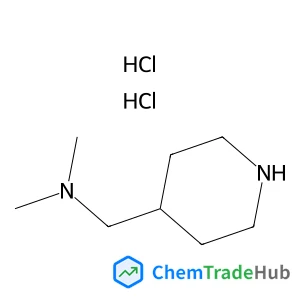
N,N-dimethyl(piperidin-4-yl)methanamine hydrochloride
CAS Number:
172281-72-0
Molecular Formula:
C8H20Cl2N2

Recommended Suppliers







Disclaimer
This page provides academic journal information for reference and research purposes only. We are not affiliated with any journal publishers and do not handle publication submissions. For publication-related inquiries, please contact the respective journal publishers directly.
If you notice any inaccuracies in the information displayed, please contact us at support@chemtradehub.com. We will promptly review and address your concerns.