












Infrared spectra of protonated neurotransmitters: dopamine
Literature Information
Publication Date
2010-12-13
DOI
10.1039/C0CP02133D
Impact Factor
3.676
Authors
Anita Lagutschenkov, Judith Langer, Giel Berden, Otto Dopfer
View Original
Abstract
The infrared (IR) spectrum of the isolated protonated neurotransmitter dopamine was recorded in the fingerprint range (570–1880 cm−1) by means of IR multiple photon dissociation (IRMPD) spectroscopy. The spectrum was obtained in a Fourier transform ion cyclotron resonance mass spectrometer equipped with an electrospray ionization source, which was coupled to a free electron laser (FEL). The spectroscopic studies are complemented by quantum chemical calculations at the B3LYP and MP2 levels of theory using the cc-pVDZ basis set. Several low-energy isomers with protonation occurring at the amino group are predicted in the energy range 0–50 kJ mol−1. Good agreement between the measured IRMPD spectrum and the calculated linear absorption spectra is observed for the two gauche conformers lowest in energy (ΔE) and free energy (ΔG) at both levels of theory, denoted g−1 and g+1. Minor contributions of higher lying gauche isomers cannot be ruled out spectroscopically but their calculated energies suggest only minor population in the sampled ion cloud. In all these gauche structures, one of the three protons of the ammonium group is pointing toward the catechol subunit, thereby maximizing the intramolecular NH–π interaction of the positive charge with the aromatic ring. In total, 16 distinct vibrational bands are observed in the IRMPD spectrum and assigned to individual normal modes of the energetically most stable g−1 conformer, with deviations of less than 24 cm−1 (average 11 cm−1) between measured and calculated frequencies. Comparison with neutral dopamine reveals the effects of protonation on the geometric and electronic structure.
Related Literature
Synthesis and self-assembly of a dual-responsive monocleavable ABCD star quaterpolymer
Jian Zhang, Wenxue Dai, Youliang Zhao
2017-11-01
Paper
DOI: 10.1039/C7PY01638G
Synthesis of regioblock copolythiophene by Negishi catalyst-transfer polycondensation using tBu2Zn·2LiCl
Eisuke Goto, Yuto Ochiai, Chen-Tsyr Lo, Tomoyuki Koganezawa, Mitsuru Ueda, Tomoya Higashihara
2017-09-13
Paper
DOI: 10.1039/C7PY01416C
Thermo- and redox-responsive dendronized polymer hydrogels
Xiacong Zhang, Yu Yin, Jiatao Yan, Afang Zhang
2018-01-10
Paper
DOI: 10.1039/C7PY01284E
High-throughput physicochemical analysis of thermoresponsive polymers
S. J. M. C. Bou, A. R. Connolly, A. V. Ellis
2018-02-07
Communication
DOI: 10.1039/C7PY02066J
Synthesis and chiroptical properties of helical polystyrenes stabilized by intramolecular hydrogen bonding
Na Liu, Rui-Wen Sun, Hao-Jun Lu, Xue-Liang Li, Chun-Hua Liu, Zong-Quan Wu
2017-10-30
Paper
DOI: 10.1039/C7PY01633F
The effect of metal ions on the viscoelastic properties of thermosensitive sol-to-gel reversible metallo-supramolecular hydrogels
A. Gutierres, S. Pascual, L. Fontaine, S. Piogé, L. Benyahia
2018-04-04
Paper
DOI: 10.1039/C7PY02118F
Dual thermo- and light-responsive coumarin-based copolymers with programmable cloud points
Couturaud Benoit, Stefanello Talitha, Fournier David, Sliwa Michel, Szarpack-Jankowska Anna, Auzély-Velty Rachel, Woisel Patrice
2017-07-05
Paper
DOI: 10.1039/C7PY00914C
Correction: Synthesis of well-defined α,ω-telechelic multiblock copolymers in aqueous medium: in situ generation of α,ω-diols
Alexandre Simula, Vasiliki Nikolaou, Athina Anastasaki, Fehaid Alsubaie, Gabit Nurumbetov
2017-11-28
Correction
DOI: 10.1039/C7PY90189E
Fluorescent and “breathable” CO2 responsive vesicles inspired from green fluorescent protein
Lei Xu, Ning Ren, Ji Pang, Hongping Deng, Xinyuan Zhu, Mo Sun, Deyue Yan
2017-09-21
Paper
DOI: 10.1039/C7PY00963A
You might also like
Compound Q&A
What precautions should be taken when handling lithium chloride hydrate (1:1:1) (CAS: 16712-20-2)?
When handling lithium chloride hydrate (1:1:1) (CAS: 16712-20-2), it is importan...
16712-20-2Lithium chloride hyd...
Compound Q&A
Is 4-(4H-1,2,4-Triazol-4-yl)piperidine (CAS: 690261-92-8) safe?
4-(4H-1,2,4-Triazol-4-yl)piperidine is generally considered safe for use in phar...
690261-92-84-(4H-1,2,4-Triazol-...
Compound Q&A
How should waste containing 1,3-Thiazole-2-carboxamide (CAS: 16733-85-0) be handled?
Waste containing 1,3-Thiazole-2-carboxamide (CAS: 16733-85-0) should be collecte...
16733-85-01,3-Thiazole-2-carbo...
Compound Q&A
What regulatory guidelines apply to 5-(Difluoromethyl)-2-fluorobenzonitrile (CAS: 934175-58-3)?
5-(Difluoromethyl)-2-fluorobenzonitrile (CAS: 934175-58-3) is subject to regulat...
934175-58-35-(Difluoromethyl)-2...
Compound Q&A
How is Methyl 3-acetamido-2-thiophenecarboxylate (CAS: 22288-79-5) typically synthesized?
Methyl 3-acetamido-2-thiophenecarboxylate can be synthesized by the reaction of ...
22288-79-5Methyl 3-acetamido-2...
Compound Q&A
What is 4-Isoquinolinecarbonitrile (CAS: 34846-65-6)?
4-Isoquinolinecarbonitrile is a chemical compound with the CAS number 34846-65-6...
34846-65-64-Isoquinolinecarbon...
Compound Q&A
How should Methyl 1H-1,2,3-triazole-4-carboxylate (CAS: 877309-59-6) be stored?
Store Methyl 1H-1,2,3-triazole-4-carboxylate (CAS: 877309-59-6) in a cool, dry p...
877309-59-6Methyl 1H-1,2,3-tria...
Compound Q&A
What regulatory guidelines apply to 6-Bromo[1,3]thiazolo[5,4-b]pyridin-2-amine (CAS: 1160791-13-8)?
6-Bromo[1,3]thiazolo[5,4-b]pyridin-2-amine (CAS: 1160791-13-8) is subject to the...
1160791-13-86-Bromo[1,3]thiazolo...
Compound Q&A
Is (2S,3S)-2-Ammonio-3-(3,4-dihydroxyphenyl)-3-hydroxypropanoate (CAS: 23651-95-8) safe?
(2S,3S)-2-Ammonio-3-(3,4-dihydroxyphenyl)-3-hydroxypropanoate (CAS: 23651-95-8) ...
23651-95-8(2S,3S)-2-Ammonio-3-...
Compound Q&A
What are the physical and chemical properties of 7-bromo-3-methyl-3,4-dihydroquinazolin-4-one (CAS: 1293987-84-4)?
7-Bromo-3-methyl-3,4-dihydroquinazolin-4-one is a solid with a crystalline form....
1293987-84-47-bromo-3-methyl-3,4...
Source Journal
Physical Chemistry Chemical Physics

CiteScore:
5.5
Self-citation Rate:
10.3%
Articles per Year:
3036
Physical Chemistry Chemical Physics (PCCP) is an international journal co-owned by 19 physical chemistry and physics societies from around the world. This journal publishes original, cutting-edge research in physical chemistry, chemical physics and biophysical chemistry. To be suitable for publication in PCCP, articles must include significant innovation and/or insight into physical chemistry; this is the most important criterion that reviewers and Editors will judge against when evaluating submissions. The journal has a broad scope and welcomes contributions spanning experiment, theory, computation and data science. Topical coverage includes spectroscopy, dynamics, kinetics, statistical mechanics, thermodynamics, electrochemistry, catalysis, surface science, quantum mechanics, quantum computing and machine learning. Interdisciplinary research areas such as polymers and soft matter, materials, nanoscience, energy, surfaces/interfaces, and biophysical chemistry are welcomed if they demonstrate significant innovation and/or insight into physical chemistry. Joined experimental/theoretical studies are particularly appreciated when complementary and based on up-to-date approaches.
Recommended Compounds
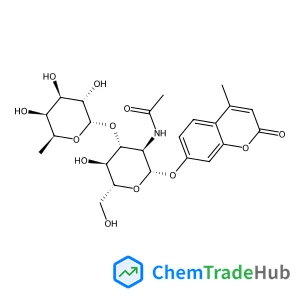
4-Methyl-2-oxo-2H-chromen-7-yl 2-acetamido-2-deoxy-3-O-(6-deoxy-alpha-L-galactopyranosyl)-beta-D-glucopyranoside
CAS Number:
383160-12-1
Molecular Formula:
C24H31NO12
![(1R,5R)-3-{[(2-Methyl-2-propanyl)oxy]carbonyl}-3-azabicyclo[3.1.0]hexane-1-carboxylic acid structure](https://static.chemtradehub.com/structs/116/1165450-63-4-bfe1.webp "(1R,5R)-3-{[(2-Methyl-2-propanyl)oxy]carbonyl}-3-azabicyclo[3.1.0]hexane-1-carboxylic acid structure")
(1R,5R)-3-{[(2-Methyl-2-propanyl)oxy]carbonyl}-3-azabicyclo[3.1.0]hexane-1-carboxylic acid
CAS Number:
1165450-63-4
Molecular Formula:
C11H17NO4
Recommended Suppliers






Disclaimer
This page provides academic journal information for reference and research purposes only. We are not affiliated with any journal publishers and do not handle publication submissions. For publication-related inquiries, please contact the respective journal publishers directly.
If you notice any inaccuracies in the information displayed, please contact us at support@chemtradehub.com. We will promptly review and address your concerns.