












Fluorescent and “breathable” CO2 responsive vesicles inspired from green fluorescent protein
Literature Information
Publication Date
2017-09-21
DOI
10.1039/C7PY00963A
Impact Factor
5.582
Authors
Lei Xu, Ning Ren, Ji Pang, Hongping Deng, Xinyuan Zhu, Mo Sun, Deyue Yan
View Original
Abstract
The design of green fluorescent protein (GFP) chromophore labeled, CO2 responsive vesicles that can mimic the breathing of jellyfish is described. The vesicles were obtained via the self-assembly of a di-block copolymer bearing a hydrophilic poly(ethylene glycol) (PEG) segment and a hydrophobic, CO2 responsive poly((diethylamino)ethyl methacrylate) (PDEAEMA) segment, with a GFP chromophore between the two blocks. Like the breathing of a jellyfish, the vesicles’ size and fluorescence changed significantly upon exposure to CO2, as confirmed by morphology observation and fluorescence measurements. Further analysis suggested that the “breathing” of the vesicles is reversible under a continuous CO2/N2 gas flow. The “breathing” behavior of the fluorescent vesicles was also directly observable under a confocal microscope.
Related Literature
Palladium catalysed Suzuki reactions of fluoroarenes
David A. Widdowson, René Wilhelm
2003-02-20
Communication
DOI: 10.1039/B212138G
Small molecule fixation by a dithiadiazolyl radical: X-ray crystal structures of (CF3C6H3FCNSSN)2 and (CF3C6H3FCNSSN)2˙G (G = N2, Ar, CO2 and SO2)
Caroline S. Clarke, Delia A. Haynes, Jeremy M. Rawson, Andrew D. Bond
2003-10-20
Communication
DOI: 10.1039/B307509P
Direct preparation of polyfunctional amino-substituted arylmagnesium reagents via an iodine–magnesium exchange reaction
Greta Varchi, Christiane Kofink, David M. Lindsay, Alfredo Ricci, Paul Knochel
2003-01-14
Communication
DOI: 10.1039/B211115B
Continuous biphasic catalysis: palladium catalyzed cross coupling reactions
Jens Hillerich, Herbert Plenio
2003-11-03
Communication
DOI: 10.1039/B310504K
Reduction of carbonyl groups to the corresponding methylenes with Ni–Al alloy in water
Keiko Ishimoto, Yoshiharu Mitoma, Satoko Nagashima, Hideki Tashiro, G. K. Surya Prakash, George A. Olah, Masashi Tashiro
2003-01-23
Communication
DOI: 10.1039/B211571A
Mono(sulfido)-bridged mixed-valence nitrosyl complex: protonation and oxidative addition of iodine across the Ir(ii)–Ir(0) bond
Takanori Hattori, Shoji Matsukawa, Shigeki Kuwata, Youichi Ishii, Masanobu Hidai
2003-01-22
Communication
DOI: 10.1039/B211021K
Isolation and structural characterization of the first thermally robust and air stable Cr(4+) bent-metallocene complex
Piet-Jan Sinnema, Justin Nairn, Ralph Zehnder, Pamela J. Shapiro, Brendan Twamley, Alex Blumenfeld
2003-11-24
Communication
DOI: 10.1039/B311352C
Crown-ether functionalised second coordination sphere palladiumcatalysts by molecular imprinting
Florian Viton, Peter S. White, Michel R. Gagné
2003-10-20
Communication
DOI: 10.1039/B309072H
A novel AlEt3-promoted tandem reductive rearrangement of 1-benzyloxy-2,3-epoxides: new route to 2-quaternary 1,3-diol units
De Run Li, Wu Jiong Xia, Yong Qiang Tu, Fu Min Zhang, Lei Shi
2003-02-25
Communication
DOI: 10.1039/B209948A
You might also like
Compound Q&A
What precautions should be taken when handling lithium chloride hydrate (1:1:1) (CAS: 16712-20-2)?
When handling lithium chloride hydrate (1:1:1) (CAS: 16712-20-2), it is importan...
16712-20-2Lithium chloride hyd...
Compound Q&A
Is 4-(4H-1,2,4-Triazol-4-yl)piperidine (CAS: 690261-92-8) safe?
4-(4H-1,2,4-Triazol-4-yl)piperidine is generally considered safe for use in phar...
690261-92-84-(4H-1,2,4-Triazol-...
Compound Q&A
How should waste containing 1,3-Thiazole-2-carboxamide (CAS: 16733-85-0) be handled?
Waste containing 1,3-Thiazole-2-carboxamide (CAS: 16733-85-0) should be collecte...
16733-85-01,3-Thiazole-2-carbo...
Compound Q&A
What regulatory guidelines apply to 5-(Difluoromethyl)-2-fluorobenzonitrile (CAS: 934175-58-3)?
5-(Difluoromethyl)-2-fluorobenzonitrile (CAS: 934175-58-3) is subject to regulat...
934175-58-35-(Difluoromethyl)-2...
Compound Q&A
How is Methyl 3-acetamido-2-thiophenecarboxylate (CAS: 22288-79-5) typically synthesized?
Methyl 3-acetamido-2-thiophenecarboxylate can be synthesized by the reaction of ...
22288-79-5Methyl 3-acetamido-2...
Compound Q&A
What is 4-Isoquinolinecarbonitrile (CAS: 34846-65-6)?
4-Isoquinolinecarbonitrile is a chemical compound with the CAS number 34846-65-6...
34846-65-64-Isoquinolinecarbon...
Compound Q&A
How should Methyl 1H-1,2,3-triazole-4-carboxylate (CAS: 877309-59-6) be stored?
Store Methyl 1H-1,2,3-triazole-4-carboxylate (CAS: 877309-59-6) in a cool, dry p...
877309-59-6Methyl 1H-1,2,3-tria...
Compound Q&A
What regulatory guidelines apply to 6-Bromo[1,3]thiazolo[5,4-b]pyridin-2-amine (CAS: 1160791-13-8)?
6-Bromo[1,3]thiazolo[5,4-b]pyridin-2-amine (CAS: 1160791-13-8) is subject to the...
1160791-13-86-Bromo[1,3]thiazolo...
Compound Q&A
Is (2S,3S)-2-Ammonio-3-(3,4-dihydroxyphenyl)-3-hydroxypropanoate (CAS: 23651-95-8) safe?
(2S,3S)-2-Ammonio-3-(3,4-dihydroxyphenyl)-3-hydroxypropanoate (CAS: 23651-95-8) ...
23651-95-8(2S,3S)-2-Ammonio-3-...
Compound Q&A
What are the physical and chemical properties of 7-bromo-3-methyl-3,4-dihydroquinazolin-4-one (CAS: 1293987-84-4)?
7-Bromo-3-methyl-3,4-dihydroquinazolin-4-one is a solid with a crystalline form....
1293987-84-47-bromo-3-methyl-3,4...
Source Journal
Polymer Chemistry

CiteScore:
8.6
Self-citation Rate:
7.3%
Articles per Year:
457
Polymer Chemistry welcomes submissions in all areas of polymer science that have a strong focus on macromolecular chemistry. Manuscripts may cover a broad range of fields, yet no direct application focus is required.
Recommended Compounds
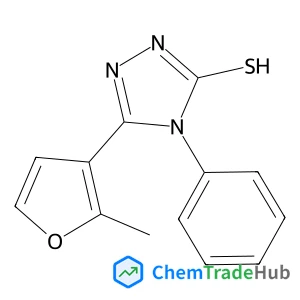
5-(2-Methyl-3-furyl)-4-phenyl-2,4-dihydro-3H-1,2,4-triazole-3-thione
CAS Number:
346464-59-3
Molecular Formula:
C13H11N3OS
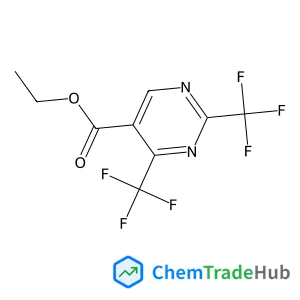
Ethyl 2,4-bis(trifluoromethyl)-5-pyrimidinecarboxylate
CAS Number:
188781-15-9
Molecular Formula:
C9H6F6N2O2
![5,10-Dihydroindeno[2,1-a]indene structure](https://static.chemtradehub.com/structs/654/6543-29-9-71ca.webp "5,10-Dihydroindeno[2,1-a]indene structure")
Recommended Suppliers





Disclaimer
This page provides academic journal information for reference and research purposes only. We are not affiliated with any journal publishers and do not handle publication submissions. For publication-related inquiries, please contact the respective journal publishers directly.
If you notice any inaccuracies in the information displayed, please contact us at support@chemtradehub.com. We will promptly review and address your concerns.