












Influence of gel-phase microdomains and lipid rafts in lipid monolayers on the electron transfer of a lipophilic redox probe: dioctadecylviologen
Literature Information
Publication Date
2011-01-05
DOI
10.1039/C0CP01928C
Impact Factor
3.676
Authors
Lucia Becucci, Elisabetta Lottini, Rolando Guidelli
View Original
Abstract
Gel-phase microdomains and lipid rafts form spontaneously in monolayers of lipid mixtures of dioleoylphosphatidylcholine (DOPC), palmitoylsphingomyelin (PSM) and cholesterol (Chol), self-assembled on mercury. The influence of microdomains on the electron transfer properties of 2 mol% dioctadecylviologen (DODV), incorporated in these lipid monolayers, was investigated by cyclic voltammetry. In pure DOPC, the DODV molecules tend to aggregate, giving rise to strong attractive lateral interactions. With an increase in the PSM mole fraction in DOPC/PSM binary mixtures, the edges of the resulting gel-phase microdomains act as docking sites for the DODV molecules, decreasing lateral interactions and modifying the DODV redox properties. A similar behavior is shown by lipid rafts formed by adding Chol to the above binary mixtures. By varying the DOPC/PSM molar ratio, the midpoint between the peak potentials of the DODV reduction and oxidation peaks shifts in parallel with the surface dipole potential of the lipid mixture. This behavior indicates that the formal (half-reduction) potential of a redox pair, as measured versus a given reference electrode, may include a surface dipole potential if one or both members of the redox pair are embedded in a medium different from the bulk phase containing the reference electrode.
Related Literature
Intermolecular structure and hydrogen-bonding in liquid 1,2-propylene carbonate and 1,2-glycerol carbonate determined by neutron scattering
Yoan M. Delavoux, Mark Gilmore, Martin P. Atkins, Małgorzata Swadźba-Kwaśny, John D. Holbrey
2016-12-15
Paper
DOI: 10.1039/C6CP07790K
Direct electron irradiation of DNA in a fully aqueous environment. Damage determination in combination with Monte Carlo simulations
Maria-Astrid Schröter, Harald Seitz, Hans-Jörg Kunte, Tihomir Solomun
2016-12-14
Paper
DOI: 10.1039/C6CP07707B
Sizing and Eddy currents in magnetic core nanoparticles: an optical extinction approach
Luis J. Mendoza Herrera, Ignacio J. Bruvera
2016-12-19
Paper
DOI: 10.1039/C6CP08260B
Adsorption of CO on the rutile TiO2(110) surface: a dispersion-corrected density functional theory study
João P. Prates Ramalho, Francesc Illas, José R. B. Gomes
2016-12-20
Paper
DOI: 10.1039/C6CP06971A
Screening out unfeasible hypothetical zeolite structures via the closest non-adjacent O⋯O pairs
Junran Lu, Lin Li, Hongxiao Cao, Yi Li, Jihong Yu
2016-12-06
Paper
DOI: 10.1039/C6CP06217B
Polyelectrolyte multilayer-cushioned fluid lipid bilayers: a parachute model
Jingxin Shao, Caixia Wen, Mingjun Xuan, Hongyue Zhang, Johannes Frueh, Mingwei Wan, Lianghui Gao, Qiang He
2016-12-02
Paper
DOI: 10.1039/C6CP06787E
The discrete nature of inhomogeneity: the initial stages and local configurations of TiOPc during bilayer growth on Ag(111)
Laura Fernandez, Sebastian Thussing, Alexander Mänz, Jörg Sundermeyer, Gregor Witte, Peter Jakob
2016-12-22
Paper
DOI: 10.1039/C6CP07922A
Is energy transfer limiting multiphotochromism? answers from ab initio quantifications
Roberto Russo, Lorenzo Cupellini, Benedetta Mennucci
2016-12-19
Paper
DOI: 10.1039/C6CP07458H
Liberation of three dihydrogens from two ethene molecules as mediated by the tantalum nitride anion cluster Ta3N2− at room temperature
Ji-Chuang Hu, Lin-Lin Xu, Hai-Fang Li, David Yubero Valdivielso, André Fielicke, Sheng-Gui He, Jia-Bi Ma
2016-11-29
Paper
DOI: 10.1039/C6CP06896K
OH production from the photolysis of isoprene-derived peroxy radicals: cross-sections, quantum yields and atmospheric implications
Robert F. Hansen, Tom R. Lewis, Lee Graham
2016-12-12
Paper
DOI: 10.1039/C6CP06718B
You might also like
Compound Q&A
Is 2-(2-chloroacetamido)-3-phenylpropanoic acid (CAS: 7765-11-9) safe?
2-(2-Chloroacetamido)-3-phenylpropanoic acid (CAS: 7765-11-9) is generally consi...
7765-11-92-(2-chloroacetamido...
Compound Q&A
Is 2-(Benzyloxy)-5-bromobenzoic acid (CAS: 62176-31-2) safe?
2-(Benzyloxy)-5-bromobenzoic acid can be handled safely if appropriate precautio...
62176-31-22-(Benzyloxy)-5-brom...
Compound Q&A
What is (4-Methyl-1,2,5-oxadiazol-3-yl)methanamine hydrochloride (CAS: 1159825-48-5)?
(4-Methyl-1,2,5-oxadiazol-3-yl)methanamine hydrochloride is a chemical compound ...
1159825-48-5(4-Methyl-1,2,5-oxad...
Compound Q&A
What is 2-(5-Hexylthiophen-2-yl)-4,4,5,5-tetramethyl-1,3,2-dioxaborolane (CAS: 917985-54-7)?
2-(5-Hexylthiophen-2-yl)-4,4,5,5-tetramethyl-1,3,2-dioxaborolane (CAS: 917985-54...
917985-54-72-(5-Hexylthiophen-2...
Compound Q&A
Are there alternatives to 4-(8-Methyl-9H-1,3-dioxolo[4,5-h][2,3]benzodiazepin-5-yl)benzenamine (CAS: 102771-26-6) in synthesis?
While 4-(8-Methyl-9H-1,3-dioxolo[4,5-h][2,3]benzodiazepin-5-yl)benzenamine (CAS:...
102771-26-64-(8-Methyl-9H-1,3-d...
Compound Q&A
What is the market or research trend for tert-butyl 3-hydroxy-4,5,7,8-tetrahydro-2H-pyrazolo[3,4-d]azepine-6-carboxylate (CAS: 851376-80-2)?
The market for tert-butyl 3-hydroxy-4,5,7,8-tetrahydro-2H-pyrazolo[3,4-d]azepine...
851376-80-2tert-butyl 3-hydroxy...
Compound Q&A
How should waste containing 3,5-Diamino-1H-pyrazole-4-carbonitrile (CAS: 6844-58-2) be handled?
Waste containing 3,5-Diamino-1H-pyrazole-4-carbonitrile (CAS: 6844-58-2) should ...
6844-58-23,5-Diamino-1H-pyraz...
Compound Q&A
How is (6-Fluoro-3-pyridinyl)boronic acid (CAS: 351019-18-6) typically synthesized?
(6-Fluoro-3-pyridinyl)boronic acid can be synthesized through the reaction of 6-...
351019-18-6(6-Fluoro-3-pyridiny...
Compound Q&A
What industries use Dibenzyl carbonimidoylbiscarbamate (CAS: 10065-79-9)?
Dibenzyl carbonimidoylbiscarbamate (CAS: 10065-79-9) finds applications in vario...
10065-79-9Dibenzyl carbonimido...
Compound Q&A
What is the market or research trend for (beta,beta,2,3,4,5,6-~2~H_7_)Phenylalanine (CAS: 74228-83-4)?
The market for (beta,beta,2,3,4,5,6-~2~H_7_)Phenylalanine (CAS: 74228-83-4) is g...
74228-83-4(beta,beta,2,3,4,5,6...
Source Journal
Physical Chemistry Chemical Physics

CiteScore:
5.5
Self-citation Rate:
10.3%
Articles per Year:
3036
Physical Chemistry Chemical Physics (PCCP) is an international journal co-owned by 19 physical chemistry and physics societies from around the world. This journal publishes original, cutting-edge research in physical chemistry, chemical physics and biophysical chemistry. To be suitable for publication in PCCP, articles must include significant innovation and/or insight into physical chemistry; this is the most important criterion that reviewers and Editors will judge against when evaluating submissions. The journal has a broad scope and welcomes contributions spanning experiment, theory, computation and data science. Topical coverage includes spectroscopy, dynamics, kinetics, statistical mechanics, thermodynamics, electrochemistry, catalysis, surface science, quantum mechanics, quantum computing and machine learning. Interdisciplinary research areas such as polymers and soft matter, materials, nanoscience, energy, surfaces/interfaces, and biophysical chemistry are welcomed if they demonstrate significant innovation and/or insight into physical chemistry. Joined experimental/theoretical studies are particularly appreciated when complementary and based on up-to-date approaches.
Recommended Compounds
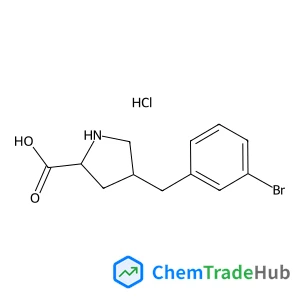
(2S,4R)-4-(3-Bromobenzyl)pyrrolidine-2-carboxylic acid hydrochloride
CAS Number:
1049734-10-2
Molecular Formula:
C12H15BrClNO2
![{3-[Bis(4-hydroxyphenyl)methyl]-1-[2-(dimethylamino)ethyl]-1H-indol-2-yl}[4-(2-chlorophenyl)-1-piperazinyl]methanone structure](https://static.chemtradehub.com/structs/170/170365-25-0-e4d7.webp "{3-[Bis(4-hydroxyphenyl)methyl]-1-[2-(dimethylamino)ethyl]-1H-indol-2-yl}[4-(2-chlorophenyl)-1-piperazinyl]methanone structure")
{3-[Bis(4-hydroxyphenyl)methyl]-1-[2-(dimethylamino)ethyl]-1H-indol-2-yl}[4-(2-chlorophenyl)-1-piperazinyl]methanone
CAS Number:
170365-25-0
Molecular Formula:
C36H37ClN4O3
Recommended Suppliers



Disclaimer
This page provides academic journal information for reference and research purposes only. We are not affiliated with any journal publishers and do not handle publication submissions. For publication-related inquiries, please contact the respective journal publishers directly.
If you notice any inaccuracies in the information displayed, please contact us at support@chemtradehub.com. We will promptly review and address your concerns.