












The discrete nature of inhomogeneity: the initial stages and local configurations of TiOPc during bilayer growth on Ag(111)
Literature Information
Publication Date
2016-12-22
DOI
10.1039/C6CP07922A
Impact Factor
3.676
Authors
Laura Fernandez, Sebastian Thussing, Alexander Mänz, Jörg Sundermeyer, Gregor Witte, Peter Jakob
View Original
Abstract
The operation of organic optoelectronic devices relies notably on the bulk properties of compound molecular species, but even more so on the influence of interfaces thereof since it is at the interface where elemental electronic processes take place. Their identification and characterization thereby requires that these critical sections of a device are well defined and can be prepared with low defect density. In this context titanyl phthalocyanine (TiOPc) arises as an excellent candidate that reveals the formation of a stable bilayer structure with a characteristic “up-down” molecular arrangement that optimizes the dipole–dipole interaction within the bilayer. In our experimental study, long-range ordered TiOPc bilayers have been grown on Ag(111) surfaces and analyzed using infrared absorption spectroscopy and scanning tunneling microscopy. By monitoring the prominent TiO stretching mode in IRAS and identifying local configurations in STM, a microscopic model for the growth of TiOPc bilayers on Ag(111) is suggested. We demonstrate that defect structures within these bilayers lead to characteristic vibrational signatures which react sensitively to the local environment of the molecules. Thermal desorption spectroscopy reveals a high thermal stability of the TiOPc bilayer up to 500 K, which is attributed to hydrogen bonds between oxygen of the titanyl unit and the hydrogen rim of phthalocyanines in the second layer, in addition to contributions arising from the oppositely oriented axial dipole moments and the ubiquitous van der Waals interactions.
Related Literature
Structural movies of the gradual spin-crossover in a molecular complex at various physical scales
S. Lakhloufi, M. H. Lemée-Cailleau, G. Chastanet, P. Rosa, N. Daro, P. Guionneau
2016-09-13
Paper
DOI: 10.1039/C6CP04987G
New insights into the photoswitching mechanisms of normal dithienylethenes
G. Buntinx, O. Devos, N. Jaïdane, S. Delbaere, A. K. Tiwari, J. Dubois, M. Takeshita, Y. Wada, S. Aloïse
2016-09-13
Paper
DOI: 10.1039/C6CP03471C
Initial dissolution of D2O at the gas–liquid interface of the ionic liquid [C4min][NTf2] associated with hydrogen-bond network formation
H. Ohoyama, T. Teramoto
2016-09-26
Paper
DOI: 10.1039/C6CP03448A
Distinctive electron transport on pyridine-linked molecular junctions with narrow monolayer graphene nanoribbon electrodes compared with metal electrodes and graphene electrodes
Jie Li, Tao Li, Yi Zhou, Weikang Wu, Leining Zhang, Hui Li
2016-09-13
Paper
DOI: 10.1039/C6CP05007G
Lowered phase transition temperature and excellent solar heat shielding properties of well-crystallized VO2 by W doping
Chuanxiang Cao, Zhang Chen, Jianjun Liu
2016-09-05
Paper
DOI: 10.1039/C6CP05143J
Isomerization of the methoxy radical revisited: the impact of water dimers
Pradeep Kumar, Partha Biswas, Biman Bandyopadhyay
2016-09-22
Communication
DOI: 10.1039/C6CP04544H
Adsorption dynamics and rate assessment of volatile organic compounds in active carbon
J. Zhu, H. L. Zhan, X. Y. Miao, Y. Song, K. Zhao
2016-09-08
Communication
DOI: 10.1039/C6CP05593A
Theory of solid effect and cross effect dynamic nuclear polarization with half-integer high-spin metal polarizing agents in rotating solids
2016-08-12
Paper
DOI: 10.1039/C6CP04621E
Application of classical simulations for the computation of vibrational properties of free molecules
Dmitry I. Sharapa, Jan Schwabedissen, Vladimir V. Rybkin
2016-09-15
Paper
DOI: 10.1039/C6CP05849C
Strategic improvement of the long-term stability of perovskite materials and perovskite solar cells
Lixin Chen, Zhanhu Guo, Tingli Ma
2016-09-13
Perspective
DOI: 10.1039/C6CP04553G
You might also like
Compound Q&A
Is 2-(2-chloroacetamido)-3-phenylpropanoic acid (CAS: 7765-11-9) safe?
2-(2-Chloroacetamido)-3-phenylpropanoic acid (CAS: 7765-11-9) is generally consi...
7765-11-92-(2-chloroacetamido...
Compound Q&A
Is 2-(Benzyloxy)-5-bromobenzoic acid (CAS: 62176-31-2) safe?
2-(Benzyloxy)-5-bromobenzoic acid can be handled safely if appropriate precautio...
62176-31-22-(Benzyloxy)-5-brom...
Compound Q&A
What is (4-Methyl-1,2,5-oxadiazol-3-yl)methanamine hydrochloride (CAS: 1159825-48-5)?
(4-Methyl-1,2,5-oxadiazol-3-yl)methanamine hydrochloride is a chemical compound ...
1159825-48-5(4-Methyl-1,2,5-oxad...
Compound Q&A
What is 2-(5-Hexylthiophen-2-yl)-4,4,5,5-tetramethyl-1,3,2-dioxaborolane (CAS: 917985-54-7)?
2-(5-Hexylthiophen-2-yl)-4,4,5,5-tetramethyl-1,3,2-dioxaborolane (CAS: 917985-54...
917985-54-72-(5-Hexylthiophen-2...
Compound Q&A
Are there alternatives to 4-(8-Methyl-9H-1,3-dioxolo[4,5-h][2,3]benzodiazepin-5-yl)benzenamine (CAS: 102771-26-6) in synthesis?
While 4-(8-Methyl-9H-1,3-dioxolo[4,5-h][2,3]benzodiazepin-5-yl)benzenamine (CAS:...
102771-26-64-(8-Methyl-9H-1,3-d...
Compound Q&A
What is the market or research trend for tert-butyl 3-hydroxy-4,5,7,8-tetrahydro-2H-pyrazolo[3,4-d]azepine-6-carboxylate (CAS: 851376-80-2)?
The market for tert-butyl 3-hydroxy-4,5,7,8-tetrahydro-2H-pyrazolo[3,4-d]azepine...
851376-80-2tert-butyl 3-hydroxy...
Compound Q&A
How should waste containing 3,5-Diamino-1H-pyrazole-4-carbonitrile (CAS: 6844-58-2) be handled?
Waste containing 3,5-Diamino-1H-pyrazole-4-carbonitrile (CAS: 6844-58-2) should ...
6844-58-23,5-Diamino-1H-pyraz...
Compound Q&A
How is (6-Fluoro-3-pyridinyl)boronic acid (CAS: 351019-18-6) typically synthesized?
(6-Fluoro-3-pyridinyl)boronic acid can be synthesized through the reaction of 6-...
351019-18-6(6-Fluoro-3-pyridiny...
Compound Q&A
What industries use Dibenzyl carbonimidoylbiscarbamate (CAS: 10065-79-9)?
Dibenzyl carbonimidoylbiscarbamate (CAS: 10065-79-9) finds applications in vario...
10065-79-9Dibenzyl carbonimido...
Compound Q&A
What is the market or research trend for (beta,beta,2,3,4,5,6-~2~H_7_)Phenylalanine (CAS: 74228-83-4)?
The market for (beta,beta,2,3,4,5,6-~2~H_7_)Phenylalanine (CAS: 74228-83-4) is g...
74228-83-4(beta,beta,2,3,4,5,6...
Source Journal
Physical Chemistry Chemical Physics

CiteScore:
5.5
Self-citation Rate:
10.3%
Articles per Year:
3036
Physical Chemistry Chemical Physics (PCCP) is an international journal co-owned by 19 physical chemistry and physics societies from around the world. This journal publishes original, cutting-edge research in physical chemistry, chemical physics and biophysical chemistry. To be suitable for publication in PCCP, articles must include significant innovation and/or insight into physical chemistry; this is the most important criterion that reviewers and Editors will judge against when evaluating submissions. The journal has a broad scope and welcomes contributions spanning experiment, theory, computation and data science. Topical coverage includes spectroscopy, dynamics, kinetics, statistical mechanics, thermodynamics, electrochemistry, catalysis, surface science, quantum mechanics, quantum computing and machine learning. Interdisciplinary research areas such as polymers and soft matter, materials, nanoscience, energy, surfaces/interfaces, and biophysical chemistry are welcomed if they demonstrate significant innovation and/or insight into physical chemistry. Joined experimental/theoretical studies are particularly appreciated when complementary and based on up-to-date approaches.
Recommended Compounds
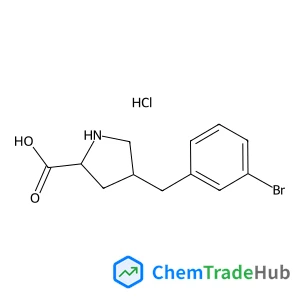
(2S,4R)-4-(3-Bromobenzyl)pyrrolidine-2-carboxylic acid hydrochloride
CAS Number:
1049734-10-2
Molecular Formula:
C12H15BrClNO2
Recommended Suppliers






Disclaimer
This page provides academic journal information for reference and research purposes only. We are not affiliated with any journal publishers and do not handle publication submissions. For publication-related inquiries, please contact the respective journal publishers directly.
If you notice any inaccuracies in the information displayed, please contact us at support@chemtradehub.com. We will promptly review and address your concerns.