













Fractional Stokes–Einstein–Debye relation and orientational entropy effects in strongly hydrogen-bonded liquid amides
Literature Information
Publication Date
2011-01-05
DOI
10.1039/C0CP01900C
Impact Factor
3.676
Authors
Jolanta Świergiel, Jan Jadżyn
View Original
Abstract
The impedance spectroscopy studies performed for two strongly hydrogen-bonded liquid amides: N-methylpropionamide (NMP, CH3·NH·CO·C2H5) and N-ethylacetamide (NEA, C2H5·NH·CO·CH3) have shown that the two centers of the peptide linkage, –NH·CO–, active in the CO⋯H–N hydrogen bonds formation, exhibit quite different sensibilities to the steric screening effects. In contrast to the oxygen atom, a relatively small change (CH3– to C2H5–) in the screening of the hydrogen atom leads to an essential decrease of the degree of the amide self-association. As a consequence, both the static dielectric permittivity and the orientational entropy increment of NEA are essentially lower than those of NMP. However, it was found that the dynamic processes studied are only weakly influenced (in the case of dc conductivity, σDC) or totally not influenced (the dielectric relaxation time, τD) by the different degrees of NMP and NEA self-association. The experiment shows that for both the amides, the logσDCvs. logτD dependence is nonlinear and can be described with the fractional Stokes–Einstein–Debye relation, σDCτsD ≅ const, with the exponent s varying from about −0.8 to about −0.6 in the temperature range from 5 °C to 110 °C.
Related Literature
Negative thermal expansion in 2H CuScO2 originating from the cooperation of transverse thermal vibrations of Cu and O atoms
Qiang Sun
2016-12-12
Paper
DOI: 10.1039/C6CP07589D
Inorganically coated colloidal quantum dots in polar solvents using a microemulsion-assisted method
Facundo C. Herrera, Martín Mizrahi, Cristina Navío, Ramón Bernardo-Gavito, Daniel Granados, Félix G. Requejo
2016-12-08
Paper
DOI: 10.1039/C6CP06982G
Reactions driving conformational movements (molecular motors) in gels: conformational and structural chemical kinetics
2016-12-06
Perspective
DOI: 10.1039/C6CP06735B
Theoretical investigation of gas-phase molecular complex formation between 2-hydroxy thiophenol and a water molecule
Debojit Kumar Deb, Biplab Sarkar
2016-12-20
Paper
DOI: 10.1039/C6CP08442G
Oxidation, defunctionalization and catalyst life cycle of carbon nanotubes: a Raman spectroscopy view
Anton S. Ivanov, Konstantin I. Maslakov, Alexander V. Egorov, Zexiang Shen
2016-12-12
Paper
DOI: 10.1039/C6CP04657F
Substituent effects on the relaxation dynamics of furan, furfural and β-furfural: a combined theoretical and experimental approach
Sven Oesterling, Oliver Schalk, Ting Geng, Richard D. Thomas, Tony Hansson, Regina de Vivie-Riedle
2016-12-16
Paper
DOI: 10.1039/C6CP06240G
A simple guiding principle for the temperature dependence of the solubility of light gases in imidazolium-based ionic liquids derived from molecular simulations
Daniela Kerlé, Majid Namayandeh Jorabchi, Sebastian Wohlrab, Dietmar Paschek
2016-11-08
Paper
DOI: 10.1039/C6CP06792A
Interfacial water on organic substrates at cryogenic temperatures: hydrogen bonding and quantification in the submonolayer regime
D. Houdoux, J. Houplin, L. Amiaud, A. Lafosse, C. Dablemont
2017-01-05
Paper
DOI: 10.1039/C6CP03328H
Quantum ergodicity breaking in semi-classical electron transfer dynamics
2016-12-20
Paper
DOI: 10.1039/C6CP07206B
The electronic character of PTCDA thin films in comparison to other perylene-based organic semi-conductors: ab initio-, TD-DFT and semi-empirical computations of the opto-electronic properties of large aggregates
Daniel Bellinger, Christoph Brüning, Volker Engel, Bernd Engels
2016-12-21
Paper
DOI: 10.1039/C6CP07673D
You might also like
Compound Q&A
Is 2-(2-chloroacetamido)-3-phenylpropanoic acid (CAS: 7765-11-9) safe?
2-(2-Chloroacetamido)-3-phenylpropanoic acid (CAS: 7765-11-9) is generally consi...
7765-11-92-(2-chloroacetamido...
Compound Q&A
Is 2-(Benzyloxy)-5-bromobenzoic acid (CAS: 62176-31-2) safe?
2-(Benzyloxy)-5-bromobenzoic acid can be handled safely if appropriate precautio...
62176-31-22-(Benzyloxy)-5-brom...
Compound Q&A
What is (4-Methyl-1,2,5-oxadiazol-3-yl)methanamine hydrochloride (CAS: 1159825-48-5)?
(4-Methyl-1,2,5-oxadiazol-3-yl)methanamine hydrochloride is a chemical compound ...
1159825-48-5(4-Methyl-1,2,5-oxad...
Compound Q&A
What is 2-(5-Hexylthiophen-2-yl)-4,4,5,5-tetramethyl-1,3,2-dioxaborolane (CAS: 917985-54-7)?
2-(5-Hexylthiophen-2-yl)-4,4,5,5-tetramethyl-1,3,2-dioxaborolane (CAS: 917985-54...
917985-54-72-(5-Hexylthiophen-2...
Compound Q&A
Are there alternatives to 4-(8-Methyl-9H-1,3-dioxolo[4,5-h][2,3]benzodiazepin-5-yl)benzenamine (CAS: 102771-26-6) in synthesis?
While 4-(8-Methyl-9H-1,3-dioxolo[4,5-h][2,3]benzodiazepin-5-yl)benzenamine (CAS:...
102771-26-64-(8-Methyl-9H-1,3-d...
Compound Q&A
What is the market or research trend for tert-butyl 3-hydroxy-4,5,7,8-tetrahydro-2H-pyrazolo[3,4-d]azepine-6-carboxylate (CAS: 851376-80-2)?
The market for tert-butyl 3-hydroxy-4,5,7,8-tetrahydro-2H-pyrazolo[3,4-d]azepine...
851376-80-2tert-butyl 3-hydroxy...
Compound Q&A
How should waste containing 3,5-Diamino-1H-pyrazole-4-carbonitrile (CAS: 6844-58-2) be handled?
Waste containing 3,5-Diamino-1H-pyrazole-4-carbonitrile (CAS: 6844-58-2) should ...
6844-58-23,5-Diamino-1H-pyraz...
Compound Q&A
How is (6-Fluoro-3-pyridinyl)boronic acid (CAS: 351019-18-6) typically synthesized?
(6-Fluoro-3-pyridinyl)boronic acid can be synthesized through the reaction of 6-...
351019-18-6(6-Fluoro-3-pyridiny...
Compound Q&A
What industries use Dibenzyl carbonimidoylbiscarbamate (CAS: 10065-79-9)?
Dibenzyl carbonimidoylbiscarbamate (CAS: 10065-79-9) finds applications in vario...
10065-79-9Dibenzyl carbonimido...
Compound Q&A
What is the market or research trend for (beta,beta,2,3,4,5,6-~2~H_7_)Phenylalanine (CAS: 74228-83-4)?
The market for (beta,beta,2,3,4,5,6-~2~H_7_)Phenylalanine (CAS: 74228-83-4) is g...
74228-83-4(beta,beta,2,3,4,5,6...
Source Journal
Physical Chemistry Chemical Physics

CiteScore:
5.5
Self-citation Rate:
10.3%
Articles per Year:
3036
Physical Chemistry Chemical Physics (PCCP) is an international journal co-owned by 19 physical chemistry and physics societies from around the world. This journal publishes original, cutting-edge research in physical chemistry, chemical physics and biophysical chemistry. To be suitable for publication in PCCP, articles must include significant innovation and/or insight into physical chemistry; this is the most important criterion that reviewers and Editors will judge against when evaluating submissions. The journal has a broad scope and welcomes contributions spanning experiment, theory, computation and data science. Topical coverage includes spectroscopy, dynamics, kinetics, statistical mechanics, thermodynamics, electrochemistry, catalysis, surface science, quantum mechanics, quantum computing and machine learning. Interdisciplinary research areas such as polymers and soft matter, materials, nanoscience, energy, surfaces/interfaces, and biophysical chemistry are welcomed if they demonstrate significant innovation and/or insight into physical chemistry. Joined experimental/theoretical studies are particularly appreciated when complementary and based on up-to-date approaches.
Recommended Compounds
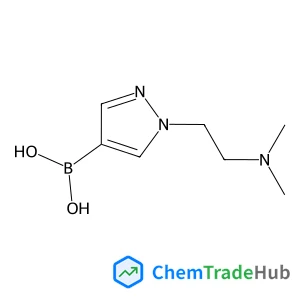
(1-(2-(Dimethylamino)ethyl)-1H-pyrazol-4-yl)boronic acid
CAS Number:
1086063-73-1
Molecular Formula:
C7H14BN3O2
![{3-[Bis(4-hydroxyphenyl)methyl]-1-[2-(dimethylamino)ethyl]-1H-indol-2-yl}[4-(2-chlorophenyl)-1-piperazinyl]methanone structure](https://static.chemtradehub.com/structs/170/170365-25-0-e4d7.webp "{3-[Bis(4-hydroxyphenyl)methyl]-1-[2-(dimethylamino)ethyl]-1H-indol-2-yl}[4-(2-chlorophenyl)-1-piperazinyl]methanone structure")
{3-[Bis(4-hydroxyphenyl)methyl]-1-[2-(dimethylamino)ethyl]-1H-indol-2-yl}[4-(2-chlorophenyl)-1-piperazinyl]methanone
CAS Number:
170365-25-0
Molecular Formula:
C36H37ClN4O3
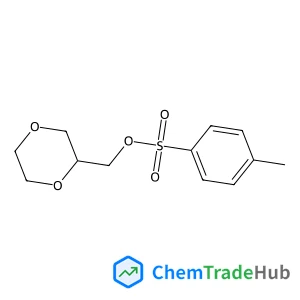
(S)-(1,4-Dioxan-2-yl)methyl 4-methylbenzenesulfonate
CAS Number:
917882-64-5
Molecular Formula:
C12H16O5S
Recommended Suppliers






Disclaimer
This page provides academic journal information for reference and research purposes only. We are not affiliated with any journal publishers and do not handle publication submissions. For publication-related inquiries, please contact the respective journal publishers directly.
If you notice any inaccuracies in the information displayed, please contact us at support@chemtradehub.com. We will promptly review and address your concerns.