


Ion conducting particle networks in liquids: modeling of network percolation and stability
Literature Information
Publication Date
2010-12-23
DOI
10.1039/C0CP01870H
Impact Factor
3.676
Authors
Anna Jarosik, Uwe Traub, Joachim Maier, Armin Bunde
View Original
Abstract
Networks of inorganic particles (here SiO2) formed within organic liquids play an important role in science. Recently they have been considered as ‘soggy sand’ electrolytes for Li-based batteries with a fascinating combination of mechanical and electrical properties. In this communication we model formation and stability of the networks by Cluster–Cluster Aggregation followed by coarsening on a different time scale. The comparison of computer simulations based on our model with experimental results obtained for LiClO4 containing polyethylene glycol reveals (i) that the percolation threshold for interfacial conductivity is very small, (ii) that the networks once formed coarsen with a time constant that is roughly independent of volume fraction and size—to a denser aggregate which then stays stable under operating condition. (iii) Trapping of the conducting solvent at high packing is also revealed.
Recommended Journals

Journal of Saudi Chemical Society

Russian Chemical Bulletin

Russian Journal of General Chemistry

Organic Process Research & Development

Journal of Natural Medicines

Current Opinion in Colloid & Interface Science

Saudi Pharmaceutical Journal

Crystallography Reports

New Journal of Chemistry

Russian Journal of Bioorganic Chemistry
Related Literature
Conformational dynamics is critical for the allosteric inhibition of cGAS upon acetyl-mimic mutations
Jingjing Guo, Mengrong Li, Yan Zhang, Lili Xi, Fengling Cui
2021-01-06
Paper
DOI: 10.1039/D0CP05871H
Collaboration between a Pt-dimer and neighboring Co–Pd atoms triggers efficient pathways for oxygen reduction reaction
Sheng Dai, Dinesh Bhalothia, Jyh-Pin Chou
2020-12-09
Paper
DOI: 10.1039/D0CP05205A
The low energy phonon modes of the hydrogenated and deuterated π-conjugated system 7,7,8,8-tetracyanoquinodimethane: an inelastic neutron scattering study
Hamish Cavaye
2021-01-12
Paper
DOI: 10.1039/D0CP06253G
Elastic properties of superionic cubic silver sulfide β-Ag2S
2021-01-21
Paper
DOI: 10.1039/D0CP04761A
The quantitative impact of fluid vs. solid interfaces on the catalytic performance of pickering emulsions
Sebastian Stock, Annika Schlander, Maresa Kempin, Ramsia Geisler, Dmitrij Stehl, Kai Spanheimer, Nicole Hondow, Stuart Micklethwaite, Ariane Weber, Reinhard Schomäcker, Anja Drews, Markus Gallei, Regine von Klitzing
2020-12-16
Paper
DOI: 10.1039/D0CP06030E
Predicting second virial coefficients of organic and inorganic compounds using Gaussian process regression
Jesús Pérez-Ríos
2021-01-11
Paper
DOI: 10.1039/D0CP05509C
Electric field induced reversal of spin polarization, magnetic anisotropy and tailored Dzyaloshinskii–Moriya interaction in underoxidized SrRuO3/SrTiO3 heterostructures‡
Zengjie Li, Xiang Liu, Jiawei Jiang, Wenbo Mi, Haili Bai
2021-01-07
Paper
DOI: 10.1039/D0CP06362B
Structural and optical properties of Be, Mg and Ca nanorods and nanodisks
A. G. Chronis, F. I. Michos, C. S. Garoufalis, M. M. Sigalas
2021-01-07
Paper
DOI: 10.1039/D0CP05780K
Electron deficiency but semiconductive diamond-like B2CN originated from three-center bonds
Hui Chen, Yu Zhao, Taimin Cheng, Quan Li
2021-01-06
Paper
DOI: 10.1039/D0CP05793B
New insights on the ESIPT process based on solid-state data and state-of-the-art computational methods
Jean Nunes Laner, Henrique de Castro Silva Junior, Fabiano Severo Rodembusch, Eduardo Ceretta Moreira
2020-12-14
Paper
DOI: 10.1039/D0CP05502F
You might also like
Compound Q&A
How is Ethyl 4-chlorothieno[2,3-b]pyridine-5-carboxylate (CAS: 59713-58-5) typically synthesized?
Ethyl 4-chlorothieno[2,3-b]pyridine-5-carboxylate (CAS: 59713-58-5) can be synth...
59713-58-5Ethyl 4-chlorothieno...
Compound Q&A
What regulatory guidelines apply to 5-Methyl-1H-indole-3-carbaldehyde (CAS: 52562-50-2)?
5-Methyl-1H-indole-3-carbaldehyde (CAS: 52562-50-2) is subject to various regula...
52562-50-25-Methyl-1H-indole-3...
Compound Q&A
What are the physical and chemical properties of (1,3-Dimethyl-2,4-dioxo-1,2,3,4-tetrahydro-5-pyrimidinyl)boronic acid (CAS: 223418-73-3)?
(1,3-Dimethyl-2,4-dioxo-1,2,3,4-tetrahydro-5-pyrimidinyl)boronic acid is a white...
223418-73-3(1,3-Dimethyl-2,4-di...
Compound Q&A
How should waste containing Sulfocostunolide A (CAS: 1016983-51-9) be handled?
Waste containing Sulfocostunolide A (CAS: 1016983-51-9) should be handled with c...
1016983-51-9Sulfocostunolide A
Compound Q&A
What precautions should be taken when handling Murraxocin (CAS: 88478-44-8)?
When handling Murraxocin (CAS: 88478-44-8), ensure proper personal protective eq...
88478-44-8Murraxocin
Compound Q&A
What are the physical and chemical properties of Formvar (CAS: 63148-64-1)?
Formvar (CAS: 63148-64-1) is an alkyd resin characterized by a high molecular we...
63148-64-1Formvar(R)
Compound Q&A
Is (S)-4-benzyl-2-((benzyloxy)methyl)morpholine (CAS: 205242-66-6) safe?
(S)-4-benzyl-2-((benzyloxy)methyl)morpholine is generally safe when handled with...
205242-66-6(S)-4-benzyl-2-((ben...
Compound Q&A
What industries use Methyl 1-(5-bromo-2-pyrimidinyl)cyclopropanecarboxylate (CAS: 1447607-69-3)?
Methyl 1-(5-bromo-2-pyrimidinyl)cyclopropanecarboxylate (CAS: 1447607-69-3) is p...
1447607-69-3Methyl 1-(5-bromo-2-...
Compound Q&A
Is 2-Methyl-1-phenyl-1-propanamine hydrochloride (CAS: 24290-47-9) safe?
2-Methyl-1-phenyl-1-propanamine hydrochloride (CAS: 24290-47-9) is generally con...
24290-47-92-Methyl-1-phenyl-1-...
Compound Q&A
How is 3-(4-Bromophenyl)-2-methylpropanoic acid (CAS: 66735-01-1) typically synthesized?
3-(4-Bromophenyl)-2-methylpropanoic acid is synthesized through a multi-step pro...
66735-01-13-(4-Bromophenyl)-2-...
Source Journal
Physical Chemistry Chemical Physics

CiteScore:
5.5
Self-citation Rate:
10.3%
Articles per Year:
3036
Physical Chemistry Chemical Physics (PCCP) is an international journal co-owned by 19 physical chemistry and physics societies from around the world. This journal publishes original, cutting-edge research in physical chemistry, chemical physics and biophysical chemistry. To be suitable for publication in PCCP, articles must include significant innovation and/or insight into physical chemistry; this is the most important criterion that reviewers and Editors will judge against when evaluating submissions. The journal has a broad scope and welcomes contributions spanning experiment, theory, computation and data science. Topical coverage includes spectroscopy, dynamics, kinetics, statistical mechanics, thermodynamics, electrochemistry, catalysis, surface science, quantum mechanics, quantum computing and machine learning. Interdisciplinary research areas such as polymers and soft matter, materials, nanoscience, energy, surfaces/interfaces, and biophysical chemistry are welcomed if they demonstrate significant innovation and/or insight into physical chemistry. Joined experimental/theoretical studies are particularly appreciated when complementary and based on up-to-date approaches.
Recommended Compounds
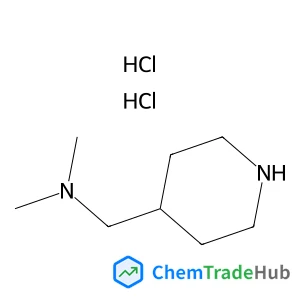
N,N-dimethyl(piperidin-4-yl)methanamine hydrochloride
CAS Number:
172281-72-0
Molecular Formula:
C8H20Cl2N2
![4-{1-[4-(4,4,5,5-Tetramethyl-1,3,2-dioxaborolan-2-yl)phenyl]cyclopropyl}morpholine structure](https://static.chemtradehub.com/structs/120/1206594-08-2-7afb.webp "4-{1-[4-(4,4,5,5-Tetramethyl-1,3,2-dioxaborolan-2-yl)phenyl]cyclopropyl}morpholine structure")
4-{1-[4-(4,4,5,5-Tetramethyl-1,3,2-dioxaborolan-2-yl)phenyl]cyclopropyl}morpholine
CAS Number:
1206594-08-2
Molecular Formula:
C19H28BNO3
Recommended Suppliers







Disclaimer
This page provides academic journal information for reference and research purposes only. We are not affiliated with any journal publishers and do not handle publication submissions. For publication-related inquiries, please contact the respective journal publishers directly.
If you notice any inaccuracies in the information displayed, please contact us at support@chemtradehub.com. We will promptly review and address your concerns.