












Electron deficiency but semiconductive diamond-like B2CN originated from three-center bonds
Literature Information
Publication Date
2021-01-06
DOI
10.1039/D0CP05793B
Impact Factor
3.676
Authors
Hui Chen, Yu Zhao, Taimin Cheng, Quan Li
View Original
Abstract
B2CN was one of the synthesized light element compounds, which was expected to be superhard material with a metallic character due to its electron deficienct nature. However, in this work, we discovered two novel semiconducting superhard B2CN phases using particle swarm intelligence technique and first-principles calculations, which were reported to have three-dimensional and four coordinated covalent diamond-like structures. These two new phases were calculated to be dynamically stable at zero and high pressures, and can be deduced from the previously reported Pmma phase by pressure-induced structural phase transitions. More importantly, unlike the previously proposed metallic B2CN structures, these two new phases combine superhard (the calculated Vickers hardness reached ∼55 GPa) and semiconducting character. The semiconducting behavior of the newly predicted B2CN phases breaks the traditional view of the metallic character of the electron deficient diamond-like B–C–N ternary compounds. By a detail analyzation of the electron localization functions of these two new phases, three-center bonds were reported between some B, C and B atoms, which were suggested to be the primary mechanism that helps the compound overcome its electron-deficient nature and finally exhibit a semiconducting behavior.
Related Literature
Transition from exohedral to endohedral structures of AuGen− (n = 2–12) clusters: photoelectron spectroscopy and ab initio calculations
Sheng-Jie Lu, Lian-Rui Hu, Xi-Ling Xu, Hong-Guang Xu, Hui Chen, Wei-Jun Zheng
2016-03-24
Paper
DOI: 10.1039/C6CP00373G
Photochemistry of nitrate chemisorbed on various metal oxide surfaces
Daniel M. B. Lesko, Ellen M. Coddens, Hannah D. Swomley, Rachel M. Welch, Jaya Borgatta, Juan G. Navea
2015-07-22
Paper
DOI: 10.1039/C5CP02903A
The unique Raman fingerprint of boron nitride substitution patterns in graphene
Marco Lorenz, Daniele Pullini, Mauro Sgroi
2016-07-04
Communication
DOI: 10.1039/C6CP02101H
Framework structured Na4Mn4Ti5O18 as an electrode for Na-ion storage hybrid devices
M. Jayakumar
2015-07-07
Paper
DOI: 10.1039/C5CP02866C
Excited states in large molecular systems through polarizable embedding
Nanna Holmgaard List, Jógvan Magnus Haugaard Olsen, Jacob Kongsted
2016-07-06
Perspective
DOI: 10.1039/C6CP03834D
Lower temperature optimum of a smaller, fragmented triphosphorylation ribozyme
Arvin Akoopie, Ulrich F. Müller
2016-04-07
Paper
DOI: 10.1039/C6CP00672H
Optically active multi-helical erythrocyte-like Ln(OH)CO3 (Ln = La, Ce, Pr and Sm)
Jing Chen, Songmei Li, Juan Du, Bo Wang, Shiming Meng, Jianhua Liu, Mei Yu
2016-06-21
Communication
DOI: 10.1039/C6CP02302A
Topography evolution of 500 keV Ar4+ ion beam irradiated InP(100) surfaces – formation of self-organized In-rich nano-dots and scaling laws
Indra Sulania, Dinesh C. Agarwal, Manish Kumar, Sunil Kumar, Pravin Kumar
2016-07-04
Paper
DOI: 10.1039/C6CP03409H
Facile hydrothermal synthesis of NiMoO4@CoMoO4 hierarchical nanospheres for supercapacitor applications
2015-07-13
Paper
DOI: 10.1039/C5CP03331D
You might also like
Compound Q&A
What is 1-(2,4,6-Trifluorophenyl)ethanol (CAS: 1250113-83-7)?
1-(2,4,6-Trifluorophenyl)ethanol is an organic compound with the CAS number 1250...
1250113-83-71-(2,4,6-Trifluoroph...
Compound Q&A
Is 1-(2,4-Dimethoxybenzyl)-4-(hydroxymethyl)-2-pyrrolidinone (CAS: 919111-34-5) safe?
1-(2,4-Dimethoxybenzyl)-4-(hydroxymethyl)-2-pyrrolidinone (CAS: 919111-34-5) is ...
919111-34-51-(2,4-Dimethoxybenz...
Compound Q&A
What are the physical and chemical properties of (7S,15R)-6β,15-Diacetoxy-7α,20-epoxy-7-hydroxykaura-2,16-dien-1-one (CAS: 51419-51-3)?
(7S,15R)-6β,15-Diacetoxy-7α,20-epoxy-7-hydroxykaura-2,16-dien-1-one is a crystal...
51419-51-3(7S,15R)-6β,15-Diace...
Compound Q&A
What regulatory guidelines apply to rac-ethyl (1r,4r)-4-hydroxycyclohexane-1-carboxylate, trans (CAS: 3618-04-0)?
The compound rac-ethyl (1r,4r)-4-hydroxycyclohexane-1-carboxylate, trans (CAS: 3...
3618-04-0rac-ethyl (1r,4r)-4-...
Compound Q&A
What is the market or research trend for 2-(2,4-Difluorophenoxy)-3-nitropyridine (CAS: 175135-62-3)?
The market for 2-(2,4-Difluorophenoxy)-3-nitropyridine (CAS: 175135-62-3) is cur...
175135-62-32-(2,4-Difluoropheno...
Compound Q&A
What are the main uses of 6-Diazo-5-oxo-L-norleucine (CAS: 157-03-9)?
The main uses of 6-Diazo-5-oxo-L-norleucine (CAS: 157-03-9) include research in ...
157-03-96-Diazo-5-oxo-L-norl...
Compound Q&A
What precautions should be taken when handling 2-Aminoethyl-mono-amide-DOTA-tris(tBu ester) (CAS: 173308-19-5)?
When handling 2-Aminoethyl-mono-amide-DOTA-tris(tBu ester) (CAS: 173308-19-5), i...
173308-19-52-Aminoethyl-mono-am...
Compound Q&A
How is 5-Methylimidazo[1,2-a]pyridine-3-carbaldehyde (CAS: 178488-37-4) typically synthesized?
5-Methylimidazo[1,2-a]pyridine-3-carbaldehyde (CAS: 178488-37-4) can be synthesi...
178488-37-45-Methylimidazo[1,2-...
Compound Q&A
Are there alternatives to 2,4,6-Trihydroxyisophthalaldehyde (CAS: 4396-13-8) in synthesis?
There are alternative reagents that can be used in the synthesis of 2,4,6-Trihyd...
4396-13-82,4,6-Trihydroxyisop...
Compound Q&A
What is (2Z)-3-(5-Fluoro-1H-indol-3-yl)-2-sulfanylacrylic acid (CAS: 179461-52-0)?
(2Z)-3-(5-Fluoro-1H-indol-3-yl)-2-sulfanylacrylic acid is a chemical compound wi...
179461-52-0(2Z)-3-(5-Fluoro-1H-...
Source Journal
Physical Chemistry Chemical Physics

CiteScore:
5.5
Self-citation Rate:
10.3%
Articles per Year:
3036
Physical Chemistry Chemical Physics (PCCP) is an international journal co-owned by 19 physical chemistry and physics societies from around the world. This journal publishes original, cutting-edge research in physical chemistry, chemical physics and biophysical chemistry. To be suitable for publication in PCCP, articles must include significant innovation and/or insight into physical chemistry; this is the most important criterion that reviewers and Editors will judge against when evaluating submissions. The journal has a broad scope and welcomes contributions spanning experiment, theory, computation and data science. Topical coverage includes spectroscopy, dynamics, kinetics, statistical mechanics, thermodynamics, electrochemistry, catalysis, surface science, quantum mechanics, quantum computing and machine learning. Interdisciplinary research areas such as polymers and soft matter, materials, nanoscience, energy, surfaces/interfaces, and biophysical chemistry are welcomed if they demonstrate significant innovation and/or insight into physical chemistry. Joined experimental/theoretical studies are particularly appreciated when complementary and based on up-to-date approaches.
Recommended Compounds

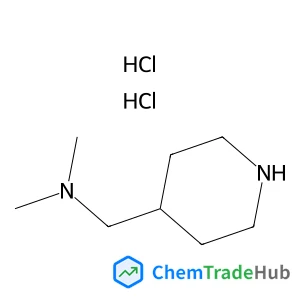
N,N-dimethyl(piperidin-4-yl)methanamine hydrochloride
CAS Number:
172281-72-0
Molecular Formula:
C8H20Cl2N2
Recommended Suppliers






Disclaimer
This page provides academic journal information for reference and research purposes only. We are not affiliated with any journal publishers and do not handle publication submissions. For publication-related inquiries, please contact the respective journal publishers directly.
If you notice any inaccuracies in the information displayed, please contact us at support@chemtradehub.com. We will promptly review and address your concerns.